
Rotary Motion Flow Wrapper Guide
HFFS Machine Blog

If you're seeking packaging automation solutions, please contact us, and we'll be delighted to offer you the most tailored solution.
Rotary motion flow wrapper is a high-speed horizontal packaging machine that uses a continuous-motion sealing head to create secure end seals on products without stopping the film. For food manufacturers looking to eliminate packaging bottlenecks, this technology is one of the most effective ways to boost throughput while maintaining superior seal integrity. Inconsistent seals and downtime from outdated machinery lead to costly inefficiencies. This guide explains how this advanced packaging automation works, its key advantages, and how to determine if it's the right investment for your production line.
What is a Rotary Motion Flow Wrapper
A rotary motion flow wrapper, also known as a horizontal form fill seal (HFFS) machine, is a packaging machine that uses continuous circular motion to seal the ends of a package. Because the sealing jaws rotate continuously without stopping, these machines are ideal for high-speed packaging of smaller, uniform, and lightweight food products like baked goods, candy bars, and snacks.
The Mechanics of Rotary Sealing
Rotary motion wrappers use rotating end-seal jaws, often called crimpers, that move in a circular path to seal the packaging film while the product is in constant motion. This continuous sealing process eliminates the stop-and-start motion found in intermittent machines, which dramatically reduces cycle times and increases overall packaging speeds.
Rotary vs. Box Motion: Key Differences
| Feature | Rotary Motion | Box Motion |
| Motion Type | Continuous circular motion | Intermittent "D-shaped" motion |
| Ideal Speed Range | 100–300+ PPM | 50–150 PPM |
| Best for Product Types | Lightweight, uniform, smaller items | Heavy, tall, or dense products |
| Mechanical Wea | Minimal due to smooth motion | Higher due to abrupt stopping/starting |
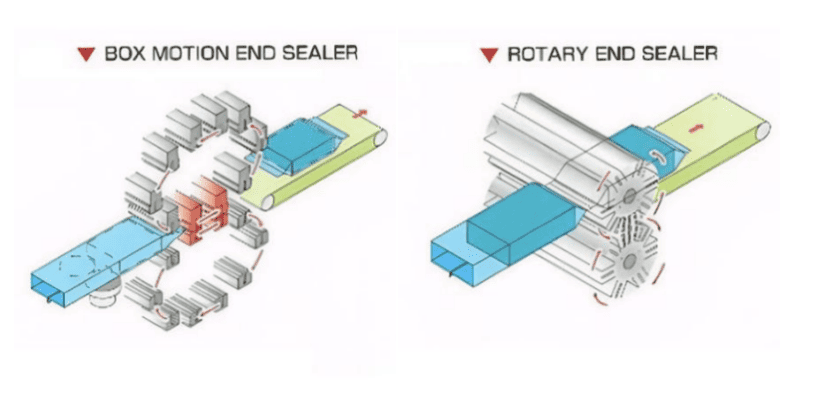
In summary, rotary motion wrappers excel in speed and efficiency for high-volume runs, while box motion flow wrappers are better suited for products that require longer seal times or are larger in size.
If you want to learn more about the differences between the two, you can read this article. < Box Motion vs Rotary Motion Flow Wrapper >
Key Benefits for Food Processing Lines
Unmatched High-Speed Output
The primary benefit of a rotary motion flow wrapper is its unmatched high-speed output, with many models achieving speeds exceeding 300 packages per minute (PPM). This capability is ideal for high-volume production lines where maximizing throughput is critical. Studies show that upgrading to rotary technology can improve output by up to 40% compared to traditional box motion systems.
Continuous Motion Efficiency
Its continuous motion design improves efficiency by reducing mechanical stress on components, which extends the lifespan of critical parts like crimpers and servo motors. Unlike intermittent systems that repeatedly start and stop, the smooth transitions of a rotary motion flow wrapper lower energy consumption and minimize wear-and-tear, boosting packaging line efficiency.
Reduced Maintenance and Wear
Rotary machines require less frequent maintenance because their fluid, continuous motion minimizes wear on critical parts. Components like sealing jaws and belts last longer, which cuts maintenance costs and reduces unplanned downtime. Many rotary machines boast maintenance intervals that are 20–30% longer than those of their box motion alternatives.
Key Takeaway: Rotary motion flow wrappers deliver higher speeds, greater efficiency, and lower maintenance demands, making them a cost-effective solution for scaling production lines.
Ideal Food Products for Rotary Flow Wrapping
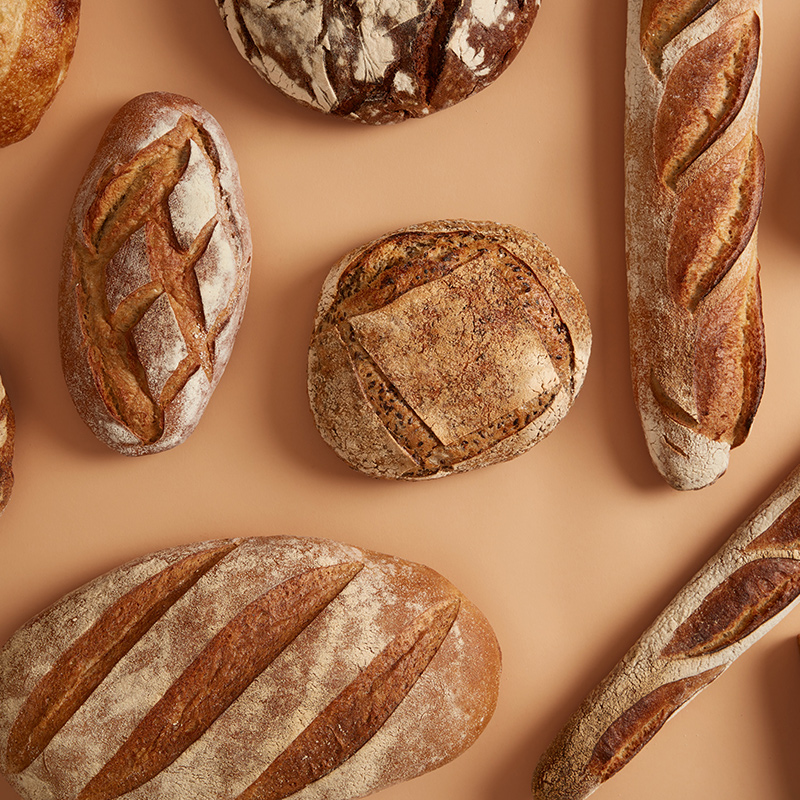
Baked Goods and Confectionery
Products like cookies, muffins, candy bars, and chocolates are perfectly suited for rotary wrappers. Their smaller size, consistent shape, and lightweight nature align with the machine's capacity to deliver rapid, consistent seals without damaging the product.
Snack Foods and Nutrition Bars
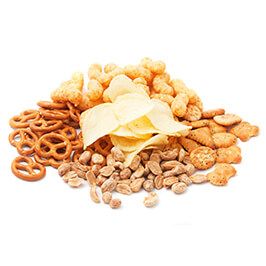
Rotary machines handle snack foods like granola bars, crackers, and chips with exceptional precision and speed. These products benefit from the continuous motion, which ensures uniform seals and reduces the risk of poor film registration.
Products to Avoid (When to Choose Box Motion)
Heavier or taller items, such as cheese blocks, large meat cuts, or multi-pack frozen entrees, require longer dwell times for proper end-sealing. Box motion flow wrappers are more appropriate for these applications due to their ability to pause and apply extended pressure and heat during the sealing cycle to ensure complete seal integrity.
Essential Features to Look For When Buying
Servo-Driven Technology
Servo-driven technology is an essential feature because it provides precise, digital control over film handling, product positioning, and sealing jaw movement. Multi-axis servo systems allow for real-time adjustments to accommodate changes in product dimensions or film thickness, ensuring accurate registration and consistent, high-quality seals.
Hygienic Design and Washdown Capabilities
Hygienic design is critical for food safety compliance. Look for a rotary motion flow wrapper built with stainless-steel frames and rated for IP65/IP69K, which enables high-pressure washdowns. Features like smooth, angled surfaces and minimal crevices prevent bacteria buildup and reduce the risk of contamination.
Quick Changeover Mechanisms
Modern rotary wrappers feature tool-less changeover mechanisms that enable operators to switch between product runs in minutes instead of hours. This functionality is crucial for facilities with diverse product portfolios, as it significantly reduces downtime and increases overall line efficiency.
Checklist for Buyers:
- Multi-axis servo motors for precise film control
- Stainless steel construction for hygiene
- IP65/IP69K ratings for washdowns
- Tool-less changeover mechanisms for flexibility
Calculating ROI on Rotary Flow Wrappers
Throughput vs. Labor Costs
Investing in packaging automation with a rotary wrapper can significantly reduce labor costs. A single machine operating at 300 PPM can often replace multiple manual operators or slower machines, saving tens of thousands of dollars annually in wages and benefits.
Material Savings and Waste Reduction
High-precision rotary systems minimize film waste through accurate film registration and fewer rejected packages from sealing errors. Industry data shows that high-speed wrappers can reduce film waste by up to 10%, resulting in substantial cost savings over time, especially in high-volume operations.
Conclusion
For food manufacturers aiming to scale production, the rotary motion flow wrapper offers a powerful solution. By providing unmatched speed, superior efficiency, and lower maintenance requirements, it directly addresses common packaging bottlenecks. While it is best suited for lightweight and uniform products, its ability to increase throughput and reduce operational costs delivers a clear and compelling return on investment for the right application.
Explore Related Resources
- What Is a Flow Wrapping Machine?
A complete guide to flow wrapping technology, types, and applications
- Working Principle of Flow Wrapping Machines
How horizontal flow wrappers really work
- Box Motion vs. Rotary Motion Flow Wrapper
Which sealing technology fits your product
- VFFS vs. HFFS: Which Packaging Machine Is Right?
Comparing vertical and horizontal form-fill-seal
- Top Film vs. Bottom Film Flow Wrappers
Film loading configuration guide
FAQ
Q1: What is the main difference between a rotary and box motion flow wrapper?
The main difference is their sealing motion. A rotary motion flow wrapper uses a continuous, circular jaw motion to seal packages without stopping the film, making it extremely fast. A box motion wrapper uses an intermittent "D-shaped" motion where the jaws move with the film, pause to seal, and then retract, which is slower but provides a longer sealing time for difficult films or taller products.
Q2: How fast can a rotary motion flow wrapper operate?
A typical rotary motion flow wrapper can operate at speeds between 100 and 300 packages per minute (PPM), with some high-end models exceeding 400 PPM. The exact speed depends on the product size, film type, and overall line integration.
Q3: Are rotary flow wrappers suitable for heavy products?
No, rotary flow wrappers are generally not suitable for heavy, large, or tall products. These items require a longer sealing dwell time to ensure a strong, hermetic seal, which is better achieved with the intermittent sealing process of a box motion wrapper.
Q4: What are the advantages of rotary motion flow wrappers over box motion flow wrappers?
Rotary motion flow wrappers offer higher speeds and smoother operation compared to box motion flow wrappers. They are ideal for applications where throughput and consistent sealing are critical, while box motion wrappers are better suited for slower speeds and thicker materials.
Q5: What types of products can a rotary motion flow wrapper package?
Rotary motion flow wrappers can package a wide range of food products, such as bakery items, snack bars, confectionery, frozen foods, and more. They are especially suitable for products requiring high-speed packaging and consistent sealing.
Q6: How do I choose the right rotary motion flow wrapper for my business?
To choose the right rotary motion flow wrapper, consider factors like your production speed, product dimensions, packaging material, and budget. Consulting with a packaging machinery expert can help identify the best option for your specific needs.