
Box Motion vs Rotary Motion Flow Wrapper
Packaging Knowledge Hub

If you're seeking packaging automation solutions, please contact us, and we'll be delighted to offer you the most tailored solution.
Choosing between a box motion and a rotary motion flow wrapper is one of the most important decisions when selecting a flow packing machine. While both technologies are widely used in horizontal flow wrapping, they are designed for different packaging goals, product characteristics, and sealing requirements.
Many buyers assume that one system is always better than the other. In reality, the best choice depends on your product size, film structure, bag length, speed target, and seal quality requirements. Another common misunderstanding is cost. In many like-for-like comparisons, a box motion flow wrapper is usually more expensive than a rotary motion flow wrapper when the machine class, configuration, and brand level are similar.
This guide explains the real differences between the two technologies and helps you understand when each solution is the better fit.
What Is a Flow Packing Machine?
A flow packing machine, also called a flow wrapper or horizontal form fill seal machine, is used to wrap products with film in a continuous process. It forms a package around the product, seals the film longitudinally, and then creates the end seals to complete each bag.
Flow wrapping is widely used for bakery products, biscuits, chocolates, frozen foods, daily necessities, medical products, and many other packaged goods. The end sealing system plays a major role in machine performance, and this is where box motion and rotary motion differ most.
What Is Box Motion in a Flow Wrapper?
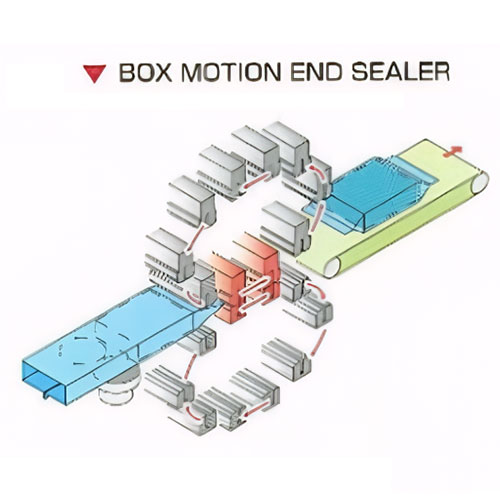
A box motion flow wrapper uses reciprocating end-seal jaws that move together with the product during sealing. Because the sealing jaws follow the product momentarily, the machine provides a longer sealing dwell time and a more controlled sealing action.
This design is especially useful when the packaging application requires:
- longer bag lengths
- stronger sealing stability
- better sealing performance on difficult films
- improved package integrity
- lower risk of product displacement during sealing
Box motion technology is often selected for more demanding applications, such as products packed with thicker laminated films, modified atmosphere packaging, or products that are harder to seal consistently.
What Is Rotary Motion in a Flow Wrapper?
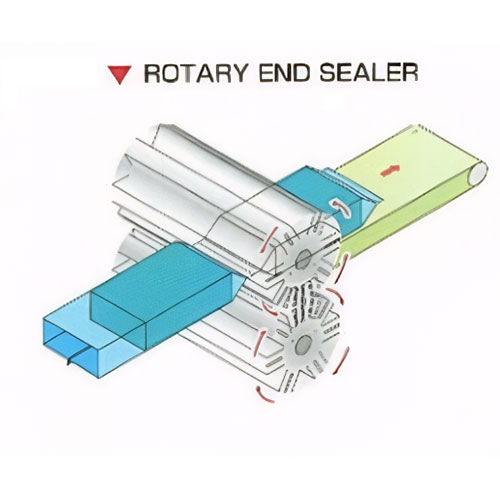
A rotary motion flow wrapper uses continuously rotating end-seal jaws to seal the package. This design is efficient, mechanically streamlined, and widely used in standard high-speed packaging applications.
Rotary motion systems are often a strong choice for:
- standard product sizes
- regular bag lengths
- higher-speed production
- stable packaging films
- applications where cost efficiency is important
Because of their continuous motion, rotary flow wrappers are commonly used in large-volume packaging environments where speed and production efficiency are key priorities.
Box Motion vs Rotary Motion: What Are the Main Differences?
Although both technologies perform the same core packaging task, their operating principles lead to clear differences in performance, flexibility, and cost.
1. Sealing Motion
The biggest difference is how the end-seal jaws move.
In a box motion flow wrapper, the jaws move in a reciprocating path and travel with the product during the sealing process. This creates more dwell time and more controlled sealing.
In a rotary motion flow wrapper, the jaws rotate continuously. This allows smooth and efficient operation, especially in high-speed standard packaging.
2. Sealing Dwell Time
Box motion provides longer sealing dwell time than rotary motion. That extra sealing time can be very important when working with:
- thicker films
- laminated films
- MAP packaging
- difficult sealing structures
- applications that require stronger seal consistency
Rotary motion, by comparison, is highly efficient but generally offers less sealing dwell time.
3. Product and Bag Length Adaptability
Box motion is usually more suitable for longer bags and products that need more stable seal formation. When package length becomes longer or the product shape is more challenging, box motion often provides better control.
Rotary motion is usually ideal for more standard products and standard package formats.
4. Speed Characteristics
Rotary motion is often preferred for high-speed packaging of standard products. It is efficient, continuous, and well suited for high-throughput lines.
Box motion can also run efficiently, but its real strength is not simply maximum speed. Its advantage lies more in sealing quality, adaptability, and performance in more difficult applications.
5. Cost Structure
This is one of the most misunderstood areas.
In many real-world comparisons, a box motion flow wrapper is usually more expensive than a rotary motion flow wrapper when both are compared under similar configuration, control level, and brand positioning.
Why? Because box motion generally requires a more demanding end-seal structure, more advanced motion control, and higher design complexity to achieve synchronized sealing movement. So it should not be described as the cheaper or simpler option in like-for-like machine comparisons.
Rotary motion is often the more cost-effective choice for many standard packaging projects.
Is Box Motion More Expensive Than Rotary Motion?
In many comparable cases, yes.
If you compare two machines of a similar brand level and with similar automation and control configurations, a box motion flow wrapper will often cost more than a rotary motion machine. This is because box motion systems are built to handle more demanding sealing tasks and usually involve a more complex sealing mechanism.
That said, the right decision should not be based on initial price alone. If your product requires longer dwell time, better seal integrity, or more stable handling for long bags or difficult films, box motion may create more value over time by reducing sealing problems, rework, and waste.
On the other hand, if your application involves standard products, stable film materials, and a strong focus on production efficiency, rotary motion may offer better overall value.
When Should You Choose Box Motion?
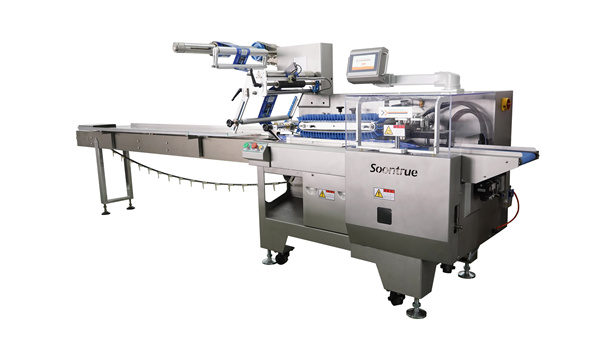
A box motion flow wrapper is usually the better choice when your packaging application involves higher technical demands.
You should consider box motion if you need to package:
- products with long bag lengths
- products that are prone to movement during sealing
- products requiring better seal appearance or seal strength
- applications using thicker or laminated films
- packaging projects involving MAP
- products that are difficult to seal consistently at standard settings
Box motion is also a strong option when packaging quality and seal stability are more important than simply choosing the lowest-cost machine.
In short, box motion is often selected for more demanding and higher-spec packaging applications.
When Should You Choose Rotary Motion?
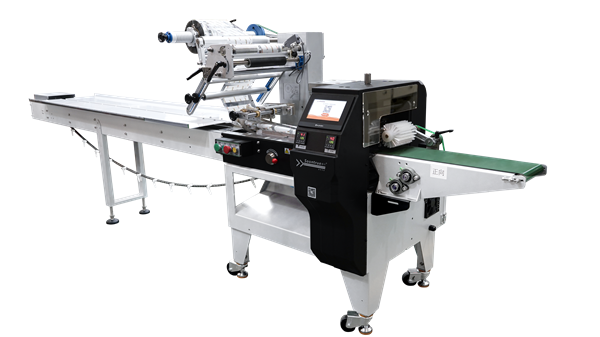
A rotary motion flow wrapper is usually the better choice when your product and packaging conditions are more standard and production efficiency is a key target.
You should consider rotary motion if you need:
- high-speed packaging
- stable operation for standard products
- cost-effective machine investment
- efficient continuous packaging
- proven performance for regular bag sizes and common films
For many food and non-food products with stable dimensions and straightforward packaging requirements, rotary motion remains an excellent and highly practical solution.
In short, rotary motion is often the preferred option for standardized, high-speed, and cost-efficient packaging lines.
Which One Is Better?
Neither system is universally better. The better solution depends on what you are packaging and what your production line needs.
Choose box motion when you need more sealing dwell time, better control for long bags, or stronger sealing performance for difficult materials and premium applications.
Choose rotary motion when you need efficient, high-speed packaging for standard products and want a more cost-effective solution.
The most important point is to match the machine to the application rather than making a decision based on assumptions or oversimplified comparisons.
How to Choose the Right Flow Wrapper for Your Product
Before selecting between box motion and rotary motion, it is worth evaluating the following factors:
- product size and shape
- bag length requirement
- film type and film thickness
- target packaging speed
- sealing quality expectations
- product stability during conveying and sealing
- whether MAP or premium packaging is required
A proper machine selection should consider the full packaging process, not just one specification. In many projects, the wrong end-seal system leads to unstable seals, film waste, lower efficiency, or product damage. Choosing the right technology at the beginning helps improve packaging performance and long-term production stability.
Why the Comparison Is Often Misunderstood
In the market, box motion and rotary motion are sometimes described too simply. Box motion may be wrongly presented as just a slower or more basic structure, while rotary motion may be described as the higher-end choice. This kind of explanation is misleading.
The real situation is more application-based:
- box motion is often used for more difficult and higher-demand sealing tasks
- rotary motion is often used for efficient, standard, high-speed packaging
So the comparison should not be framed as “advanced versus basic” in a simplistic way. It should be framed as which sealing technology is better suited to your packaging objective.
FAQ About Box Motion and Rotary Motion Flow Wrappers
Q1. What is the difference between box motion and rotary motion in a flow wrapper?
Box motion uses reciprocating sealing jaws that move with the product during sealing, giving longer dwell time and more controlled sealing. Rotary motion uses continuously rotating jaws and is usually better suited for standard high-speed packaging.
Q2. Is box motion more expensive than rotary motion?
In many like-for-like comparisons, yes. When machine class, automation level, and brand positioning are similar, a box motion flow wrapper is often more expensive than a rotary motion machine.
Q3. Which is better for long bag packaging?
Box motion is usually better for long bag applications because it offers more controlled sealing and better adaptability when sealing time becomes more critical.
Q4. Which is better for high-speed packaging?
Rotary motion is usually the better choice for standard products that require efficient high-speed packaging.
Q5. Is box motion better for difficult sealing films?
Yes. Box motion is often more suitable for thicker films, laminated films, and other packaging materials that need longer sealing dwell time and better seal consistency.
Q6. Can rotary motion handle many common packaging applications?
Yes. Rotary motion is a widely used and highly effective solution for many standard products and packaging formats.
Q7. Which one should I choose for MAP packaging?
Box motion is often preferred for MAP applications because better sealing stability and package integrity are usually more important in these projects.
Conclusion
The choice between a box motion and a rotary motion flow wrapper should be based on application requirements, not on simplified assumptions.
If your packaging project requires better sealing dwell time, long bag adaptability, stronger seal stability, or better performance with difficult films, box motion is often the better solution. If your goal is high-speed, cost-effective packaging for standard products, rotary motion is often the more suitable option.
Understanding these differences helps manufacturers choose a machine that not only fits the product today, but also supports stable and efficient production in the long run.

Not sure whether box motion or rotary motion is right for your product?
Soontrue can help evaluate your product size, bag length, film type, sealing requirements, and production target to recommend the most suitable flow wrapping solution for your application.
Contact Soontrue to discuss your packaging project and get a tailored machine recommendation.
Related Articles
To help you better understand flow wrapping technology and choose the right packaging solution, you may also be interested in the following articles:
Learn the basic working principle of a flow packing machine, including film forming, longitudinal sealing, and end sealing.
- How to Choose the Right Flow Packing Machine for Your Product
A practical guide to evaluating product size, film type, speed, bag length, and sealing requirements before selecting a machine.
Explore when a box motion flow wrapper is the better choice for long bags, difficult films, MAP, and premium sealing requirements.
- Rotary Motion Flow Wrapper: Features and Best Use Cases
Understand why rotary motion is often preferred for standard products, continuous operation, and cost-effective high-speed packaging.
- HFFS vs VFFS Packaging Machine: What Is the Difference?
Compare horizontal and vertical packaging systems to determine which solution fits your product and production line.
- Flow Wrapper for Biscuit, Bread, and Bakery Products
See how flow wrapping technology is applied in bakery packaging and what machine features matter most for stable production.