
Top Film Loader vs. Bottom Film Loader Flow Wrappers: Which is Right for Your Product?
HFFS Machine Blog

If you're seeking packaging automation solutions, please contact us, and we'll be delighted to offer you the most tailored solution.
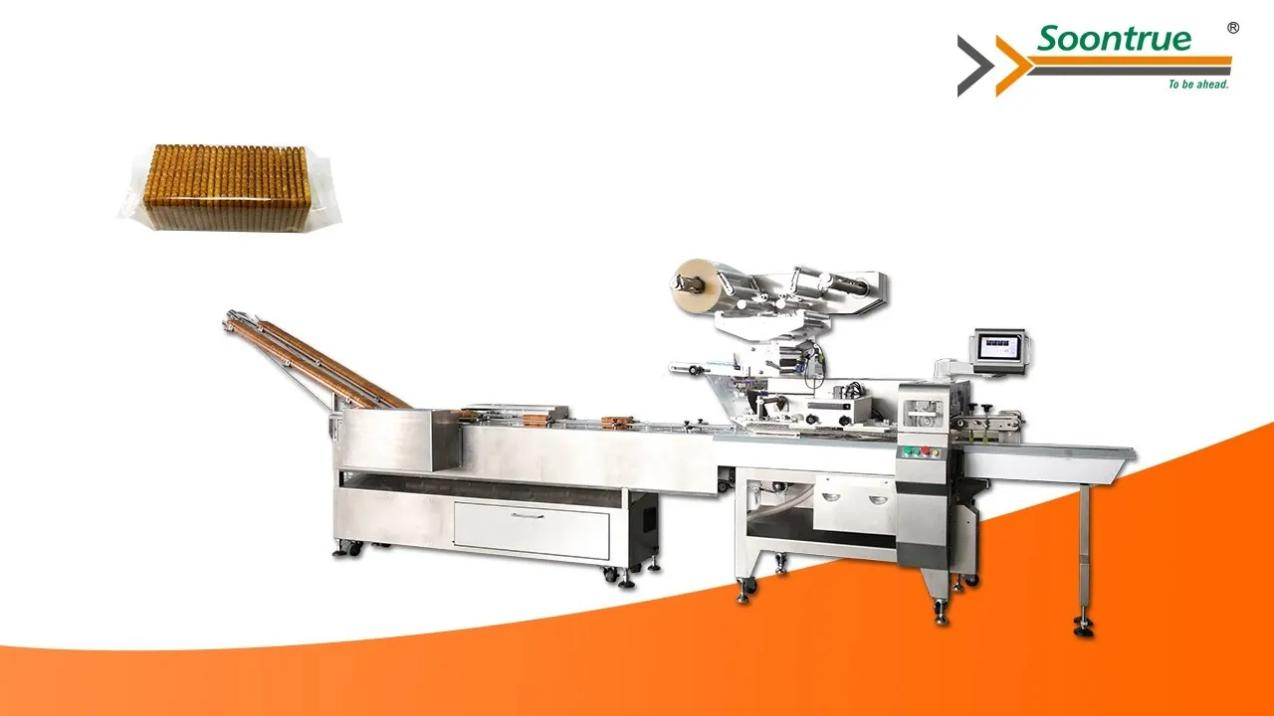
What Is the Difference Between Top Film and Inverted Flow Wrappers?
Top film and inverted flow wrappers are used for different product handling needs. A standard top film loader is usually best for rigid, dry, and uniform products, while an inverted flow wrapper is better for sticky, soft, fragile, or irregular products that need gentler handling. In this guide, we compare how each machine works, where the seal is placed, which products they suit best, and how to choose the right option for your packaging line.
The Standard Choice: Top Film Loader Flow Wrappers
When you picture a "pillow packing machine," this is likely what you see. In this configuration, the film reel is mounted above your product.
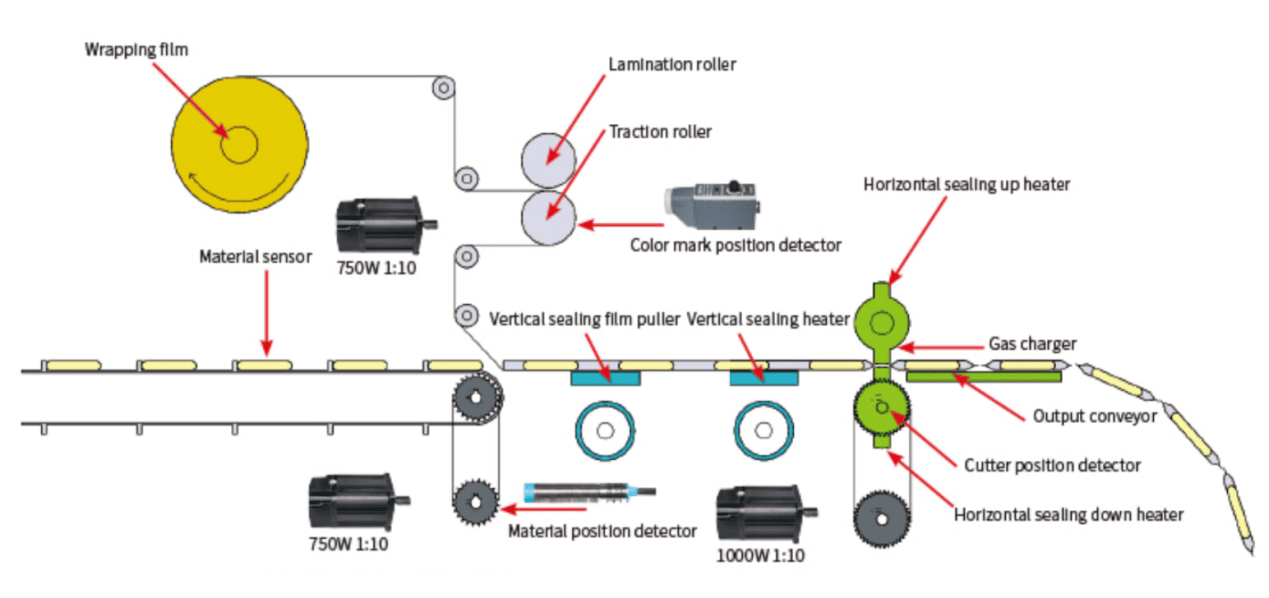
How It Works
- The Process: You place your products on a metal chain conveyor.
- The Movement: A mechanical "pusher" (lug chain) comes up behind your product and physically pushes it into the forming tube.
- The Seal: The machine creates the fin seal on the bottom of your pack.
When Should You Choose This?
You should opt for a Top Film Loader machine if you are packaging products that are rigid, consistent, and dry.
- Are you packing biscuits, chocolate bars, or hardware? This is your best choice.
- Are your products in trays? This is the industry standard for you.
Why you’ll love it: It’s generally faster and hides the seal underneath the pack for a cleaner look on the shelf.
What to watch out for: If your product is sticky or fragile, the pushers might damage it or get jammed.
The Gentle Alternative: Inverted (Bottom Film Loader) Flow Wrappers
Also known as "Bottom Feed" wrappers, these machines flip the script. The film reel is mounted below your product flow.
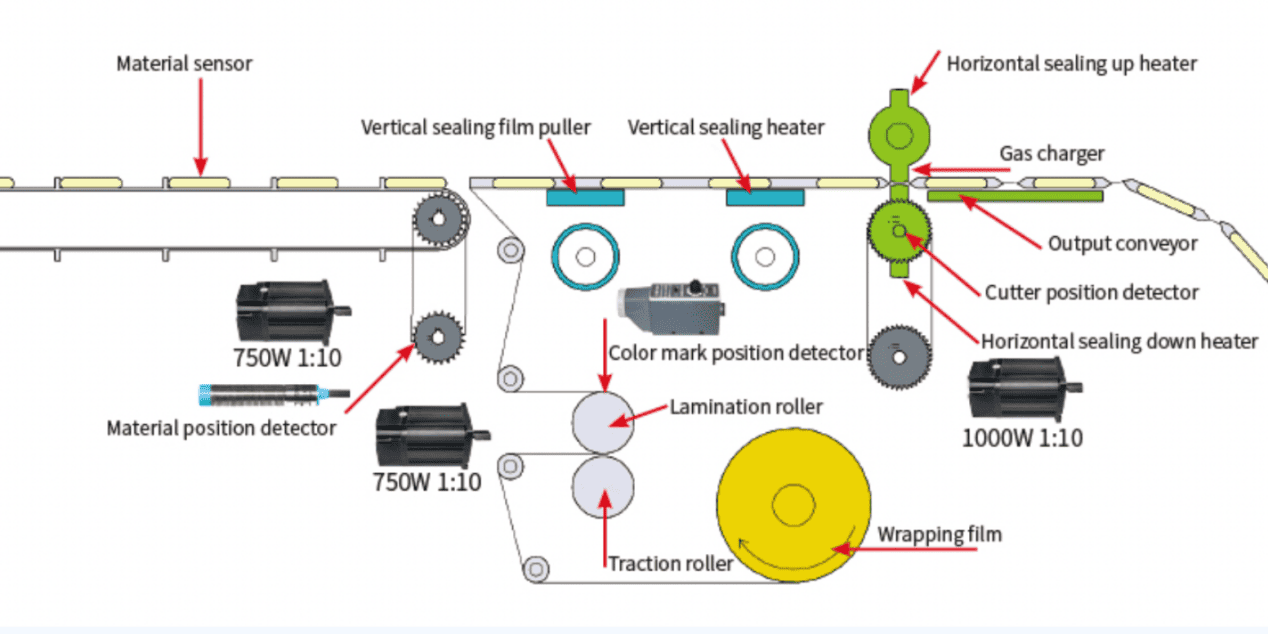
How It Works
- The Process: The film comes up from underneath.
- The Movement: Instead of being pushed, your product sits directly on top of the film. The film acts as a conveyor belt, carrying your product forward gently.
- The Seal: The machine creates the fin seal on the top of your pack.
When Is This Your Best Option?
If you struggle with difficult-to-handle items, this configuration is a game-changer for your operations.
- Is your product soft? (e.g., Tortillas, sponge cakes). Since nothing pushes it, it won't get squashed.
- Is your product sticky? (e.g., Fruit bars, gummies). Because your product sits on the film and doesn't touch the metal machine bed, you won't have to stop for cleaning nearly as often.
- Are you packing loose items? (e.g., A kit of 3 sausages or loose vegetables). The film carries them as a group, keeping your pack organized.
Why you’ll love it: It drastically reduces your waste and downtime caused by jams or cleaning.
What to watch out for: The seal line is visible on top (though we can make it very discreet).
Top Film vs Inverted Flow Wrapper: Key Differences at a Glance
Not sure which one fits your factory? Use this cheat sheet to compare:
| Feature | Standard (Top Film Loader) | Inverted (Bottom Film Loader) |
| Film Reel Position | Top | Bottom |
| How Your Product Moves | Pushed by a Lug Chain | Carried by the Film |
| Where the Seal Goes | Bottom (Hidden) | Top (Visible) |
| Good for Your Sticky Items? | No (Might stick to the bed) | Yes (Excellent) |
| Good for Your Soft Items? | No (Risk of crushing) | Yes (Gentle) |
| Sanitation for You | Standard | High (Less contact) |
Best Applications for Each Flow Wrapper Type
Choosing between a top film loader and an inverted flow wrapper is not just about machine design. It depends heavily on the physical behavior of your product during feeding, wrapping, and sealing. Some products are rigid and easy to control, while others are soft, sticky, wet, or irregular in shape. Matching the right wrapper type to the right application helps reduce damage, prevent downtime, and improve overall packaging consistency.
Top Film Loader Applications
A standard top film loader flow wrapper is usually the best option for products that are rigid, dry, uniform, and easy to push with a lug chain. Because the machine moves the product forward mechanically, it performs best when the item can hold its shape and does not stick to the metal infeed bed.
Typical applications include:
- Biscuits and cookies packed individually, in stacks, or in trays
- Chocolate bars and other solid confectionery items
- Tray-packed products that need stable, high-speed feeding
- Soap bars and personal care items with a regular shape
- Hardware kits and non-food items that are firm and consistent
- Rigid bakery products that do not deform easily during transport
For these products, a top film loader offers excellent speed, efficient production, and a cleaner shelf appearance because the fin seal is placed on the bottom of the pack. In many factories, this is the preferred solution for high-volume lines where product stability is not a concern.
Inverted Flow Wrapper Applications
An inverted flow wrapper, also called a bottom film flow wrapper, is better suited for products that are soft, sticky, delicate, wet, or irregular in shape. Instead of being pushed from behind, the product is carried forward on the film itself. This reduces direct contact with machine surfaces and provides gentler handling throughout the wrapping process.
Typical applications include:
- Tortillas and flat baked products that can stick or fold easily
- Sponge cakes and other soft bakery items that deform under pressure
- Sticky bars such as fruit bars, protein bars, or cereal bars
- Gummies and chewy products that may leave residue on machine parts
- Wet products that require cleaner transport and reduced surface contact
- Vegetables such as celery, cucumbers, or leafy bundles with varying size
- Irregular multipacks that are hard to control with standard pushers
For these applications, the biggest advantage of an inverted flow wrapper is product protection. It can significantly reduce crushing, sticking, smearing, and unstable feeding. In many cases, it also improves sanitation and reduces cleaning time, especially when packaging sticky or moisture-sensitive products.
Common Problems Caused by Choosing the Wrong Flow Wrapper
Using the wrong flow wrapper configuration can create problems that go far beyond appearance. In many packaging lines, the machine may still run, but efficiency drops, product waste increases, and operators have to stop production more often than expected. In other words, the wrong machine setup can quietly reduce your real output even if the line looks fast on paper.
Sticky products sticking to the infeed bed
One of the most common problems happens when sticky products are packed on a standard top film loader. Because the product moves across a metal infeed surface, residue can build up quickly. This leads to drag, unstable product movement, poor spacing, and frequent cleaning interruptions. Products such as fruit bars, tortillas, gummies, or soft coated snacks are especially likely to create this issue.
Soft products deformed by lug pushing
Top film loaders use mechanical lugs to push products forward. While this works well for rigid items, it can damage soft or delicate products. Cakes, sponge products, filled pastries, and certain bakery items may be squashed, dented, or misshapen when pushed too aggressively. Once product shape changes, pack presentation and sealing consistency often suffer as well.
Frequent cleaning downtime
When products stick, smear, or leave crumbs and residue in the machine, cleaning frequency increases. This is not only a sanitation issue but also an efficiency problem. Every unplanned stop reduces throughput, increases labor burden, and affects production scheduling. In these cases, an inverted flow wrapper often performs better because the product is carried on the film rather than dragged across machine parts.
Product misalignment
If the product is unstable during feeding, it may enter the forming area in the wrong position. Misalignment can lead to poor sealing, off-center packs, cut marks in the wrong place, or even machine jams. Irregular items and loose grouped products are especially difficult to control with a standard pusher-based system.
Poor pack presentation
Even when the product is technically wrapped, the wrong machine type can create poor package appearance. Crushed edges, uneven spacing, wrinkled film, or visible contamination in the seal area can all reduce shelf appeal. For consumer-facing products, these issues directly affect brand perception and perceived quality.
Unstable feeding for irregular items
Products with different lengths, uneven surfaces, or loose groupings do not always behave well in a top film loader. They may roll, separate, or fail to stay in the correct position as they move through the machine. Inverted flow wrappers are often the better solution because the film supports and stabilizes the product from below, making feeding more consistent.
The key takeaway is simple: when the wrong wrapper type is used, the line may keep moving, but productivity, quality, and uptime all suffer. Choosing the right machine from the start helps avoid these hidden costs.
Speed, Efficiency and Downtime: What Really Matters
When comparing top film loaders and inverted flow wrappers, many buyers focus first on speed. That is understandable, but packaging performance should not be judged by maximum machine speed alone. What matters more is how much stable, saleable output your line can produce over time.
Top film loaders may run faster in ideal conditions
For rigid, dry, and uniform products, a top film loader usually offers higher theoretical speed. Because products are pushed mechanically in a controlled way, these machines can often operate at very high pack rates with excellent repeatability. For simple, stable products such as biscuits, chocolate bars, trays, or solid bakery goods, this makes top film loaders highly efficient.
Inverted wrappers may deliver better effective output for sticky or fragile products
An inverted flow wrapper may run at a lower nominal speed, but that does not always mean lower productivity. For sticky, soft, wet, or irregular products, gentle handling can reduce deformation, jams, cleaning stops, and product waste. In real production, this often results in better effective output and more stable operation across the entire shift.
Effective output is not the same as theoretical max speed
A machine rated for very high speed may still perform poorly if the product is difficult to handle. If operators need to stop the line repeatedly for cleaning, clearing jams, adjusting spacing, or removing damaged products, the true output can be much lower than expected. This is why packaging line decisions should be based on actual production conditions rather than catalog speed alone.
Fewer jams and less cleaning can improve OEE
Overall Equipment Effectiveness depends on more than speed. It also includes availability, performance stability, and product quality. A machine that runs slightly slower but stops less often may achieve better OEE than a faster machine with frequent interruptions. For many manufacturers, especially those handling soft or sticky products, an inverted wrapper becomes the more profitable option because it improves uptime and reduces waste.
In practice, the best machine is not the one with the highest advertised speed. It is the one that gives your factory the most reliable output, the least downtime, and the most consistent pack quality for your specific product.
Ask Yourself These 3 Questions
Still undecided? Look at your product right now and ask yourself these three questions.
Question 1: "Is my product sticky?"
If you are producing sticky fruit bars or marinated items, a standard machine will frustrate you. Your product will drag against the metal in-feed bed. Your Move: Choose an Inverted Wrapper. Let the film carry the sticky product so it never touches the machine parts.
Question 2: "Can my product take a hit?"
Imagine poking your product with your finger. Does it dent? If a mechanical pusher hits your soft croissant, it will deform. But if a pusher hits a hard cracker, it’s fine. Your Move: If your product deforms under pressure, you need the gentle handling of an Inverted machine. If it’s solid, stick with Top Film Loader for higher speeds.
Question 3: "Is my product uniform?"
Are you packing single, identical blocks of soap? Or are you packing variable vegetables like celery? Your Move: Loose or variable items are hard to "push" because they separate or roll away. An Inverted Wrapper stabilizes them on the film, giving you a perfect pack every time.
Real Results from Factories Like Yours
The Tortilla Challenge
One of our clients was struggling with flour tortillas sticking to their standard machine plates, forcing them to stop production every 20 minutes.
The Fix: They switched to a Soontrue Inverted Flow Wrapper. By letting the tortillas ride on the film, they cut downtime by 80% and virtually eliminated waste.
The Vegetable Solution
A farm needed to pack celery stalks of different sizes. Standard pushers required constant manual adjustment.
The Fix: An Inverted machine allowed them to place variable-sized celery directly onto the film. The machine automatically adjusted the bag length, giving them the flexibility they needed.
Choosing between a Top Film and Bottom Film Loader flow wrapper isn't just about the machine specs—it's about your product's success.
- Choose Top Film Loader if you need speed for rigid products.
- Choose Bottom Film Loader (Inverted) if you need flexibility for sticky or soft products.
If Still not 100% sure?You don't have to guess. Send us your product samples! Our engineers will run a free test on both machine types using your actual products. We will send you a video report so you can see exactly how your product performs before you spend a dime.
Contact Us Today to Schedule Your Free Test Run
Frequently Asked Questions (FAQ)
Q1: Is an Inverted (Bottom Film Loader) Wrapper slower than a Standard Top Film machine?
A: Generally, yes. Standard Top Film machines use mechanical pushers, allowing for very high speeds (often 300-500 packs/min). Inverted machines rely on the film to carry the product, so speeds are typically lower (80-200 packs/min) to prevent film stretching or product slippage. However, for sticky or fragile products, the effective output of an Inverted machine is often higher because it eliminates downtime caused by jams.
Q2: Since the seal is on top of the pack with an Inverted machine, will it look ugly?
A: Not at all. While the fin seal is on top, modern machines create a very tight, neat seal. For many products (like multipack vegetables, wet wipes, or meat trays), this is the industry standard and perfectly acceptable to consumers. If aesthetics are a major concern, the seal can easily be covered by a label.
Q3: Can I pack both "soft" and "hard" products on the same Inverted machine?
A: Yes! This is a huge advantage of Inverted wrappers. They are highly versatile. While designed for difficult/soft products, they handle rigid items (like trays or hard biscuits) perfectly well. If your factory runs a mix of products, an Inverted machine is often the safer, more flexible investment.
Q4: Can I use Gas Flushing (MAP) with an Inverted Flow Wrapper?
A: Absolutely. Both machine types can be equipped with gas flushing. If you need high hermetic seals for extended shelf life (e.g., for bakery or meat), we recommend choosing an Inverted wrapper equipped with Box Motion (Reciprocating) jaws to ensure a long enough dwell time to seal the gas in.
Q5: Do I need special packaging film for a Bottom Film machine?
A: No, it uses the same materials (OPP, BOPP, laminates) as standard machines. The only difference is the winding direction of the reel. If you have stock film for a top film machine, you might need to ask your film supplier to adjust the winding direction for future orders, but this is not a technical barrier.
Q6: What is an inverted flow wrapper?
A: An inverted flow wrapper, also known as a bottom film flow wrapper, is a packaging machine in which the film comes from below the product instead of above it. The product rests directly on the film and is carried forward more gently during wrapping. This design is especially useful for sticky, soft, fragile, wet, or irregular products that may be damaged or destabilized in a standard top film loader.
Q7: What products need a bottom film flow wrapper?
A: A bottom film flow wrapper is usually the best choice for products that are difficult to push with a lug chain. This includes tortillas, sponge cakes, sticky snack bars, gummies, wet products, vegetables, and irregular multipacks. If a product tends to stick to metal surfaces, lose shape under pressure, or move unpredictably during feeding, an inverted flow wrapper is often the safer and more efficient solution.
Q8: Is a top film loader better for biscuits and trays?
A: Yes, in many cases a top film loader is better for biscuits, cookies, chocolate bars, and tray-packed products. These products are typically rigid, uniform, and easy to control mechanically, which makes them well suited for lug-driven feeding. A top film loader can usually provide higher speed, stable pack presentation, and a bottom fin seal that is less visible on the shelf.
Q9: Can an inverted flow wrapper pack irregular vegetables?
A: Yes. An inverted flow wrapper is often a very good choice for irregular vegetables such as celery, cucumbers, leafy bundles, or mixed fresh produce packs. Because the film carries the product from underneath, it helps stabilize items that vary in size or shape. This reduces feeding problems, improves pack consistency, and makes the machine more adaptable for fresh produce applications.
Q10: How do I choose between top seal and bottom seal packaging?
A: The choice depends on your product behavior and packaging priorities. Bottom seal packaging, which is common in top film loaders, is often preferred for rigid products because it creates a cleaner appearance on the shelf. Top seal packaging, which is typical in inverted flow wrappers, is better when the product needs gentler handling or reduced contact with machine surfaces. If product protection, reduced sticking, and more stable feeding are more important than hiding the seal, top seal packaging may be the better option.
Q11: Which flow wrapper is better for sticky products?
A: For sticky products, an inverted flow wrapper is usually the better option. Since the product sits on the film instead of moving directly across machine surfaces, there is less sticking, less residue buildup, and less need for frequent cleaning. This makes bottom film flow wrappers particularly effective for fruit bars, gummies, coated snacks, tortillas, and other sticky items.
Q12: Which machine is better for fragile bakery products?
A: For fragile bakery products such as sponge cakes, soft pastries, or cream-filled items, an inverted flow wrapper is generally the better choice. It reduces mechanical pressure during feeding and helps preserve product shape. For firmer bakery items such as biscuits or crackers, a top film loader may still be the more efficient option.
Q13: Can one factory use both top film and inverted flow wrappers?
A: Yes. Many factories use both machine types depending on the products they run. A top film loader may be ideal for rigid, high-speed applications, while an inverted flow wrapper may be needed for sticky, soft, or irregular items. In mixed-product factories, using the right machine for each product category often leads to better overall efficiency and lower waste.