
Top 5 Benefits of Food Packaging Automation & Future Trends (2026)
Packaging Knowledge Hub

If you're seeking packaging automation solutions, please contact us, and we'll be delighted to offer you the most tailored solution.
Food producers are increasingly turning to automated technologies to package their products effectively. To meet the growing demand for food products and address labor rate increases, investing in automation has become an integral part of many food processing companies’ operations.
Automated food packaging is done with the use of robotic systems or machinery and with the least amount of human involvement in performing the packaging function. Examples of automated packaging in the food industry can be found in form-fill-seal equipment or robotic palletizing.
The guide describes how automated food packaging systems operate, what benefits they offer to producers of packaged foods, and the difficulties manufacturers may experience when implementing automation/using automated systems. The guide also provides information about some of the different types of machines typically found in a modern automated packaging line.
What Is Food Packaging Automation?
Automated systems utilize machine and robotic equipment to perform packaging procedures (e.g., filling, sealing, labeling, and palletizing products). Rather than relying on human employees to operate the equipment and perform manual labor, automated systems are designed to operate using modern technology, including sensors, control software, and mechanical components, to provide continuous and reliable product handling.
Automated Food Packaging Systems
An automatic food packing system generally consists of several machines that work together in a production line. Each individual machine provides its own specific process in the packaging process.
Typical stages of a typical packing system include:
- Product feeding
- Weigh or dose
- Fill
- Seal or wrap
- Label (and code)
- Inspect and control quality
- Carton and palletize
The systems can run continuously, allowing the manufacturer to produce a high volume of packaged food products.
Machinery for Automating Food Packaging
Different food products require different types of packaging machines. Some of the most commonly used machines include:
Vertical Form Fill Seal Machines (VFFS)
VFFS machines create bags from roll film, fill them with products, and seal them vertically. They are widely used for snacks, grains, frozen foods, and powdered products.
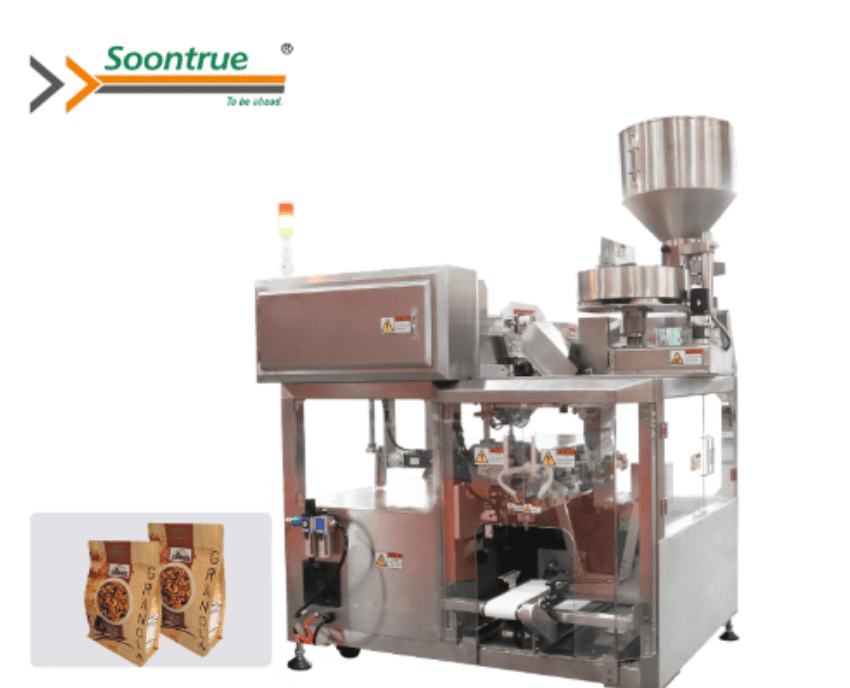
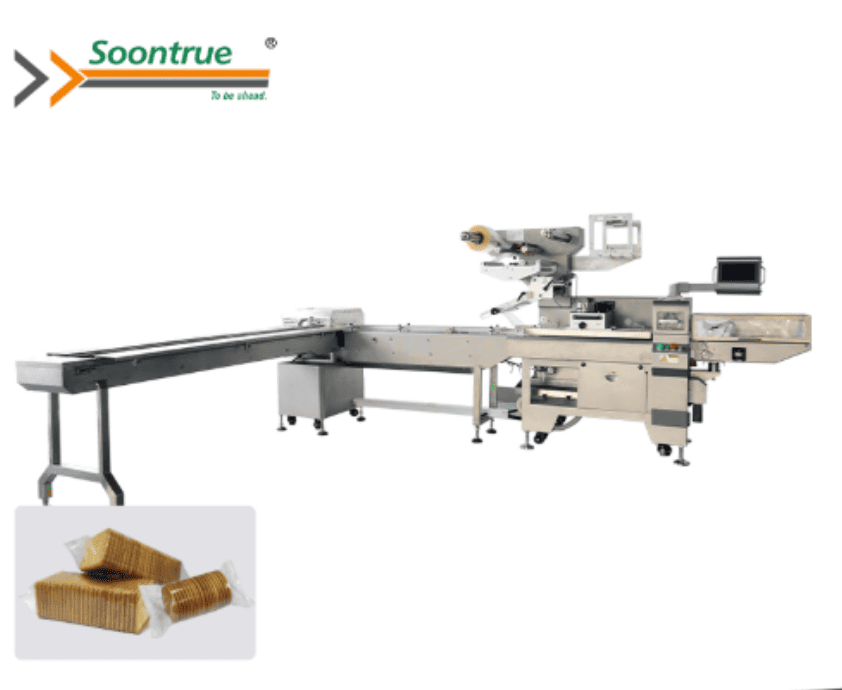
Horizontal Flow Wrapping Machines
Horizontal flow wrapping machines package products in horizontal form producing pillow type packages. They are typically used for the packing of biscuits, chocolate bars, bakery products and energy bars.
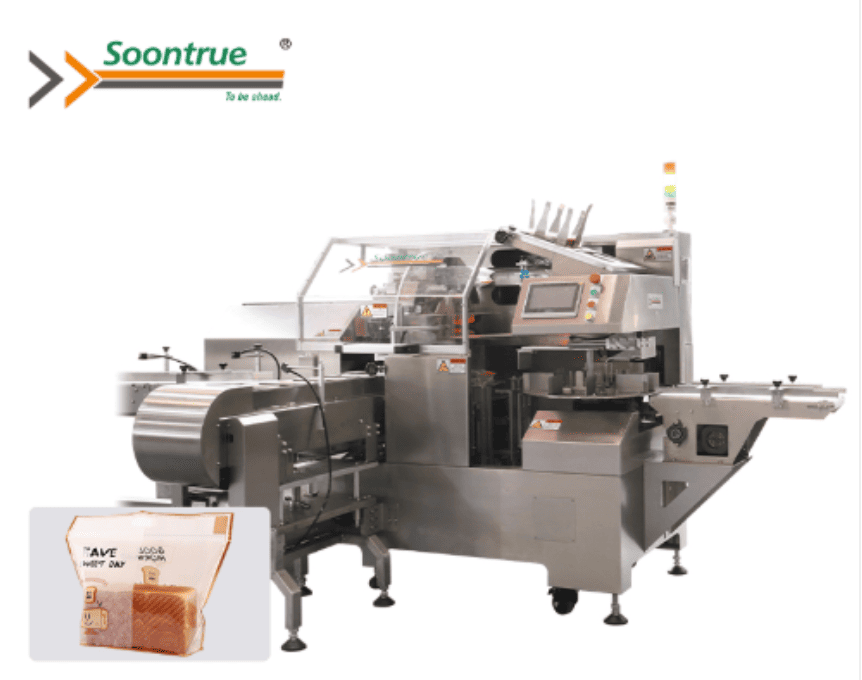
Pouch Packaging Machines
Pouch packing machines fill and seal pre-made pouches. They are suitable for sauces, ready meals, liquids, and snack products.
Tray Sealing Machines
Tray sealing machines seal food products inside plastic trays using heat-sealed film. They are commonly used for fresh foods and ready-to-eat meals.
Robotic Food Palletizing Systems
Robotic palletizers automatically stack packaged products onto pallets, improving warehouse efficiency and reducing manual handling.
Benefits of Food Packaging Automation
Automation provides several advantages for food manufacturers looking to scale their production operations.
Increased Production Efficiency
Automated packaging machines operate at much higher speeds than manual processes, allowing factories to produce thousands of packages per hour.
Reduced Labor Costs
Automation reduces the need for manual labor in repetitive packaging tasks, helping companies lower long-term operational costs.
Consistent Packaging Quality
Machines maintain precise control over filling weight, sealing temperature, and packaging alignment, ensuring consistent product presentation.
Improved Food Safety and Hygiene
Automated packaging reduces human contact with food products, helping manufacturers maintain high hygiene standards and comply with food safety regulations.
Better Production Monitoring
Modern automated systems often include sensors and software that monitor machine performance, allowing manufacturers to track productivity and identify potential issues early.
Challenges in Implementing Food Packaging Robotics
Despite its advantages, implementing automation can present certain challenges.
High Initial Investment
Automated packaging equipment requires significant upfront investment, particularly for fully integrated production lines.
Integration with Existing Production Lines
Existing facilities may need layout changes or equipment upgrades to accommodate automated packaging machines.
Technical Skills and Maintenance
Operating and maintaining automated equipment requires trained technicians and regular maintenance.
Product-Specific Customization
Different food products require specialized packaging solutions, which may increase system complexity.
Food Packaging Automation vs Manual Packaging
Understanding the differences between automated and manual packaging helps manufacturers make informed investment decisions.
| Factor | Automated Packaging | Manual Packaging |
|---|---|---|
| Production Speed | High and consistent | Slower and variable |
| Labor Requirements | Lower | Higher |
| Packaging Consistency | Highly consistent | Depends on workers |
| Food Safety | Improved hygiene | Higher contamination risk |
| Long-Term Cost | Lower over time | Higher due to labor |
As production demand grows, automation often becomes essential for maintaining efficiency and competitiveness.
Key Machines Used in Automated Food Packaging Lines
A modern packaging line usually combines several machines working together.
Multihead Weighers
Multihead weighers measure product weight with high accuracy and are commonly used for snack foods, nuts, candies, and frozen products.
Checkweighers
Checkweighers verify the weight of packaged products to ensure they meet regulatory standards.
Metal Detectors
Metal detection systems identify metal contamination in food products before packaging.
Vision Inspection Systems
Vision systems use cameras and software to detect packaging defects, labeling errors, or damaged products.
Cartoning Machines
Cartoning machines automatically place packaged products into cartons for retail distribution.
Choosing the Right Food Packaging Machine Manufacturer
Selecting the right equipment supplier is an important step when investing in automation.
Equipment Reliability
High-quality machines reduce downtime and improve long-term productivity.
Technical Support
Reliable suppliers offer training, spare parts availability, and after-sales service.
Customization Capabilities
Manufacturers should be able to customize machines according to product type and packaging format.
Production Scalability
Packaging equipment should be capable of supporting future production growth.
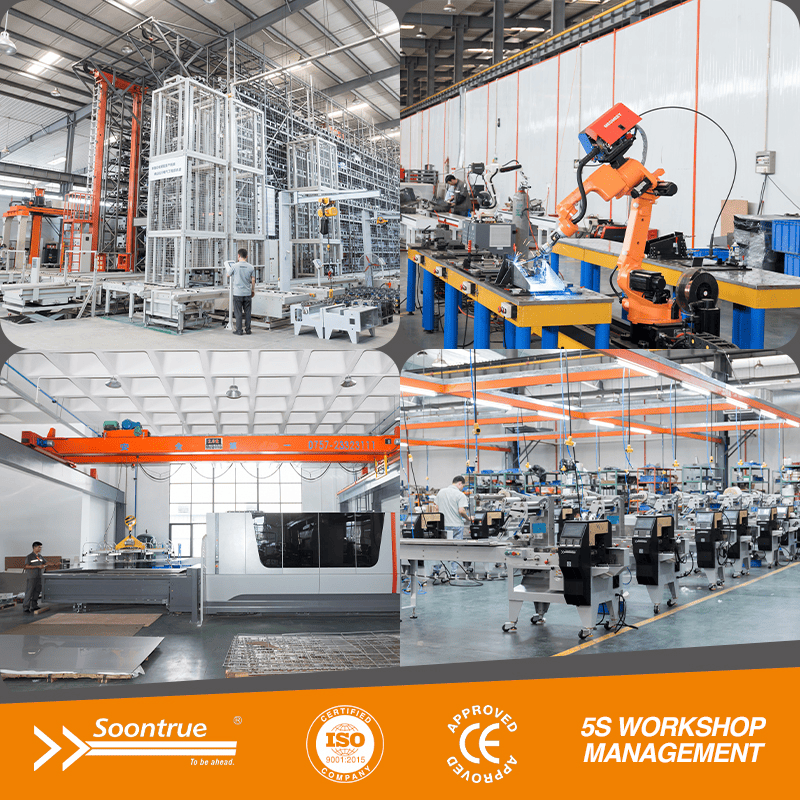
Automation Solutions for Different Business Sizes
Automation systems can be tailored for businesses of different scales.
Small Business Food Packaging Automation Solutions
Small food companies may start with compact or semi-automatic machines such as:
- Tabletop filling machines
- Compact VFFS machines
- Small pouch packaging machines
These solutions allow businesses to automate gradually while controlling costs.
High-Speed Food Packaging Lines for Large Manufacturers
Large food factories typically operate fully automated packaging lines including:
- Automated feeding systems
- Multihead weighers
- High-speed packaging machines
- Inspection systems
- Robotic palletizers
These systems can produce tens of thousands of packages per hour.
Food Packaging Automation Trends
The food packaging industry continues to evolve as new technologies emerge.
Smart Packaging Lines and Industry 4.0
Many modern machines integrate sensors and data monitoring systems that enable real-time production tracking.
Robotics Integration
Robotic systems are increasingly used for sorting, case packing, and palletizing operations.
Sustainable Packaging Technologies
Manufacturers are adopting packaging machines compatible with recyclable and biodegradable materials.
Advanced Quality Inspection
New inspection technologies such as AI vision systems and X-ray scanners are improving product safety and quality control.
Impact of Automation on Food Safety Standards
Food packaging automation plays an important role in maintaining food safety compliance. Automated systems reduce human contact with food, ensure consistent sealing quality, and enable real-time inspection of packaging integrity.
These capabilities help manufacturers meet regulatory standards and maintain consumer trust.
FAQ
Q: What is an automated food packaging system?
A: Automated food packaging systems are production lines utilizing machines to complete all aspects of packaging from filling, sealing, and labeling to palletizing on very little human interaction.
Q: What type of machinery is there for food packaging automation?
A: Common machines include VFFS machines, flow wrapping machines, pouch packaging machines, multihead weighers, checkweighers, and robotic palletizing systems.
Q: Is food package automation considered expensive?
A: Automation requires higher upfront investment, but it can reduce labor costs and increase productivity, making it cost-effective over time.
Q: Can small food businesses use automated packaging machines?
A: Yes. Many manufacturers offer compact or semi-automatic packaging machines designed specifically for small and medium-sized businesses.
Q: How does automation improve food safety?
A: Automation reduces human contact with products, ensures consistent sealing and packaging quality, and allows automated inspection systems to detect contamination or packaging defects.