
Why Packaging Is Essential in Modern Manufacturing
Packaging Knowledge Hub

If you're seeking packaging automation solutions, please contact us, and we'll be delighted to offer you the most tailored solution.
This article is part of the Soontrue Packaging Knowledge Series.
For the full in-depth encyclopedia-level guide, see: Packaging Machine Definition & History.
In modern factories, packaging is no longer an afterthought or a simple "last step" before shipping. It has become a strategic function that connects production, quality, branding, logistics, regulations, and even sustainability goals. The importance of packaging in modern manufacturing can be seen everywhere: from the way products are protected during transport, to how they appear on the shelf, to how efficiently they move through automated warehouses and global supply chains.
For beginners, it is tempting to think of packaging only as bags, boxes, or films. But for manufacturers, packaging systems—including flow wrappers, VFFS machines, premade pouch machines, cartoners, case packers, and palletizing robots—are deeply integrated into the heart of production. They influence throughput, labor cost, product quality, and compliance. This article explains why packaging is essential in modern manufacturing, and how it supports product safety, supply chain performance, and long-term brand value.
1. Protecting Product Quality, Shelf Life, and Consumer Safety
The most fundamental role of packaging is to protect the product. Without the right packaging design and reliable packaging machinery, even a perfectly made product can lose its quality before it reaches the consumer. This is especially true in food, pharmaceutical, cosmetics, and chemical industries, where contamination, oxidation, moisture, and mechanical damage can have serious consequences.
Primary packaging—such as pillow bags, snack pouches, sachets, bottles, or blisters—provides a barrier against external factors. Materials like high-barrier films, multi-layer laminates, and vacuum or MAP (modified atmosphere packaging) solutions are carefully chosen to control oxygen, moisture, and light exposure. Form-fill-seal (FFS) machines, flow wrappers, and bottle filling lines must maintain accurate sealing temperature, pressure, and dwell time to ensure tight, leak-free seals.
In food manufacturing, poor packaging can lead to microbial growth, off-flavors, and shortened shelf life. In pharmaceuticals, inadequate packaging can affect dosage stability and patient safety. That is why modern packaging machines are designed with hygienic structures, stainless steel contact surfaces, washdown capability, and integrated inspection systems such as metal detectors, checkweighers, and vision inspection. Packaging is not simply a container; it is a key part of the food safety and quality assurance system.
Beyond microbiological risks, packaging protects products from physical damage during handling and transport. Secondary and tertiary packaging—cartons, trays, cases, and pallets—are designed to absorb shock, distribute weight, and keep items stable in trucks, containers, and warehouses. In this way, the importance of packaging extends from the micro-level (seal integrity and barrier performance) to the macro-level (shipment stability and damage reduction).
2. Enabling Efficient Supply Chains, Retail Operations, and E-Commerce
Another reason packaging is essential in modern manufacturing is its role in logistics and retail operations. Global supply chains depend on standardized, well-designed packaging that can move efficiently through distribution centers, automated warehouses, and retail environments.
At the secondary packaging level, multi-packs, trays, and shelf-ready cartons help retailers handle products more quickly. Automated cartoners, shrink bundlers, and robotic case packers can group primary packs into configurations that are optimized for shelving, promotion, or e-commerce fulfillment. A well-designed secondary package saves labor both in the factory and in the store, while also protecting the product from crushing or misalignment.
At the tertiary packaging level, master cases, pallet loads, and stretch-wrapped units are designed for forklifts, pallet jacks, and conveyor-based warehouses. Palletizing robots arrange cases into stable patterns that maximize cubic efficiency and minimize damage. Barcodes, QR codes, and RFID labels on cases and pallets support traceability, inventory management, and automated scanning in distribution hubs.
For e-commerce, packaging has become even more critical. Products must be able to withstand multiple handling steps and parcel shipments, often without the protection of a full pallet or uniform case stack. Manufacturers increasingly use packaging design to balance protection, size optimization, and unboxing experience. All of this is enabled by flexible packaging equipment that can handle different pack counts, formats, and labeling requirements without sacrificing speed.
In short, modern supply chains cannot function smoothly without standardized, automation-ready packaging. Packaging directly influences transport cost per unit, warehouse efficiency, and retailer satisfaction—making it a strategic element in manufacturing planning.
3. Driving Automation, Efficiency, and Cost Control in the Factory
From the factory's point of view, packaging machines are also powerful tools for automation and cost control. As labor costs rise and skilled operators become harder to find, manufacturers rely on automated packaging lines to keep production stable and competitive.
Modern horizontal flow wrappers, VFFS machines, premade pouch packing machines, cartoners, and case packing systems are equipped with servo motors, PLC control, and touchscreen HMIs. They can maintain consistent speed and quality for long production runs, reducing operator intervention and minimizing human error. Automated feeding systems, multihead weighers, robotic pick-and-place units, and infeed distribution systems further streamline the flow of products into the packaging line.
The importance of packaging automation becomes especially visible when analyzing overall equipment effectiveness (OEE). Downtime, changeover time, and product rework are all heavily influenced by the performance of the packaging section. A well-designed packaging line can:
- synchronize automatically with upstream processes
- handle multiple product sizes with recipe-based changeover
- reduce material waste through precise film control
- cut labor requirements by replacing manual packing and stacking
This does not mean that humans disappear from the process. Instead, operators focus more on monitoring, quality control, and line optimization rather than repetitive manual packing. Packaging automation allows manufacturers to respond faster to demand changes, run longer shifts, and improve consistency—all of which are essential for modern, globally competitive factories.
4. Supporting Branding, Consumer Experience, and Sustainability Goals
Beyond protection and logistics, packaging plays a central role in branding and consumer experience. The primary package—whether a snack bag, stand-up pouch, box, or blister—often forms the first and strongest impression of the product. Visual design, material choice, opening features, and resealability all influence how consumers perceive quality and value.
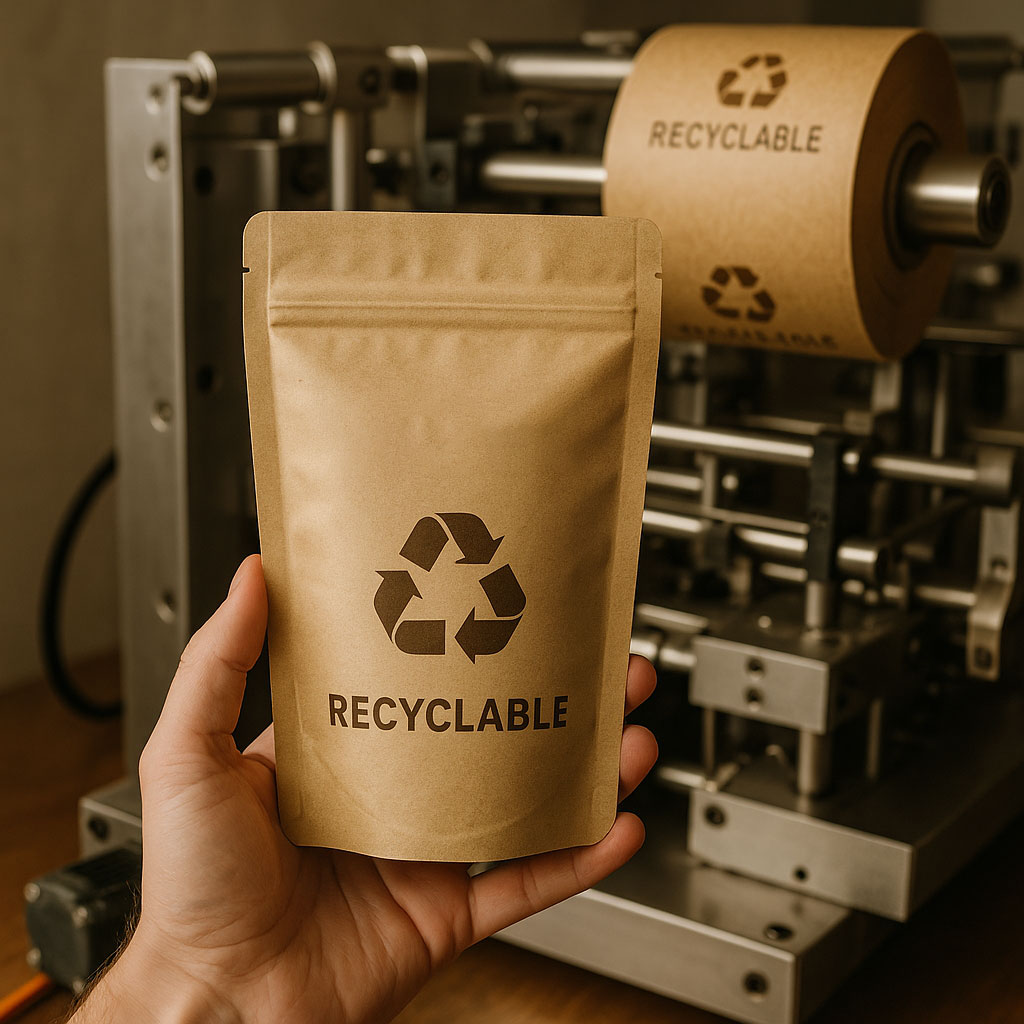
Modern packaging equipment must therefore support not just speed, but also flexibility for different packaging formats. HFFS machines, premade pouch machines, and advanced cartoners can handle stand-up pouches, zipper pouches, windowed cartons, and premium print films that help brands stand out on the shelf. This ability to change designs and formats without redesigning the entire line is a major competitive advantage.
At the same time, manufacturers face growing pressure to improve sustainability. This includes reducing packaging material usage, shifting to recyclable or mono-material films, and optimizing package dimensions to lower transport emissions. Efficient form-fill-seal processes and precisely controlled cutting and sealing can reduce film waste. Right-sized cartons and cases lower cardboard consumption. Replacing heavy, rigid packaging with lighter, flexible formats can reduce the overall environmental footprint.
In this context, the importance of packaging extends into corporate ESG goals. Manufacturers increasingly see packaging as a lever for sustainability performance, not just a necessary cost. Choosing energy-efficient machines, optimizing material usage, and designing for recyclability all rely on close collaboration between packaging engineers, equipment suppliers, and brand teams.
Conclusion
Packaging is essential in modern manufacturing because it sits at the intersection of product safety, logistics, automation, brand value, and sustainability. Without the right combination of packaging design and packaging machinery, factories cannot protect their products, support complex supply chains, control costs, or meet evolving consumer and regulatory expectations.
For manufacturers, understanding the role of packaging in modern manufacturing means thinking beyond bags and boxes. It means recognizing packaging as an integrated system—connecting primary, secondary, and tertiary layers; linking machines from flow wrappers and VFFS systems to cartoners, case packers, and palletizers; and balancing efficiency with quality and environmental impact. In a truly modern factory, packaging is not the end of the process. It is a core capability that shapes how products move, how they are perceived, and how successfully they reach the market.
FAQ
Q1: Why is packaging considered a strategic function, not just a cost?
Because packaging affects product safety, logistics efficiency, brand perception, and compliance. It can reduce waste, prevent returns, and support supply chain performance, making it a strategic investment rather than a simple cost.
Q2: How does packaging influence production efficiency?
Automated packaging lines with flow wrappers, VFFS machines, and case packers can run at high speeds with fewer operators, reducing downtime and human error. This improves overall equipment effectiveness and stabilizes throughput.
Q3: What is the connection between packaging and sustainability?
Packaging design and machinery determine how much material is used, what type of materials are chosen, and how easily packs can be recycled. Efficient form-fill-seal systems and optimized carton sizes can significantly reduce environmental impact.
Q4: Why do retailers care so much about packaging format?
Retailers value shelf-ready packaging, correct pack sizes, and easy handling. Well-designed secondary and tertiary packaging reduces labor, simplifies display, and minimizes damage—all of which affect their operating cost and satisfaction with suppliers.
Q5: Can packaging equipment support both branding and cost reduction at the same time?
Yes. Modern flexible packaging machines can produce premium-looking formats—such as stand-up pouches or windowed cartons—while still using efficient, roll-fed materials and automated handling. This allows brands to upgrade appearance without losing efficiency.
Related Knowledge Articles
- What Is a Packaging Machine? A Beginner's Guide
- Evolution Timeline of Packaging Machinery
- Primary, Secondary & Tertiary Packaging Explained
- What Is Form-Fill-Seal (FFS)? Basics for Beginners
- Hygiene Standards in Food & Pharmaceutical Packaging
- (Coming Soon) How Automated Packaging Lines Improve ROI