
Hygiene Standards in Food & Pharmaceutical Packaging
Packaging Knowledge Hub

If you're seeking packaging automation solutions, please contact us, and we'll be delighted to offer you the most tailored solution.
For the full in-depth encyclopedia-level guide, see: Packaging Machine Definition & History.
In food and pharmaceutical production, packaging is not only about speed or efficiency—it is also a critical part of the hygiene control system. Poorly designed or improperly maintained packaging machinery can introduce contamination, compromise shelf life, and even trigger product recalls. That is why global manufacturers must follow strict hygiene standards and equipment design principles when choosing and operating food packaging machines and pharmaceutical packaging equipment.
For beginners, the number of acronyms—GMP, HACCP, FDA, EU regulations, CE, and more—can feel overwhelming. But at the core, they all point to a few key principles: use hygienic design, control contact surfaces, avoid contamination, document procedures, and verify cleanliness. This article gives a practical overview of hygiene standards in food and pharma packaging, focusing on what they mean for packaging machines and automatic packaging lines.
1. Why Hygiene Matters in Food & Pharmaceutical Packaging
Both food and pharmaceutical products are highly sensitive to contamination. Microbial growth, foreign particles, chemical residues, and cross-contamination can all have serious consequences. In the food industry, contamination can lead to foodborne illness, off-flavors, and reduced shelf life. In the pharmaceutical sector, it can directly affect patient safety, product efficacy, and regulatory compliance.
Packaging is often the last step before products enter the supply chain, which means packaging machines are part of the "final safeguard". They must ensure that products are packed in clean, controlled conditions, using materials and surfaces that do not add risk. Any horizontal flow wrapper, VFFS machine, premade pouch machine, cartoner, or case packer used in food or pharma applications must be designed with hygiene in mind.
From a business perspective, good hygiene is not only about compliance—it protects the brand, reduces waste, prevents recalls, and builds consumer trust. A well-designed hygienic packaging line can be cleaned faster, validated more easily, and operated more safely, leading to higher overall equipment effectiveness (OEE).
2. Key Hygiene Standards: GMP, HACCP, and Regulatory Requirements
Several international frameworks govern hygiene in food and pharmaceutical packaging. While details differ by region and product category, the underlying logic is similar.
Good Manufacturing Practice (GMP)
GMP is a foundational concept in both food and pharma. It requires manufacturers to control their processes, maintain documentation, and ensure that equipment is designed, maintained, and operated in a way that avoids contamination. For packaging machinery, this means:
- smooth, cleanable surfaces on product-contact areas
- use of food-grade materials in contact parts
- proper access for cleaning and inspection
- controlled use of lubricants and chemicals
- documented cleaning and maintenance procedures
HACCP for Food Packaging
In the food industry, Hazard Analysis and Critical Control Points (HACCP) is used to identify and control hazards. Packaging steps are often defined as critical control points, especially for products that require modified atmosphere packaging (MAP), vacuum packing, or high-barrier film.
For packaging machines, HACCP focuses on:
- preventing physical contamination (e.g., broken parts, loose screws, film fragments)
- avoiding microbial contamination through residual product buildup
- controlling allergen cross-contact between different product runs
- ensuring seal integrity so that packs remain safe throughout shelf life
Pharmaceutical Regulatory Standards
In pharmaceuticals, hygiene standards are even stricter. Regulations from bodies like the FDA in the United States and EMA in Europe require validated equipment, controlled environments, and documented cleaning. Blister packaging machines, sachet machines, and filling lines must be designed to avoid trapped product, allow full cleaning, and support cleanroom-compatible designs.
Regional and Certification Standards
Other frameworks like ISO 22000 for food safety management and BRCGS (Brand Reputation through Compliance) for food packaging also influence how packaging machinery is specified and audited. For equipment used in Europe, CE marking is required, confirming that the machine meets relevant safety and hygiene directives.
3. Hygienic Design Principles for Packaging Machinery
To comply with hygiene standards, packaging machines must follow hygienic design principles that make cleaning and inspection easier while minimizing contamination risks.
Material and Surface Selection
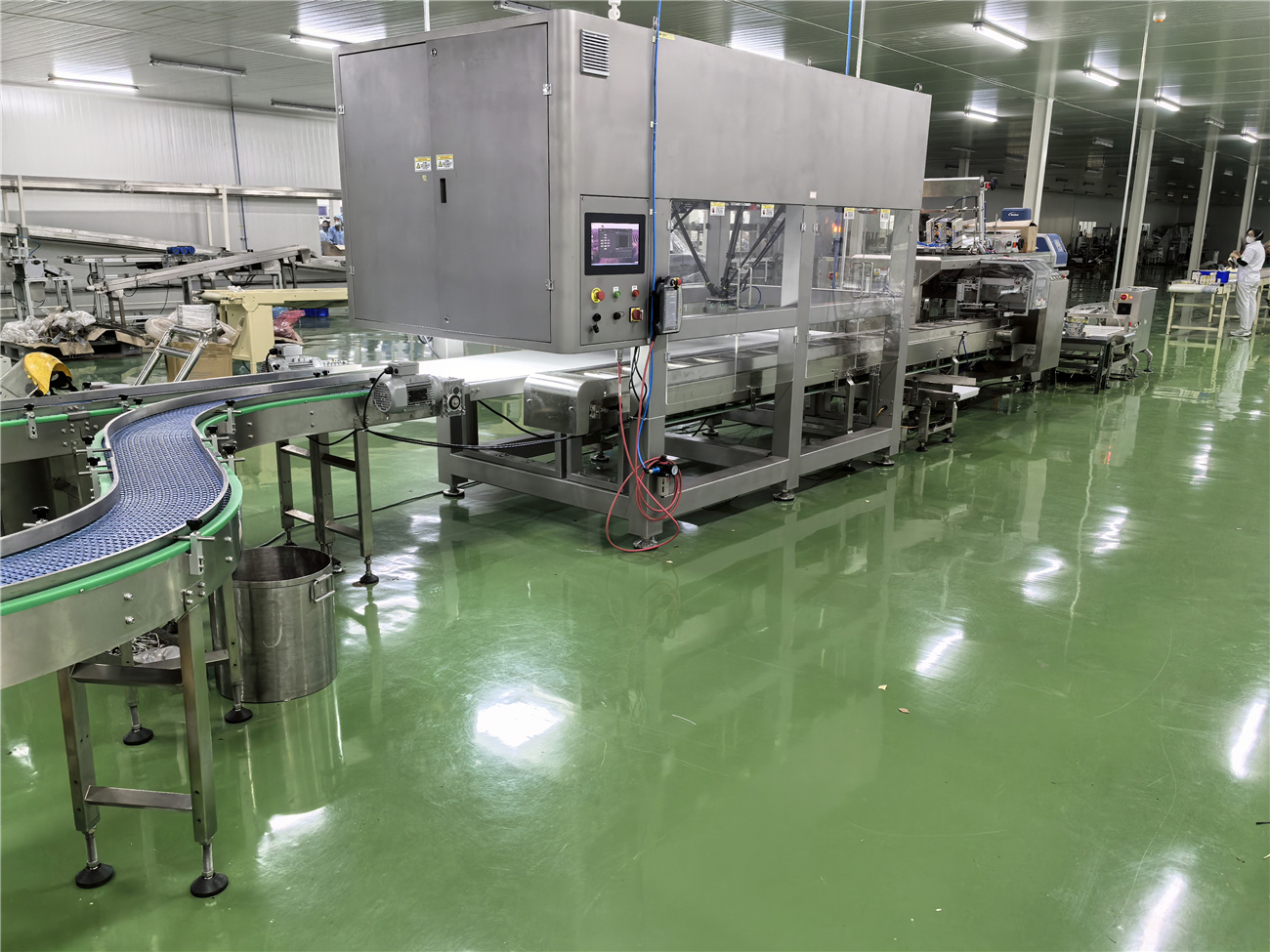
Product-contact surfaces are typically made from stainless steel, often AISI 304 or 316, and food-grade plastics. Surfaces should be smooth, with no sharp corners, cracks, or rough welds where product can accumulate. Corrosion-resistant materials are critical, especially where cleaning chemicals or water are used frequently.
Cleanability and Accessibility
Hygienic design requires that all product-contact areas and potential accumulation zones can be easily accessed for cleaning and inspection. This means:
- open frame designs instead of fully enclosed, hard-to-reach structures
- tool-less removal of belts, guards, and forming sets
- clear access to forming tubes, sealing jaws, and product conveyors
For many food and pharma applications, machines must support washdown cleaning, using high-pressure water and sanitizers. IP-rated electrical enclosures and sealed components are used to handle these environments.
Avoiding Product Traps and Dead Zones
Any area where powders, crumbs, liquids, or small fragments can accumulate becomes a hygiene risk. Hygienic packaging machines minimize horizontal ledges, bolts in product zones, and dead spaces under belts or chutes. Components are often angled or shaped to encourage product and water to flow off.
Controlled Airflow and Enclosures
Some high-hygiene applications use enclosed packaging areas, laminar airflow, or HEPA filtration above the product zone. This is especially important for pharmaceutical sachets, medical devices, and aseptic packaging.
In these systems, packaging machines are designed to coexist with cleanroom standards, using low-particle materials, reduced lubrication, and minimized external moving parts in the clean area.
4. Practical Hygiene Best Practices for Packaging Lines
Beyond machine design, manufacturers must implement operational best practices to maintain hygiene in real-world conditions.
- Standardized Cleaning Procedures (CIP/SIP where applicable)
Define clear cleaning intervals, methods, and chemicals suitable for each part of the packaging line.
- Changeover Controls
When switching between products—especially allergens—operators must follow strict changeover cleaning and verification steps.
- Operator Training
Personnel must understand hygienic risks, correct cleaning techniques, and how to spot early signs of contamination or wear.
- Preventive Maintenance
Worn seals, loose fasteners, or damaged belts can create contamination risks. Preventive maintenance is a critical part of hygiene control.
- Documentation & Traceability
Cleaning logs, inspection reports, and maintenance records help demonstrate compliance with GMP, HACCP, and regulatory standards.
When hygienic design and best practices are combined, food and pharma manufacturers can run automated packaging lines with high confidence in product safety and regulatory compliance.
FAQ
Q1: Why are hygiene standards so strict in food and pharmaceutical packaging?
Because food and pharmaceutical products directly affect consumer and patient health. Contamination at the packaging stage can lead to serious safety risks and product recalls.
Q2: What is the difference between GMP and HACCP in packaging?
GMP focuses on proper facility, equipment, and process control, while HACCP systematically analyzes hazards and defines critical control points, often including packaging steps.
Q3: Do all food packaging machines need stainless steel construction?
In hygiene-critical areas, stainless steel product-contact parts and food-grade materials are strongly recommended to ensure cleanability and corrosion resistance.
Q4: How does hygienic design affect packaging machine selection?
Manufacturers must choose hygienically designed packaging machines that are easy to clean, have smooth surfaces, and allow access to all product-contact zones.
Q5: Can one packaging line meet both food and pharma standards?
It is possible but requires very strict design, material selection, and environmental control. In most cases, pharmaceutical lines use higher-level cleanroom standards than standard food lines.
Related Knowledge Articles
- What Is a Packaging Machine? A Beginner's Guide
- Evolution Timeline of Packaging Machinery
- Primary, Secondary & Tertiary Packaging Explained
- What Is Form-Fill-Seal (FFS)? Basics for Beginners
- Why Packaging Is Essential in Modern Manufacturing
- (Coming Soon) Hygienic Design Checklist for Packaging Machines