
How Sustainable Packaging Is Reshaping Flow Wrapping Technology
HFFS Machine Blog

If you're seeking packaging automation solutions, please contact us, and we'll be delighted to offer you the most tailored solution.
Sustainable packaging is reshaping flexible packaging as manufacturers adopt recyclable films, simplified material structures, and more efficient packaging formats. These changes also affect flow wrapping performance because film thickness, stiffness, friction, and thermal properties influence feeding, forming, sealing, and cutting.
For packaging manufacturers, selecting a sustainable film is therefore closely connected with machine compatibility and production efficiency. A suitable flow wrapper needs to maintain stable film handling, consistent sealing, reliable output, and efficient material use. This article examines how sustainable packaging is influencing flow wrapping technology and how manufacturers can evaluate equipment for changing film requirements.
How Sustainable Packaging Is Changing Flow Wrapping
The transition toward sustainable packaging is changing the materials used in flexible packaging and, consequently, the technical requirements of packaging equipment. Traditional flow wrap films often combine several material layers to achieve mechanical strength, barrier protection, printability, and reliable sealing. Newer packaging strategies increasingly focus on recyclable structures, material reduction, and simplified polymer compositions.
From Multilayer Films to More Recyclable Structures
Multilayer films remain widely used because different layers can provide specific functional properties. Sustainable packaging development is encouraging manufacturers to investigate structures that are easier to recover within established recycling systems. Mono-material packaging is one important direction, particularly for applications using polyethylene or polypropylene based structures.
The change in film structure can affect processing characteristics. A new film may have different stiffness, coefficient of friction, thickness, or heat response compared with the material previously used on a packaging line. These properties influence how the film travels through the machine and how reliably it forms around the product.
For equipment buyers, recyclable packaging therefore needs to be assessed at the level of the complete film specification. Material structure, thickness, sealing characteristics, and intended package format all contribute to machine compatibility.
Why Film Properties Matter
Flow wrapping relies on controlled film movement throughout several stages of the packaging cycle. The film is unwound, guided, formed around the product, longitudinally sealed, end sealed, and cut into individual packs. Variations in material properties can influence each stage.
Film tension and friction affect tracking and positioning. Stiffness influences forming behavior. Thermal characteristics affect sealing conditions, while thickness can influence both forming and heat transfer. These factors become increasingly important as manufacturers pursue higher speeds and lower material consumption.
For this reason, sustainable flow wrapping should be approached through material and equipment validation together. The relevant question is not simply whether a film is recyclable. It is whether the selected film can achieve the required package quality, sealing performance, throughput, and material efficiency on the intended flow wrapping system.
What Sustainable Films Mean for Flow Wrapping Performance
The introduction of recyclable and simplified film structures changes the operating conditions of a flow wrapping line. Film properties influence how the material moves through the machine, how it conforms to the product, and how heat and pressure are transferred during sealing. For manufacturers, these factors directly affect package consistency, production speed, and material utilization.
Film Feeding and Tracking
Stable film feeding is fundamental to accurate flow wrapping. The film needs to move through the machine at a controlled tension and remain correctly aligned with the product and sealing components. Differences in stiffness, friction, thickness, or surface properties can affect this movement.
Servo-controlled film systems can provide more precise control over film feeding and registration. Soontrue's SZ601, for example, uses servo-driven film control to support accurate film positioning and consistent packaging performance.
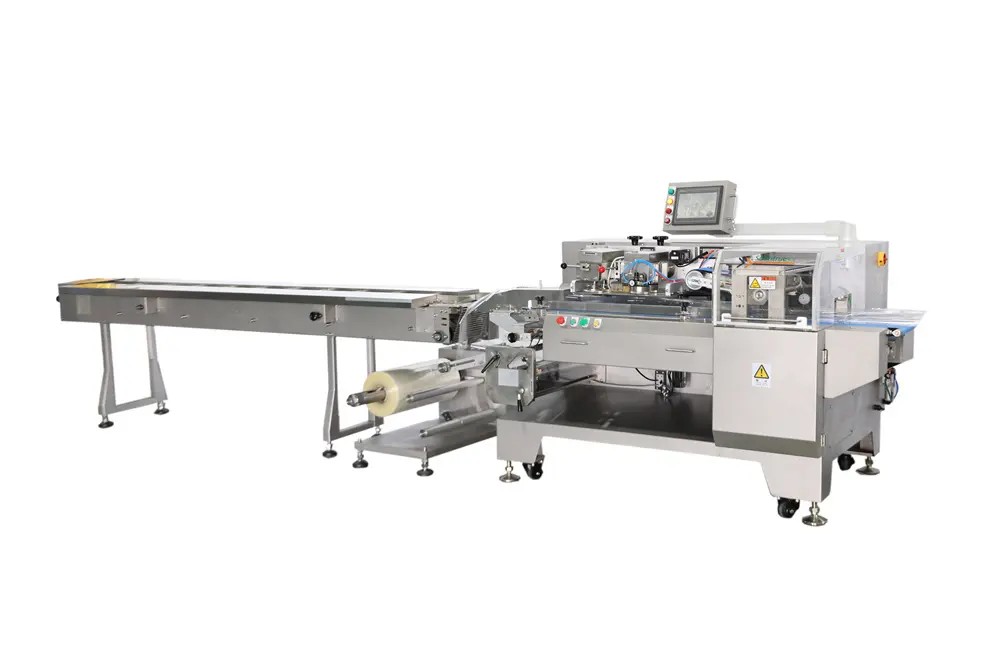
The SZ602 also incorporates servo control and optional photoelectric tracking for accurate positioning.
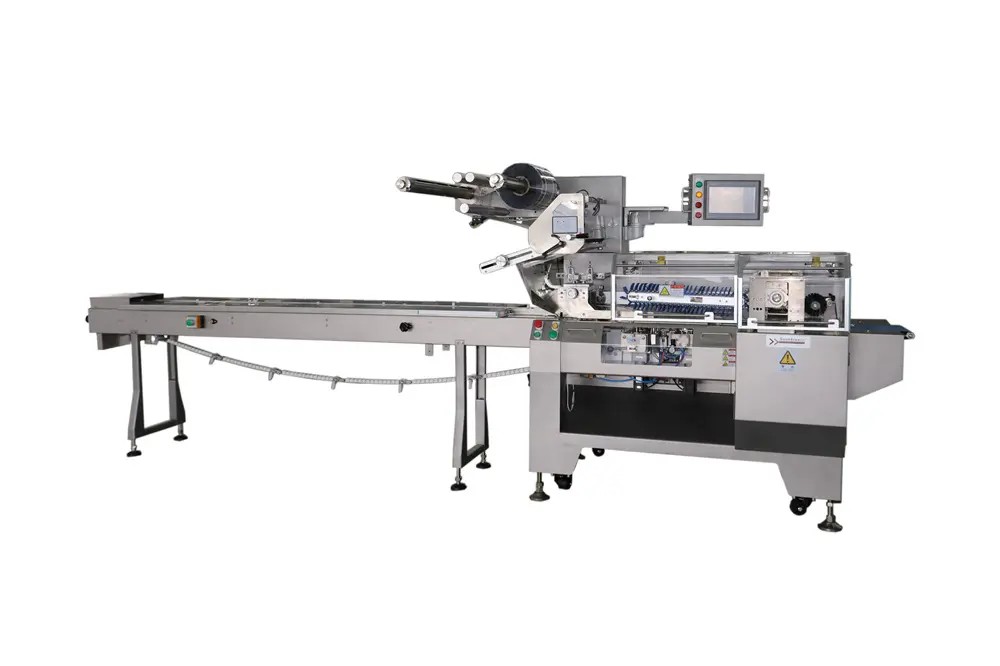
For sustainable packaging applications, this level of control helps manufacturers establish repeatable film movement when introducing a new material specification. Actual performance still needs to be validated using the target film.
Sealing Performance
Sealing is one of the most material-sensitive stages of flow wrapping. Film structures can have different seal initiation temperatures, thermal response, and sealing ranges. The machine therefore needs to provide sufficient control over the conditions used to create the longitudinal and end seals.
Temperature, pressure, sealing time, and machine speed work together during this process. A suitable setting should produce a consistent seal without damaging the packaging material or affecting package appearance. For a new recyclable film, manufacturers should establish these parameters through controlled machine trials.
Soontrue offers flow wrapping configurations using rotary and box-motion sealing systems across different models. The appropriate configuration depends on the product, package dimensions, film characteristics, and required production conditions.
Production Speed and Material Efficiency
Machine speed influences film movement and the time available for sealing. As speed increases, stable tracking and accurate sealing become increasingly important. Production efficiency should therefore be assessed through a combination of output, seal integrity, reject rate, and film consumption.
Soontrue's SZ590 is designed for high-speed flow wrapping and has published operating speeds of up to 350 bags per minute, with configurations reaching higher speeds for suitable applications. Its documented film range includes structures such as OPP/CPP, PT/PE, KOP/CPP, VMBOPP, VMCPP, and VMPET.
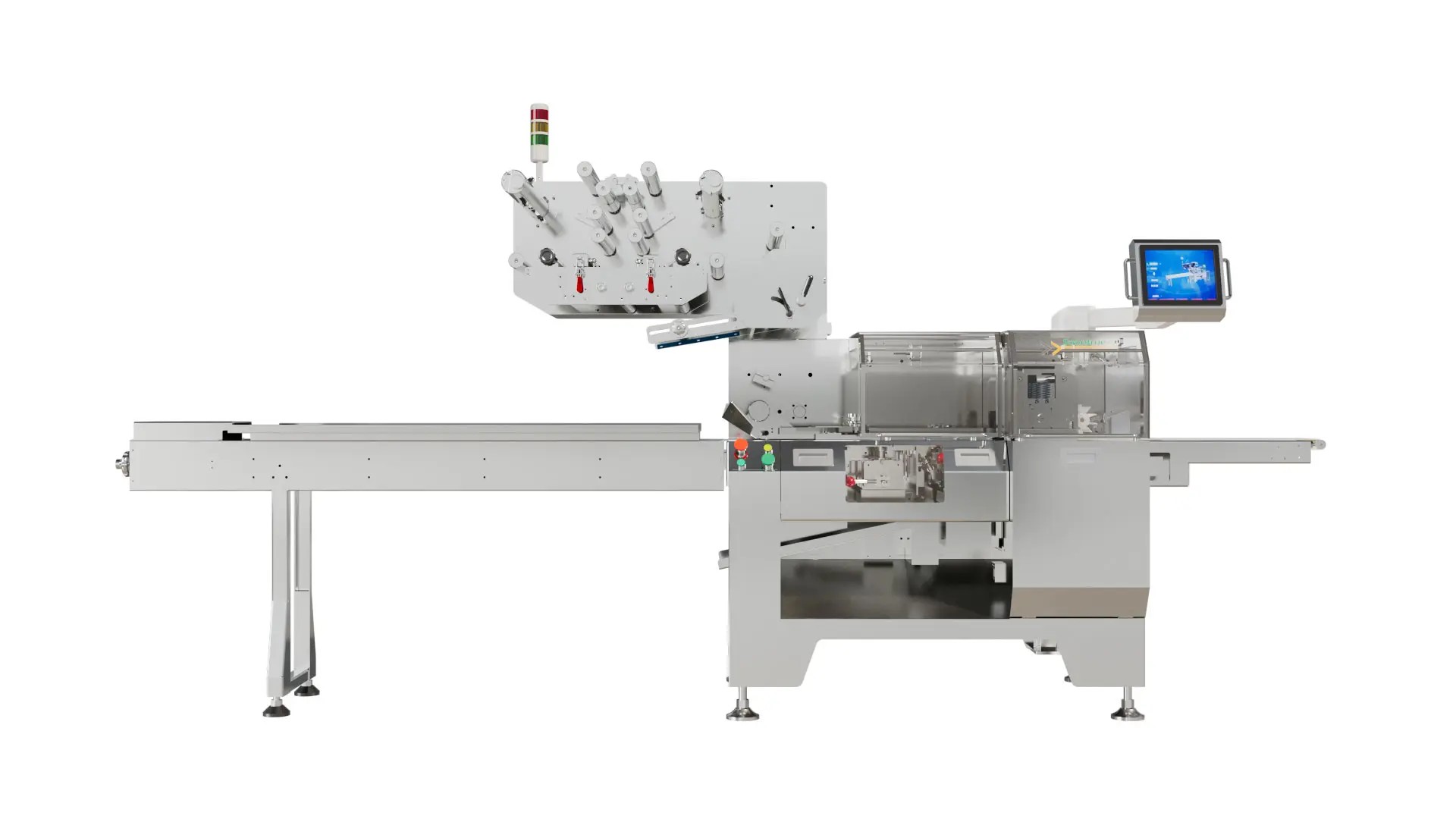
For manufacturers evaluating sustainable packaging, the key consideration is the actual performance of the selected film on the intended machine. A successful material transition should support both the packaging objective and the production requirements of the factory.
How to Evaluate a Flow Wrapper for Recyclable Packaging
Sustainable packaging materials can vary significantly in thickness, stiffness, surface characteristics, sealing behavior, and mechanical strength. These properties affect film handling and package formation, so equipment selection should be based on the complete material specification and the intended production conditions.
Verify the Exact Film Structure
Film compatibility should be assessed using the specific film intended for production. Terms such as recyclable film or mono-material packaging describe broad material categories and do not provide enough information to determine machine performance. Packaging engineers should review the film structure, thickness, width, sealing layer, surface properties, and thermal characteristics with the equipment supplier.
Validate Speed, Sealing and Waste Together
Machine performance should be evaluated as a combination of throughput, package quality, sealing integrity, and material consumption. During testing, manufacturers can progressively increase machine speed while monitoring seal quality, film tracking, package appearance, reject rates, and film consumption. This provides a practical operating range for the selected film and product combination. Measuring waste is particularly valuable because stable film control and accurate cutting can influence the amount of packaging material consumed per finished pack.
Consider Future Material Flexibility
Packaging specifications can evolve as recycling systems, customer requirements, and material technologies develop. Equipment selection should therefore consider the range of films and package formats that may be required during the machine's service life. For a new sustainable film, compatibility should still be confirmed through technical validation using the exact material and production format.
How Soontrue Flow Wrappers Support Changing Film Requirements
Soontrue's current product range includes multiple horizontal flow wrapping machines with documented compatibility for a range of packaging materials, including PP, CPP, OPP, PVC, PET, OPP/CPP, PT/PE, KOP/CPP, VMBOPP, VMCPP, and VMPET, depending on the model.
Published Film Compatibility Across Models
Different Soontrue models are configured for different applications and material requirements.
|
Model |
Published Film Materials |
Key Feature |
|
CPP, OPP, PVC, OPP/CPP, PT/PE, KOP/CPP |
Servo film control |
|
|
PP, PVC, PS, EVA, PET, OPP/CPP |
Servo control |
|
|
OPP, PVC, OPP/CPP, PT/PE, KOP/CPP |
Rotary motion |
|
|
OPP/CPP, PT/PE, KOP/CPP, VMBOPP, VMCPP, VMPET |
High-speed rotary sealing |
|
|
CPP, OPP, PVC, OPP/CPP, PT/PE, KOP/CPP |
Servo control |
Servo Film Control and Accurate Packaging
Servo-controlled systems can coordinate film feeding with product movement and sealing operations, supporting accurate registration throughout the packaging cycle. Soontrue's SZ601 incorporates servo-driven film control, while the SZ602 provides servo control with optional photoelectric tracking for accurate positioning. These functions support repeatable film handling and help maintain consistent package dimensions during automated production.
Rotary and Box-Motion Sealing Options
Soontrue provides different sealing approaches across its product range, including rotary and box-motion configurations. Box-motion systems can provide controlled sealing movement for applications where sealing performance and package presentation are important. Rotary sealing is used across several Soontrue models and supports continuous high-speed packaging applications.
The Future of Sustainable Flow Wrapping
Sustainable packaging is driving continued development in recyclable films, simplified material structures, and more efficient packaging processes. For flow wrapping, these changes increase the importance of precise film control, reliable sealing, accurate cutting, and stable production performance.
Manufacturers evaluating new packaging materials should assess the complete film specification alongside machine compatibility, production speed, package quality, and material utilization. Flexible equipment configurations can also provide greater adaptability as packaging requirements evolve.
Soontrue provides a range of flow wrapping solutions with different film compatibility, servo control, sealing configurations, and production capabilities. If you are evaluating recyclable packaging materials or planning to upgrade your flow wrapping line, contact Soontrue to discuss the appropriate packaging solution for your application.
Frequently Asked Questions
What is sustainable flow wrapping?
Sustainable flow wrapping refers to the use of flow wrapping technology with packaging materials and production processes designed to improve recyclability, material efficiency, and resource utilization. The approach can involve recyclable film structures, mono-material packaging, reduced film consumption, and improved machine efficiency.
Can flow wrapping machines process recyclable packaging films?
Many flow wrapping machines can process recyclable films when the material structure is compatible with the machine's forming and sealing system. Compatibility should be confirmed using the exact film specification, including material structure, thickness, sealing characteristics, and package format. Production trials are recommended before commercial implementation.
What film materials does Soontrue support?
Soontrue's published specifications vary by machine model. They include materials such as PP, CPP, OPP, PVC, PET, OPP/CPP, PT/PE, KOP/CPP, VMBOPP, VMCPP, and VMPET. Manufacturers should consult the specifications of the selected model and validate the exact film intended for production.
What should manufacturers test before switching to a sustainable film?
Manufacturers should evaluate film feeding, tracking, forming, sealing, cutting, production speed, package quality, reject rate, and material consumption. Testing the actual film on the intended machine provides the most reliable basis for establishing operating parameters and confirming production suitability.