
Hygienic Flow Wrapper Design for High-Sanitation Food Production
HFFS Machine Blog

If you're seeking packaging automation solutions, please contact us, and we'll be delighted to offer you the most tailored solution.
High-sanitation food production places demanding requirements on packaging equipment. Meat, fresh food, and frozen food can expose machinery to moisture, product residues, frequent cleaning, and changing production conditions. A hygienic flow wrapper should support effective sanitation while maintaining reliable packaging performance and equipment durability. Hygienic design covers the entire machine, including construction materials, surface geometry, component accessibility, drainage, and product transfer. Understanding these design principles helps food manufacturers select sanitary packaging equipment that supports food safety, efficient cleaning, and consistent production.
What Makes a Flow Wrapper Hygienic?
A hygienic flow wrapper is designed to support clean and controlled packaging operations in food production environments. Its hygienic performance comes from the interaction of materials, machine structure, component layout, and product handling. Each element influences how easily the equipment can be cleaned, inspected, and maintained during regular production.
Corrosion-Resistant and Food-Safe Materials
Stainless steel is widely used in hygienic packaging equipment because of its corrosion resistance, durability, and suitability for food production environments. These properties are particularly valuable where machinery is exposed to moisture, cleaning agents, and frequent sanitation procedures.
Material selection should also extend to product-contact components. Conveyors, guides, supports, and transfer components should be appropriate for the products being handled and the cleaning conditions within the facility. Consistent material selection helps maintain equipment integrity and supports long-term packaging reliability.
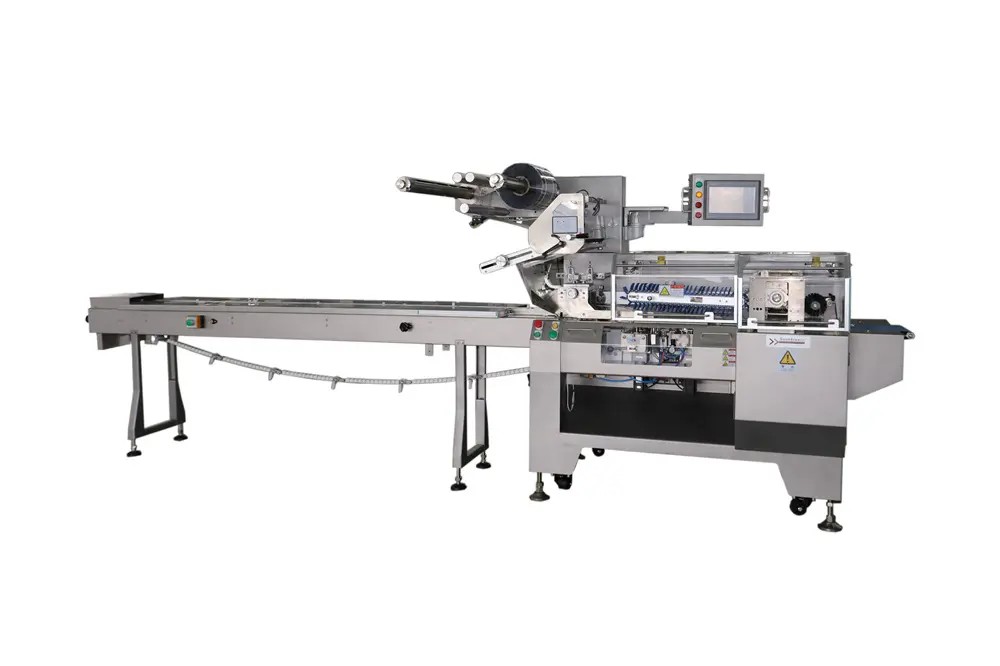
Soontrue SZ602 Flow Wrapping Machine Built with hygienic and corrosion-resistant materials to meet strict food safety and cleanroom requirements.
Smooth, Accessible and Easy-to-Clean Surfaces
Machine geometry has a direct effect on cleaning efficiency. Smooth, non-absorbent surfaces help operators remove food residues more effectively, while simplified structures can reduce areas where moisture or product particles accumulate.
Accessibility is equally important. Conveyors, sealing areas, frames, and other critical components should allow practical inspection and cleaning. Open or accessible structures can reduce the time required for routine sanitation and maintenance, helping production teams maintain a more consistent hygiene standard.
A hygienic design therefore combines durable materials with practical machine architecture. The goal is to make cleaning, inspection, and maintenance an integrated part of daily packaging operations.
Five Key Hygienic Design Features for High-Sanitation Packaging
Hygienic performance depends on how effectively a flow wrapper supports routine sanitation, inspection, and maintenance. For high-sanitation food production, machine design should account for moisture, food residues, cleaning procedures, and repeated equipment use. The following features are especially relevant when evaluating sanitary packaging equipment.
Sanitation-Friendly Machine Construction
A food packaging machine should use materials and structural components that suit the production environment and its cleaning procedures. Stainless steel construction provides corrosion resistance and durability for applications involving moisture and regular sanitation. Motors, sensors, electrical components, and other sensitive parts should also receive appropriate protection according to their position and operating conditions.
For facilities using frequent water-based cleaning, component protection and material compatibility become important considerations. The required level of protection should be determined by the actual sanitation process, including water exposure, cleaning chemicals, temperature, and frequency.
Effective Drainage
Water management is an important part of hygienic machine design. Sloped surfaces and practical machine geometry can help water move away from production areas after cleaning. Frames, supports, and machine bases should minimize areas where moisture can remain.
Effective drainage also supports faster drying and simplifies routine sanitation. This is particularly relevant in meat, fresh food, and other applications where moisture is regularly present around packaging equipment.
Minimal Crevices and Dead Zones
Food residues can accumulate around joints, fasteners, corners, and enclosed spaces that are difficult to inspect. Hygienic construction aims to simplify machine geometry and reduce potential accumulation points.
A cleaner structural layout allows operators and QA teams to inspect critical areas more easily. It also makes routine cleaning more consistent across different production shifts.
Easy Conveyor and Component Access
Conveyors, guides, sealing areas, and product-contact components require regular inspection and cleaning. Accessible machine structures, removable components, and practical access points can simplify these tasks and reduce maintenance time.
Easy access also supports faster identification of residue buildup, wear, or component issues before they affect packaging performance.
Hygienic Product Transfer
Hygiene considerations extend beyond the wrapper itself. Product feeding and transfer systems can influence product exposure, residue accumulation, and overall line cleanliness. Food-suitable contact materials, controlled product movement, and accessible transfer components help maintain consistent hygiene standards from the infeed through the wrapping process.
For high-sanitation applications, evaluating these features as an integrated system provides a more practical basis for selecting a hygienic flow wrapper.
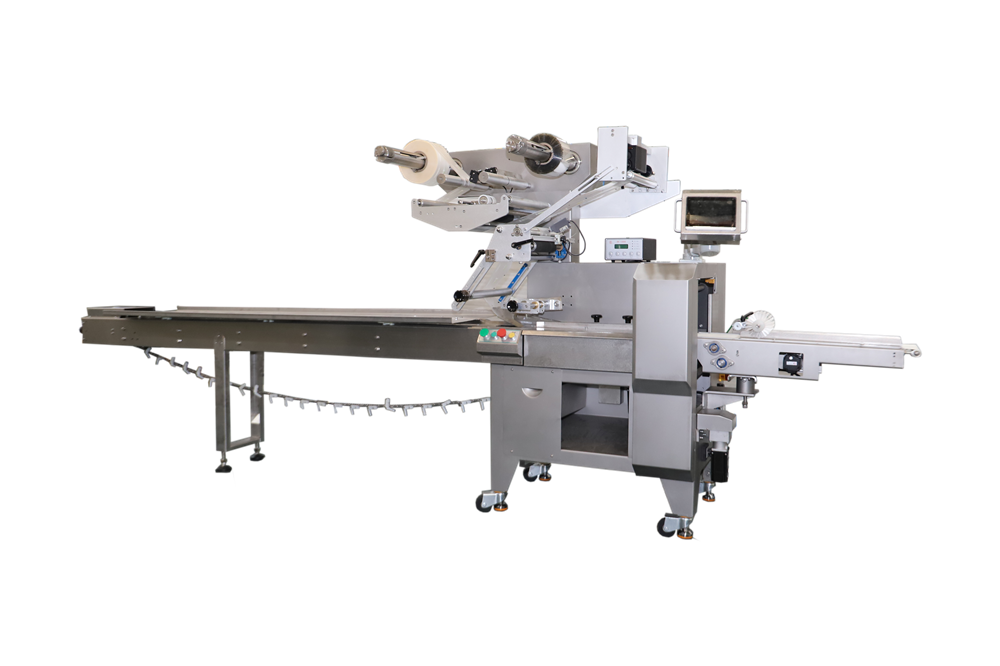
Soontrue SZ580 High-Speed Packaging Machine, a horizontal flow wrapper suited to hygienic food production environments.
Why Hygienic Design Matters for Meat, Fresh and Frozen Foods
Food characteristics directly influence the sanitation requirements of packaging equipment. Meat, fresh food, and frozen food production each introduce different combinations of moisture, residues, temperature changes, and product handling demands. A hygienic flow wrapper should therefore be selected according to the specific production environment and sanitation procedures.
Meat and poultry processing can expose packaging equipment to proteins, fats, and moisture. These residues may accumulate around conveyors, product guides, sealing areas, and transfer points. Corrosion-resistant construction, accessible surfaces, effective drainage, and easy-to-clean components are especially valuable for maintaining consistent sanitation.
Fresh food production often involves high moisture levels and frequent product handling. Open machine structures, smooth surfaces, and accessible product-contact components can make routine cleaning and inspection more practical. These features also support better visibility around areas where residues may accumulate.
Frozen food production introduces additional considerations related to temperature changes and condensation. Equipment used for frozen meat, seafood, dumplings, and prepared foods needs durable construction and reliable component protection to maintain stable performance across production and sanitation cycles.
The right hygienic design should match the actual conditions of the facility. Product properties, cleaning frequency, moisture exposure, operating temperature, and production volume all contribute to equipment selection. Evaluating these factors together helps manufacturers establish a packaging environment that supports food safety, cleaning efficiency, and dependable operation.
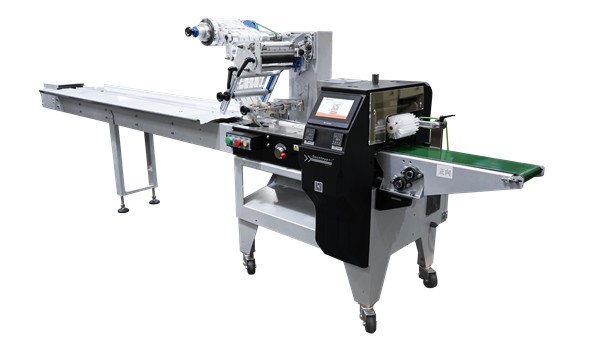
Soontrue SZ100 Flow Wrapping Machine, a compact horizontal pillow-pack solution used across bakery, snack, and high-care applications.
Hygienic Flow Wrapping Machine Checklist for QA Managers
The following practical checklist supports pre-purchase review and ongoing verification.
- Confirm stainless-steel grade for frame and product-contact components.
- Verify continuous or ground-smooth welds in the product zone.
- Check that all horizontal surfaces slope toward drainage points.
- Confirm IP65 or higher rating on electrical enclosures in the washdown area.
- Test tool-free or minimal-tool access to belts, guides, and sealing jaws.
- Inspect product-contact materials for food-grade certification.
- Observe a full cleaning cycle during factory acceptance testing.
- Review spare-parts list for hygienic wear items and delivery lead times.
- Confirm documentation includes recommended cleaning procedures and frequencies.
- Evaluate integration points with upstream and downstream equipment for consistent hygiene standards.
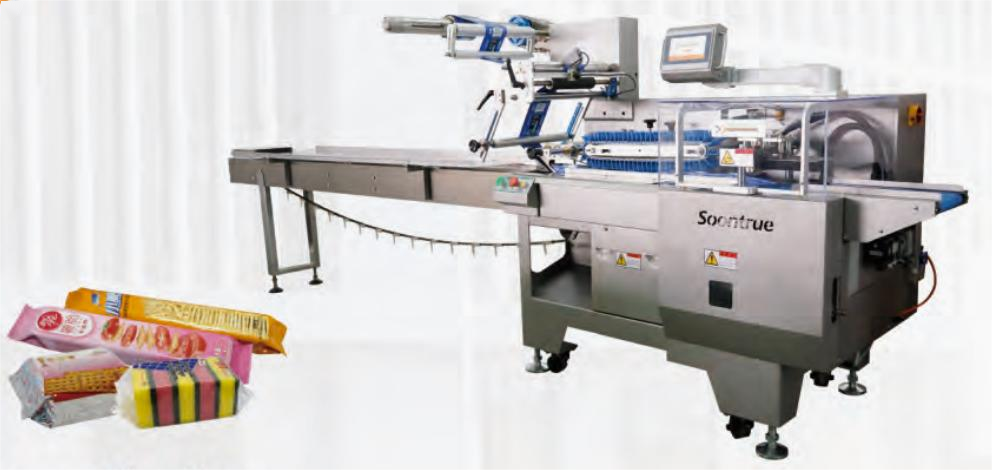
Soontrue Hygienic Flow Wrapping Solutions
Soontrue develops flow wrapping equipment for food manufacturers across applications including frozen foods, meat, seafood, fresh foods, and other products with demanding packaging requirements. These applications require packaging equipment that combines reliable wrapping performance with practical hygiene considerations throughout daily production.
Soontrue flow wrapping machines incorporate stainless steel construction and hygiene-oriented machine layouts to support cleaning, inspection, and routine maintenance. Accessible components help operators reach key areas during cleaning and servicing, while servo-driven systems provide controlled film feeding and sealing performance for different product and production requirements.
Hygiene also extends beyond the flow wrapper. Product feeding, conveying, inspection, and downstream packaging can influence the cleanliness and efficiency of the complete packaging process. Integrating these stages into an automated packaging line allows manufacturers to consider product handling and packaging performance as a connected system.
For manufacturers evaluating a hygienic flow wrapper or sanitary packaging equipment, Soontrue can develop packaging configurations according to product characteristics, production requirements, and sanitation conditions. This approach helps food manufacturers build reliable packaging processes that support food safety, operational efficiency, and long-term equipment performance.
FAQ
What is a hygienic flow wrapper?
A hygienic flow wrapper is a horizontal packaging machine designed with food safety, cleanability, and production hygiene in mind. Its design typically considers corrosion-resistant materials, smooth surfaces, accessible components, effective drainage, and hygienic product handling.
What makes packaging equipment hygienic?
Sanitary packaging equipment combines suitable materials with cleanable machine geometry, accessible components, practical drainage, and appropriate protection for the production environment. Product transfer and maintenance access are also important because hygiene needs to be considered across the complete packaging process.
Is stainless steel enough for hygienic packaging equipment?
Stainless steel provides an important foundation for corrosion resistance and durability, but hygienic performance depends on the complete machine design. Surface geometry, component accessibility, drainage, conveyors, product-contact parts, and machine protection also influence cleanability and sanitation performance.
When should washdown requirements be considered?
Washdown requirements should be considered when a facility uses regular water-based cleaning procedures. Equipment should be evaluated according to the actual cleaning conditions, including water exposure, cleaning agents, temperature, pressure, and cleaning frequency. These requirements should be matched with the machine's construction and component protection.