
Multi-SKU Production: How Modern Flow Wrappers Improve Manufacturing Flexibility
HFFS Machine Blog

If you're seeking packaging automation solutions, please contact us, and we'll be delighted to offer you the most tailored solution.
Food manufacturers today manage more product variations than ever. Snacks appear in multiple flavors and pack sizes, bakery lines handle different dimensions, and contract packers switch between customer specifications throughout the day. As SKU portfolios expand, shorter runs and more frequent changeovers consume a growing share of packaging time.
Packaging flexibility is therefore tightly linked to production efficiency. A flow wrapper may achieve high speeds during continuous operation, yet actual shift output also depends on how quickly and consistently the machine moves from one SKU to the next. Modern servo flow wrappers reduce this burden through recipe-based settings, precise motion control, adjustable formats, and repeatable operation. Combined with sensible SKU grouping and sequencing, these capabilities help recover productive time while supporting a growing product portfolio.
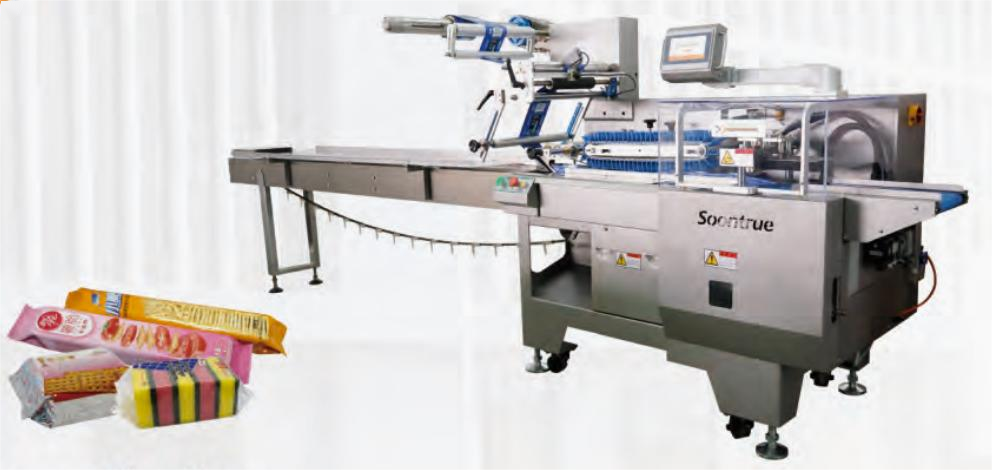
Modern horizontal flow wrapping line supporting multi-SKU production.
Why Multi-SKU Production Turns Changeover Into a Capacity Problem
More SKUs Mean More Production Interruptions
Every additional SKU introduces another production transition. Different products may require different package dimensions, films, feeding conditions, or machine settings. As batches become shorter, these transitions account for a larger proportion of available operating time. A factory running ten products in one shift can lose substantially more productive time to setup than a facility producing one or two high-volume items. Changeover frequency therefore becomes a direct capacity factor.
Nominal Speed Does Not Equal Effective Output
A machine’s rated packs per minute describes performance under defined conditions. It does not account for product changes, startup adjustments, trial packs, or rejected packages. Manufacturers should evaluate effective output across the full production schedule. This connects with broader OEE considerations discussed in The Strategic Reality of Food Flow Wrap Machines. A flexible machine creates value by increasing the percentage of each shift spent producing approved packs.
What Actually Happens During a Multi-SKU Changeover
A typical changeover involves four main activities:
- Product and infeed adjustment – Differences in length, width, height, shape, or fragility affect how products enter the wrapper. Multi-SKU flexibility depends on both the feeding system and the wrapping machine.
- Film and package format change – New film width, bag length, printed film, or structure may be required. Material selection is covered in Selecting the Right Materials for Your Flow Wrap Machine.
- Machine parameter setup – Film feeding, cutting position, sealing timing, temperature, and product spacing often change. Recipe-based control stores established parameters so operators can recall a predefined configuration instead of rebuilding the setup each time.
- Trial packs and restart – The changeover is complete only when the new SKU produces approved packages. Time to first good pack measures the period from stopping the previous SKU to obtaining the first accepted package of the new one.
Where Servo Technology Helps in Multi-SKU Changeovers
Parameter Recall Improves Setup Repeatability
Recipe management is one of the most useful servo-related capabilities. Machine parameters for individual products can be stored and recalled when the SKU returns. This gives operators a defined starting point, reduces repeated manual entry, and lowers variation between operators and shifts. Soontrue’s servo-driven packaging equipment incorporates digital control and memory functions.
Independent Motion Control Supports Format Changes
Different package dimensions require changes in the relationship between product movement, film feeding, sealing, and cutting. Servo-driven axes allow these movements to be controlled electronically and synchronized according to the selected format. This provides greater flexibility when one machine handles several bag lengths or product sizes, making adjustments more precise and easier to reproduce.
Repeatability Matters More Than One-Time Speed
A short changeover is useful only when operators can achieve similar results consistently. Recipe management, electronic positioning, and servo control reduce dependence on individual operator experience. In a high-mix environment, repeatable changeovers often deliver more practical value than achieving the shortest possible changeover during a single test.
Not Every Changeover Should Be Solved by the Machine Alone
Machine capability is only part of the solution. Three complementary practices further reduce changeover burden:
- Standardize similar SKUs – Group products that share film structure, sealing method, and general machine configuration. Running them within the same production block reduces major adjustments and simplifies training.
- Classify SKUs by changeover complexity – Low-complexity changes may involve similar dimensions and the same film; high-complexity changes combine different products, films, and feeding requirements. This classification guides production sequencing and highlights where machine flexibility delivers the greatest benefit.
- Sequence production intelligently – Similar products scheduled together (for example A1–A3 then B1–B2) require fewer major adjustments than repeatedly switching between unrelated items. Actual scheduling must still respect customer deadlines, cleaning needs, and material availability.
How to Measure Multi-SKU Flexibility
Three practical metrics help quantify performance:
- Changeovers per shift – Tracks production complexity. A high number of transitions indicates that changeover efficiency has a direct impact on available capacity.
- Time to first good pack – Captures the complete restart process including setup, trial production, inspection, and final correction. It provides a more practical view than setup time alone.
- Startup waste – Film, test products, and rejected packs may seem minor per changeover, yet the total becomes meaningful when a line performs many transitions each day. Measuring waste by SKU family also supports sustainability goals.
Choosing a Flow Wrapper for Multi-SKU Production
Machine selection should begin with the actual production profile:
- SKU and changeover frequency – How many SKUs will run on the machine, how often films change, and how long typical runs last. The number of transitions per shift is often more informative than the total SKU count in the catalog.
- Machine adjustability – Assess recipe storage, electronic adjustments, format range, feeding flexibility, and operator involvement. Soontrue’s SZ280X HFFS Packaging Machine combines servo control, flexible format capability, and memory settings for product changes.
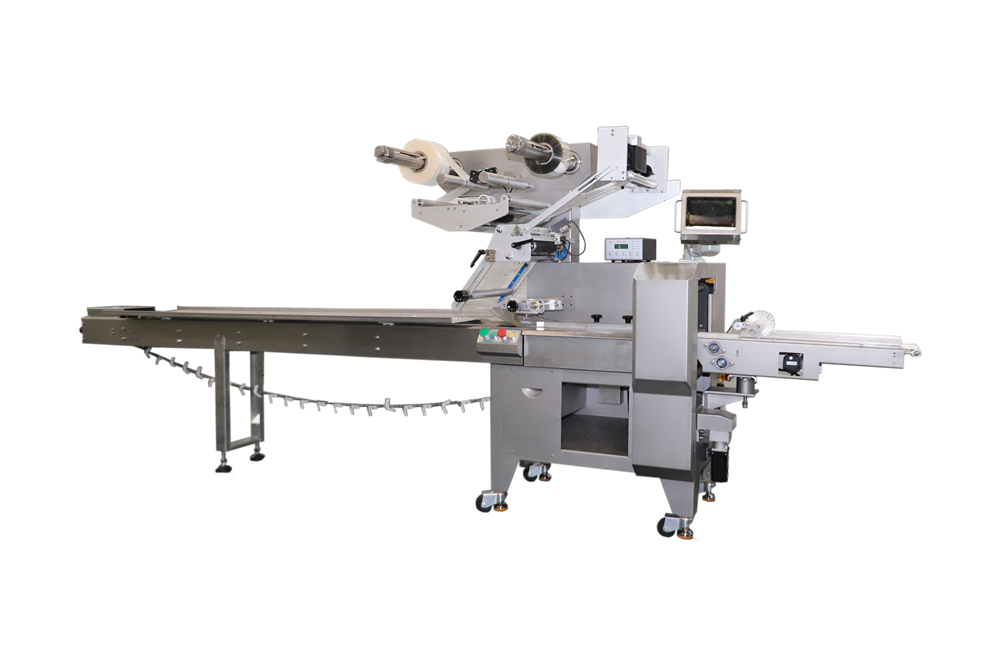
- Future SKU growth – New flavors, package sizes, or promotional formats may increase complexity. Selecting equipment with sufficient adjustment range provides room for expansion. The broader selection process is covered in How to Choose the Right Horizontal Flow Packing Machine.
Multi-SKU Applications Where Flexibility Creates the Most Value
Snack Manufacturers
Snack producers frequently manage multiple flavors, pack sizes, promotional products, and seasonal SKUs. Flexible format control and recipe management allow the same packaging line to accommodate these variations while production teams group similar products to reduce major adjustments.
Bakery Producers
Bakery products vary in size, shape, texture, and fragility, influencing feeding and wrapping requirements. A flexible HFFS system supports multiple package formats while maintaining controlled product handling.
Contract Packers
Contract packers often face the highest SKU complexity because one line may serve several customers. Each order can involve different products, films, package sizes, and quantities. Repeatable setup and efficient transitions directly affect available production capacity.
When Should You Upgrade to a More Flexible Flow Wrapper?
An upgrade is worth considering when SKU additions are shortening production runs, operators spend significant time adjusting equipment, startup waste is increasing, or actual shift output remains well below the machine’s rated capacity. These conditions indicate that changeover efficiency has become a meaningful production factor. Servo motion control, recipe management, adjustable formats, and suitable feeding systems can address these challenges. The appropriate solution depends on the product portfolio and production schedule—evaluating real SKU data provides a stronger basis for investment decisions than comparing machine speed alone.
How Soontrue Approaches Multi-SKU Flow Wrapping
Soontrue’s HFFS equipment is designed for different product characteristics, packaging formats, and production requirements. The SZ100 Flow Wrapping Machine offers a reliable, efficient, and easy-to-integrate solution for various modern food packaging needs.
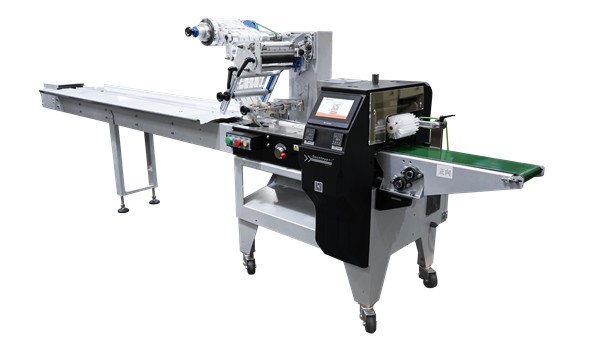
For manufacturers requiring broader automation, flow wrapping can become part of a complete packaging system. Soontrue’s portfolio includes HFFS, VFFS, premade pouch systems, secondary packaging, tertiary packaging, and palletizing. This allows primary wrapping equipment to be connected with upstream feeding and downstream automation as production requirements grow. Visit the Soontrue for more information.
Conclusion
Multi-SKU production changes how packaging flexibility should be evaluated. Machine speed remains important, but effective output also depends on the time required to move between products and return to stable production. Servo motion control, recipe management, adjustable formats, flexible feeding, and sensible SKU sequencing work together to reduce transition time and improve repeatability.
For snack manufacturers, bakery producers, and contract packers, the practical question is how efficiently a packaging system can move from one SKU to the next while maintaining consistent package quality. Selecting equipment with the right balance of speed, adjustability, and control helps protect capacity as product portfolios continue to expand.
Frequently Asked Questions
1. What is multi-SKU packaging?
Multi-SKU packaging refers to using the same packaging equipment to produce multiple stock keeping units with different products, package sizes, films, formats, or specifications.
2. How does a servo flow wrapper support multi-SKU production?
Servo control enables precise and programmable movement of packaging components. Combined with recipe management, it helps operators recall product-specific settings and achieve more repeatable changeovers.
3. What is the most important metric for measuring changeover efficiency?
Time to first good pack is particularly useful because it covers setup, trial production, inspection, adjustment, and restart until the first approved package is produced.
4. Can one flow wrapper package products of different sizes?
Yes. The practical range depends on the machine configuration, product characteristics, feeding system, film width, package dimensions, and sealing requirements. These parameters should be evaluated against the complete SKU portfolio.
5. How can manufacturers reduce changeover time?
Manufacturers can combine recipe-based machine settings with adjustable equipment, SKU grouping, standardized packaging specifications, and production sequencing that places similar products together.
6. Why is changeover especially important for contract packers?
Contract packers often switch between customers and product specifications more frequently than dedicated manufacturers. Efficient and repeatable changeovers therefore have a direct impact on available production capacity.
7. Is machine speed still important for multi-SKU production?
Yes. Running speed remains an important factor, especially for high-volume products. For high-mix production, speed should be evaluated together with changeover frequency, startup waste, quality, and effective output per shift.
8. What should manufacturers consider when selecting a flexible flow wrapper?
Key factors include SKU volume, package size range, film requirements, changeover frequency, recipe management, feeding flexibility, adjustment range, sealing technology, operator involvement, and expected future SKU growth.