
When to Combine Flow Wrapping with Tray Packing, Deoxidizer and End-of-Line Automation
HFFS Machine Blog

If you're seeking packaging automation solutions, please contact us, and we'll be delighted to offer you the most tailored solution.
Many food manufacturers begin with a single flow wrapper and achieve solid results on primary packs. As volumes rise and retail requirements tighten, the same line often needs additional modules that protect the product, extend shelf life, improve shelf presentation, and feed finished goods into automated secondary and tertiary packaging. Knowing exactly when each module becomes useful protects both capital and daily output. This guide examines the practical triggers for adding tray packing, oxygen scavenger insertion, and end-of-line automation to a flow-wrapping core.
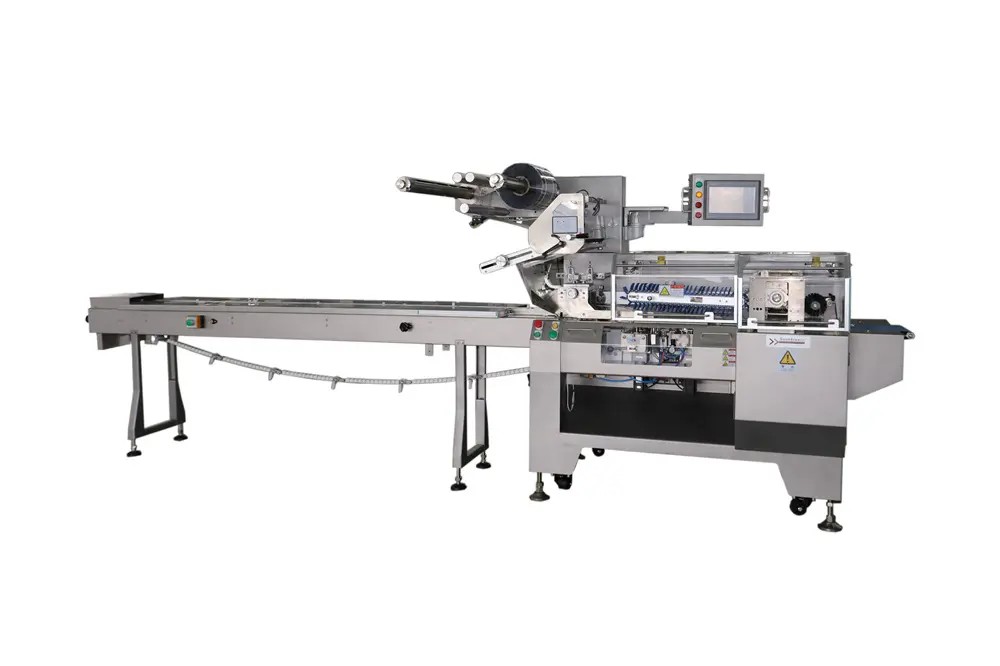
Soontrue SZ602 flow wrapping machine
Four Reasons to Add Automation Beyond Flow Wrapping
Product Protection
Tray packing places the product into a rigid or semi-rigid carrier before the film forms around it. The tray absorbs impact and keeps multiple pieces aligned, which reduces breakage rates on delicate cookies, layered cakes, or filled dumplings. Manufacturers that ship long distances or stack cases high in warehouses notice the difference in returns and customer complaints.
Shelf-Life Extension
Oxygen absorbers, also called deoxidizers, chemically remove residual oxygen after sealing. Products rich in fats or sensitive to oxidation, such as roasted nuts, certain baked goods, and dried fruit mixes, gain weeks or months of additional stable shelf life. The absorber works only when the primary seal is hermetic and the film provides an adequate oxygen barrier.
Retail Presentation
Tray-in-bag formats let shoppers see the product arrangement through clear film while the tray keeps the contents neat. This presentation style supports premium pricing in bakery and ready-meal categories and satisfies the requirements that demand consistent pack dimensions.
Downstream Automation
Once primary packs leave the flow wrapper at rates of several hundred units per minute, manual case packing and palletizing quickly become the limiting factor. Connecting the wrapper to automatic case packers and robotic palletizers keeps the entire line balanced and frees operators for higher-value tasks.
When Should You Add Tray Packing to a Flow Wrapper?
Tray packing becomes practical when product fragility, multi-piece orientation, or retail display standards exceed what a simple pillow pack can deliver. Bakery manufacturers packing soft cakes, mooncakes, or sliced rolls often introduce trays once breakage during distribution exceeds acceptable limits. Frozen food plants packing dumplings or dim sum portions rely on trays to maintain portion shape through freezing and transport.
The addition usually involves an automatic tray dispenser, a loading station (mechanical or robotic), and a flow wrapper sized for the combined tray-plus-product height. Speed remains competitive because the loading and wrapping stations run in continuous motion. Changeover time stays manageable when tray and film formats are standardized across related SKUs.
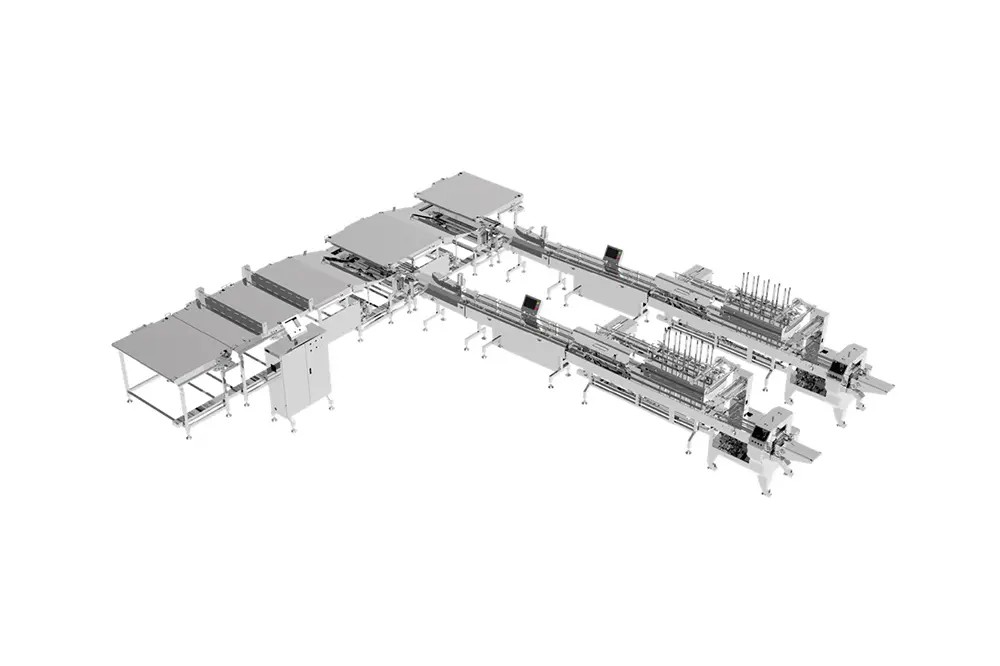
A complete tray-in-bag configuration is illustrated on the automatic packaging line with tray page. That layout shows how tray loading integrates with pillow-bag sealing and optional gas flushing.
When Does a Deoxidizer Become Worth Adding?
Oxygen scavenger insertion pays for itself on products where residual oxygen shortens shelf life or alters flavor and color. The decision point arrives when laboratory shelf-life tests show clear improvement after oxygen removal, or when customers request longer best-before dates without reformulating the product.
Insertion equipment places a precisely sized sachet into the film tube just before the end seals close. The system must synchronize with the flow wrapper so that every pack receives one absorber and none are missed or doubled. High-barrier films and reliable seals are prerequisites; otherwise the scavenger exhausts its capacity too quickly.
Typical candidates include roasted nuts, certain confectionery items, dried fruit, and specialized bakery goods. The incremental cost of the sachet and the insertion module is recovered through reduced returns and expanded distribution reach.
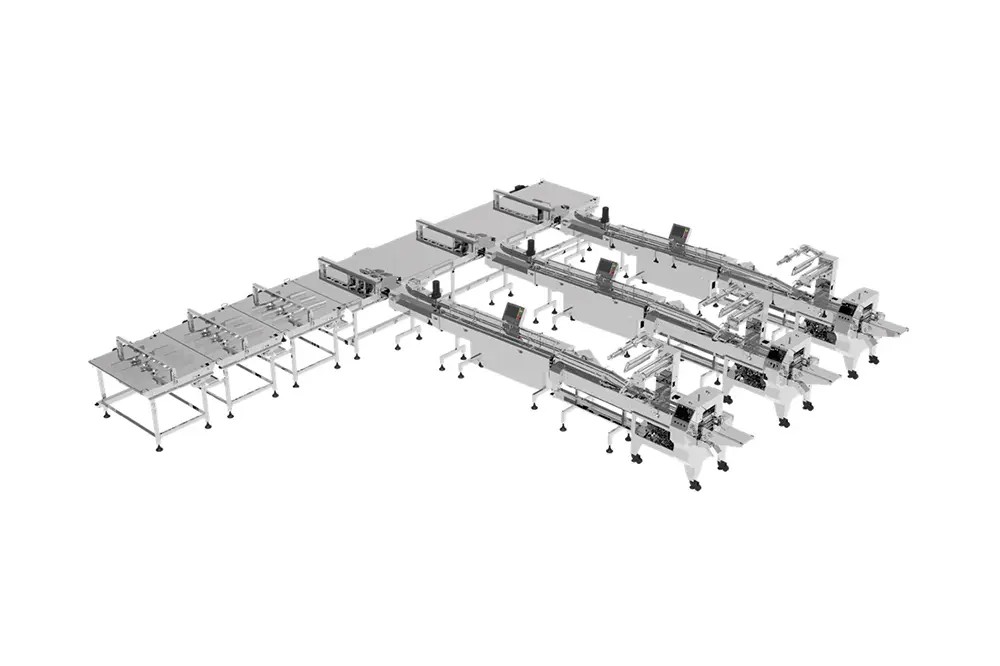
Soontrue automatic packaging line configured with deoxidizer insertion
When Should Flow Wrapping Connect to End-of-Line Automation?
End-of-line modules become essential once primary packaging speed consistently exceeds the capacity of manual secondary packing. At outputs above roughly 150–200 packs per minute, dedicated case packing and palletizing stations restore balance. The connection also improves ergonomics by removing repetitive lifting and stacking tasks from operators.
A typical sequence after the flow wrapper includes optional checkweighing and metal detection, then automatic case erecting, product loading into cases, case sealing, and robotic palletizing. Each stage is engineered to match the upstream rate so that no station becomes a new bottleneck. Modular design allows plants to add stages progressively as volume grows.
Further detail on secondary and tertiary systems appears in the end-of-line packing series overview. That resource covers case packing and palletizing options suited to flow-wrapped products.
Packaging Configurations for Different Food Manufacturers
Bakery
Soft cakes, pastries, and multi-piece cookie packs benefit from tray loading followed by flow wrapping. The tray protects shape and the film provides hygiene and moisture control. Higher-speed bakery lines often add automatic case packing to keep pace with continuous oven output.
Snacks
Many snack items remain in simple pillow packs. When multipacks or premium presentation are required, a short tray station or grouping conveyor can be added. Deoxidizers appear more frequently on nut and seed products that face oxidation risk.
Ready Meals
Prepared meal portions often travel in trays that are then flow-wrapped. The combination supports clean presentation and allows modified-atmosphere options when longer chilled shelf life is needed. Downstream cartoning or case packing completes the retail or food-service pack.
Frozen Foods
Dumplings, filled buns, and frozen snack portions commonly use tray-plus-flow-wrap configurations. The tray maintains portion integrity through freezing, and the film protects against freezer burn. Full lines frequently include automatic case packing and palletizing sized for cold-store logistics.
Broader packing-line architectures are described on the packing line solutions page. Those examples show how primary and secondary modules combine for different product families.
Modular Automation vs. Full-Line Automation
Modular automation installs one functional block at a time and connects it to existing equipment. This approach limits capital exposure and allows operators to master each stage before the next arrives. Full-line automation designs the entire sequence from product infeed through palletizing as a single engineered system. It delivers higher overall equipment effectiveness from day one and shortens the total project timeline when volume forecasts are firm.
Most mid-sized manufacturers find a hybrid path effective. They begin with a proven flow wrapper, add tray or deoxidizer capability when product needs justify it, and later integrate case packing and palletizing once output and labor costs make the investment clear.
Soontrue automated packaging solution with flow packaging machine and secondary modules
How Soontrue Build the Right Combination
Soontrue engineers packaging systems around the specific product, film, tray, and throughput targets supplied by each manufacturer. The portfolio includes high-speed and mid-speed flow wrappers, dedicated tray-loading modules, deoxidizer insertion units, and complete end-of-line stations for case packing and robotic palletizing. Layout proposals start from product samples and target output figures, then proceed through detailed mechanical and control design.
Factory acceptance testing under realistic conditions confirms that the combined line meets speed, seal quality, and changeover goals before shipment. After installation, training and remote support keep the system running at the intended overall equipment effectiveness. This engineering approach produces configurations that match actual production needs rather than generic catalogs.
Further information on complete solutions is available at the Soontrue homepage and through direct consultation with the engineering team.
Final Checklist Before Choosing Your Packaging Configuration
- Confirm product fragility, multi-piece orientation, and retail display requirements.
- Measure residual oxygen impact on shelf life through controlled tests.
- Compare current primary packaging speed with secondary packing capacity.
- Identify the single highest-priority module that solves the most urgent constraint.
- Validate tray fit, film barrier, and absorber placement with actual samples.
- Plan modular expansion paths so future stations integrate without redesign.
FAQ
Can tray packing and deoxidizer insertion run on the same flow wrapper?
Yes. The tray enters the forming area as a single unit, and the absorber is placed into the film tube before the end seals close. Synchronization of both stations with the wrapper ensures every pack receives the correct components.
What speed range is typical for a tray-plus-flow-wrap line?
Depending on tray size, product count per tray, and sealing technology, practical rates commonly fall between 30 and 150 packs per minute. Higher speeds are achievable with optimized loading and multi-jaw sealing.
How does end-of-line automation affect changeover time?
Modern case packers and palletizers store multiple pack patterns and pallet recipes. When the primary wrapper changes product, the downstream stations recall the matching pattern, keeping overall changeover within practical limits for multi-SKU plants.
Is oxygen absorber insertion compatible with modified-atmosphere packaging?
The two approaches address residual oxygen differently. Gas flushing replaces air with a controlled mixture at the moment of sealing, while absorbers continue removing oxygen after sealing. Some applications use both, provided the film barrier and seal integrity support the combined strategy.
What information helps specify the right combination?
Product samples, target packs per minute, tray dimensions if used, film specifications, shelf-life targets, and current secondary packing methods allow engineers to propose a matched configuration and layout.
Selecting the right combination of flow wrapping, tray packing, deoxidizer insertion, and end-of-line automation starts with a clear picture of product needs and production constraints. A measured, modular approach delivers protection, shelf life, presentation, and throughput without excess complexity. Soontrue supports that process with engineered systems, validated layouts, and ongoing technical partnership.