
The Strategic Reality of Food Flow Wrap Machines
HFFS Machine Blog

If you're seeking packaging automation solutions, please contact us, and we'll be delighted to offer you the most tailored solution.
When you’re running a food plant, packaging isn't just about putting a product in a bag—it's about protecting your margins. For business owner, the real conversation around Horizontal Form Fill Seal (HFFS) technology isn't just about the price tag; it’s about how that machine handles the "chaos" of a 24/7 production floor while keeping your OEE (Overall Equipment Effectiveness) in the green.
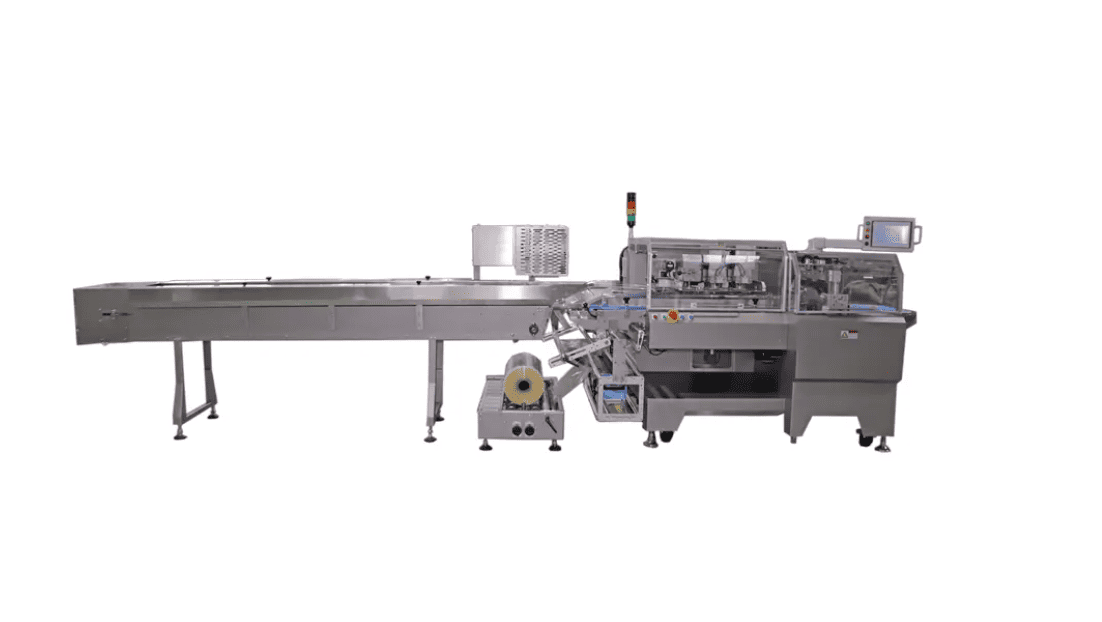
Why is a Flow Wrap Machine the Single Best Move for Your Automation Roadmap?
If you're looking to slash labor costs by 70% while hitting speeds that manual lines can't touch, a flow wrap machine is your primary lever. It’s not just about speed; it’s about the "strategic resilience" that automation brings to your facility, especially when labor markets get tight.
Let's be honest: manual packing is a headache. You’ve got high turnover, human error, and inconsistent seals that lead to "leakers" and wasted batches. A servo-driven flow wrapper doesn't get tired. It provides a consistent, 24/7 output that allows you to scale up for seasonal spikes without the nightmare of hiring 50 temporary workers. Plus, with integrated sensors, you stop throwing money away in the form of wasted film.
What Sanitary Design Standards are Required for Food Safety Compliance?
Food-grade compliance (FDA/HACCP) requires an open-frame stainless steel build that’s actually easy to wash down, ideally with an IP65 or IP69K rating. If your team spends four hours cleaning a machine because of "dead zones," you’re losing money.
In a real-world food plant, engineering excellence is measured by how fast you can get back to production after a deep clean. We’re talking about SUS304/316L stainless steel that won't pit or rust when hit with harsh chemicals. The best designs use sloped surfaces so water doesn't pool and tool-less belt removal so your sanitation crew can do their job in half the time. For meat or dairy, don't settle for anything less than high-pressure steam compatibility; it’s the only way to sleep soundly before a safety audit
How Can You Optimize OEE and Reduce Downtime in Packaging Lines?
The difference between a profitable shift and a loss often comes down to two features: "No Product & Packaging" and rapid, digital changeovers. If your machine is running empty bags or your operators are spending an hour with a wrench to change SKUs, your OEE is tanking.
- Stop Wasting Film: Modern HFFS units use optical eyes to "see" the product. No product on the belt? The film stops. It sounds simple, but it saves miles of laminate every year.
- Prevent the "Crush": Misplaced product detection is a lifesaver. It stops the sealing jaws if a product isn't centered, preventing a messy cleanup that would otherwise shut you down for 20 minutes.
- One-Touch Changeovers: Your operators shouldn't need a degree in engineering to switch from a 100g pack to a 250g pack. Digital recipe memory in the HMI means you switch parameters in seconds, keeping the line moving.
What are the Differences Between Rotary and Box-Motion Sealing for Food?
It’s a simple trade-off: Go with Rotary if you need raw speed for snacks (400+ PPM), but choose Box-Motion if you need a hermetic, leak-proof seal for heavy films or MAP (Modified Atmosphere Packaging).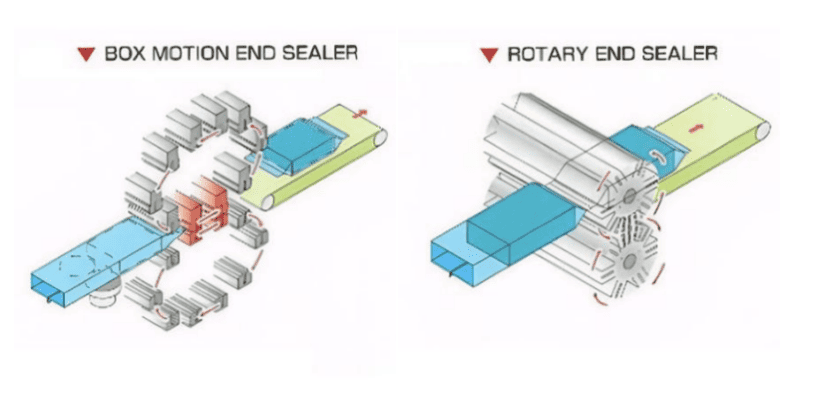
Think of Rotary as the "sprinter"—it’s fast and continuous, perfect for candy or crackers. But if you’re packing fresh bread, cheese, or meat, you need the "heavy lifter"—Box-Motion. These jaws move in a rectangular path, staying in contact with the film longer. This "dwell time" is what creates that perfect, airtight seal that keeps your Nitrogen/CO2 mix inside the bag, effectively doubling your shelf life and keeping your retailers happy.
How to Calculate the Total Cost of Ownership (TCO) for a Horizontal Packaging Machine?
A real TCO (Total Cost of Ownership) analysis shows that a high-end servo machine usually pays for itself in under a year, simply by cutting out labor, film waste, and the hidden costs of proprietary spare parts.
Procurement teams often get blinded by the initial CAPEX. But a "budget" machine with mechanical linkages and proprietary electronics is a ticking time bomb of downtime. When a $5 sensor fails and you have to wait two weeks for a part from overseas, that "saving" vanishes. By choosing a system built with global standards, you ensure that parts are available at the local distributor. Factor in a 3-5% reduction in film waste through servo-precision, and the machine basically buys itself.
Is Your Packaging Line Ready for Industry 4.0?
Don't buy a "dumb" machine. You need a wrapper with IoT connectivity that can "talk" to your upstream weighers and downstream robots.
The "Smart Factory" isn't a buzzword; it’s a survival strategy. Modern flow wrappers act as data hubs. They tell you exactly how much energy you're using, what your reject rate is, and—most importantly—they offer Predictive Maintenance. Imagine getting a notification on your phone that a motor is running hot before it fails. That’s how you eliminate catastrophic downtime and keep your GM happy with the quarterly numbers.
Why Soontrue is the Partner You’ve Been Looking For
Investing in Soontrue isn't just a hardware purchase; it’s a partnership with an engineering team that actually understands the grit and pressure of food production.
Soontrue has built its reputation on machines that don't quit. From high-speed servo synchronization to intuitive HMI controls that your staff will actually find easy to use, their systems are designed to solve the real-world headaches of the food industry. Whether you’re a mid-sized bakery or a massive confectionery plant, Soontrue delivers the technical "muscle" and the post-sale support you need to keep your OEE exactly where it belongs: at the top.
FAQ
Q: Can a flow wrap machine handle eco-friendly or paper-based films?
A: Absolutely. But you need precise heat control. Soontrue’s latest units are built to handle the narrow sealing windows of recyclable mono-materials and paper-based films.
Q: What is the typical lifespan of an industrial flow wrapper?
A: If you treat it right, 10 to 15 years is the standard. Because we use global electronic components, you can upgrade the "brains" of the machine without replacing the whole frame.
Q: Is "No Product & Packaging" really that important?
A: Ask your CFO. If you're running 5% empty bags on a high-speed line, you're literally throwing thousands of dollars of film into the trash every month.
Q: Is a flow wrapper suitable for fragile or sticky food items?
A: We use specialized overhead feeders and friction-less belts. Whether it’s a sticky protein bar or a flaky croissant, we can wrap it without ruining the product.