
How Smart Servo Technology Improves Flow Wrapping Performance
HFFS Machine Blog

If you're seeking packaging automation solutions, please contact us, and we'll be delighted to offer you the most tailored solution.
Flow wrapping performance depends on more than maximum packs per minute. At high production speeds, accurate film registration, stable product positioning, precise cutting and consistent sealing all influence packaging quality and output. Servo technology addresses these requirements through coordinated digital motion control. By independently managing key movements while maintaining precise synchronization, a servo flow wrapper can adapt its operation to different products, packaging formats and production conditions. Programmable motion profiles and recipe based settings also improve repeatability across production runs. For packaging engineers and equipment buyers, understanding how servo control affects actual machine performance provides a more practical basis for evaluating modern flow wrapping equipment.
What Makes Servo Technology Different in Flow Wrapping?
A flow wrapper relies on several coordinated movements to complete each packaging cycle. Product feeding, film transport, sealing and cutting must follow a precise timing relationship. Servo technology gives these movements greater control through programmable speed, position and motion profiles, creating a more adaptable motion system.
From Fixed Timing to Programmable Motion
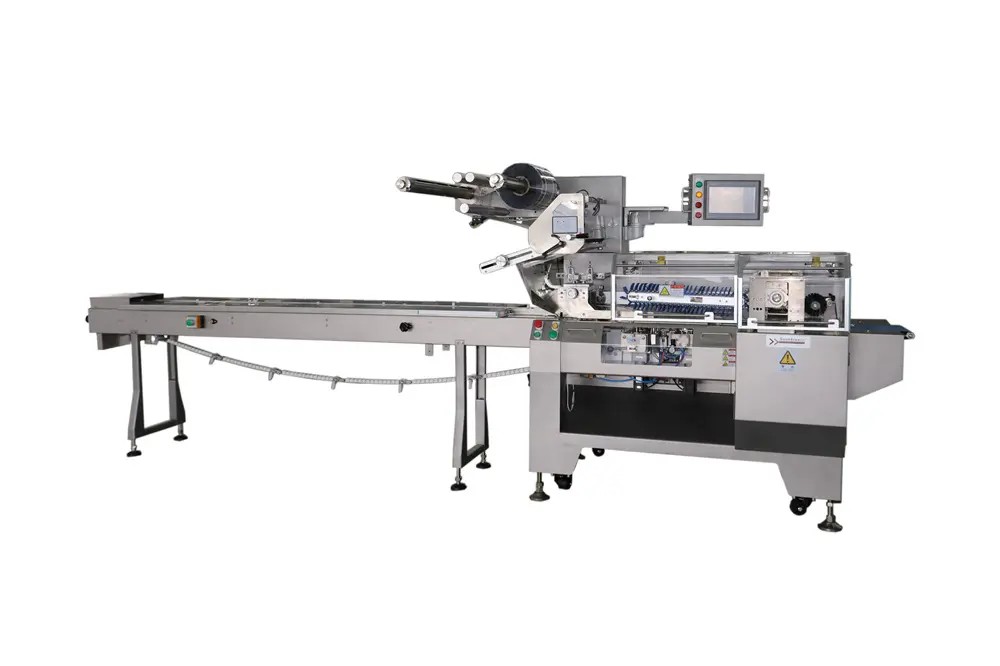
Mechanical transmission establishes physical relationships between different machine movements. Servo control allows these relationships to be defined electronically. Parameters such as speed, position, acceleration and deceleration can be adjusted according to the application. Electronic cam control can also coordinate multiple servo axes according to a defined motion profile. This allows the infeed, film feeding and sealing or cutting mechanisms to remain synchronized while their individual movements are optimized for the packaging process. Manufacturers seeking higher flexibility often evaluate models such as the SZ602 Flow Wrapping Machine, which combines servo-driven control with rotary end sealing for precise, high-speed performance.
Why Motion Coordination Matters
The performance of a servo flow wrapper depends heavily on how accurately its motion axes work together. Product spacing affects feeding, film movement determines package length, and sealing and cutting must occur at the correct position within each cycle. For this reason, servo axis count alone provides limited insight into machine capability. Motion synchronization, position feedback, programmable profiles and control architecture offer a more meaningful view of how effectively a servo packaging machine can manage demanding production conditions.
How Servo Technology Improves Precision at High Speed
High speed flow wrapping places continuous demands on film positioning and cutting accuracy. As production rates increase, even small timing variations can affect package length, print alignment and product presentation. Servo control helps maintain these parameters by coordinating film movement with real time position feedback.
More Accurate Film Registration and Cutting
Film registration typically relies on print mark detection and position feedback. When a sensor identifies the printed mark, the control system can adjust the film movement to maintain the required cutting position. This creates a continuous process of detection, feedback and motion correction. For printed packaging, accurate synchronization helps keep graphics aligned with the finished package. Consistent film movement also supports more uniform bag lengths across extended production runs, which is important for both product presentation and material control. Readers can explore detailed guidance on flow wrapping machine selection and film handling to better understand these capabilities in practice.
Maximum Speed vs. Usable Speed
A flow wrapper's rated speed represents its maximum operating capability under defined conditions. Practical output also depends on how consistently the machine maintains product positioning, film control and cutting accuracy during continuous production. Servo systems allow acceleration, deceleration and motion timing to be programmed according to the application. Controlled movement helps the machine maintain stable operation as production speed changes. This makes sustained production performance a more useful indicator for equipment evaluation than maximum speed alone. For packaging engineers, the key question is how reliably the machine can maintain packaging quality at the required production rate.
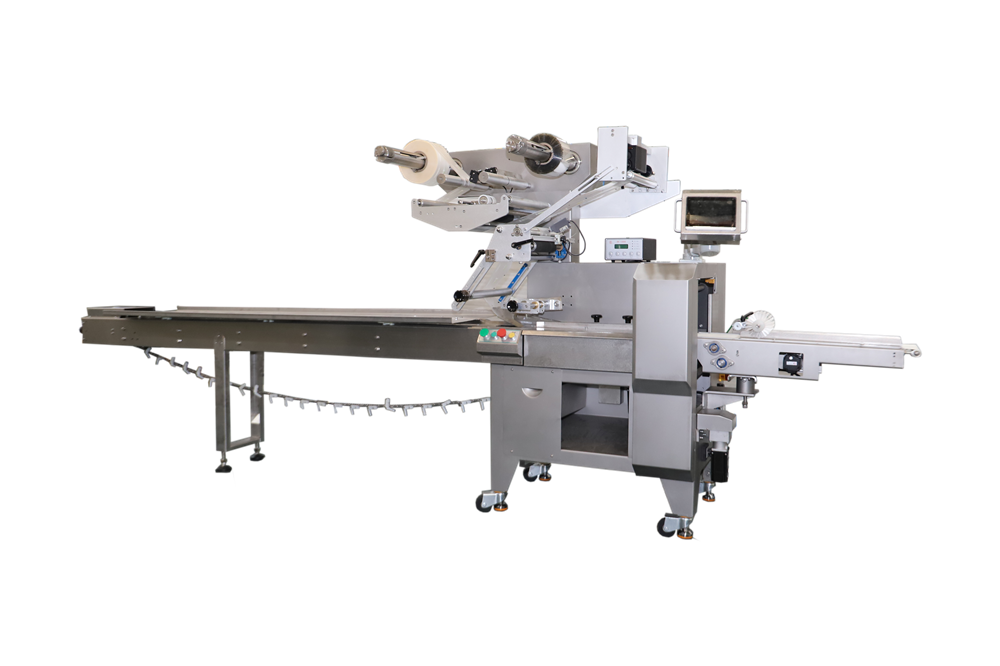
Soontrue SZ580 High-Speed Packaging Machine — servo control enabling stable performance up to 500 packs/min
How Servo Technology Supports Different Products and SKUs
Modern food packaging lines often handle products with different dimensions, shapes and handling characteristics. Servo control provides the motion flexibility needed to adjust machine behavior for these production requirements. Programmable movement also makes it easier to maintain consistent packaging conditions across multiple SKUs.
Controlled Motion for Fragile Products
Bakery products, snacks and other delicate foods can shift or become damaged during rapid product transfer. Servo driven infeed systems allow acceleration and deceleration to be controlled according to product characteristics and line speed. Smoother motion helps maintain product spacing and positioning as items enter the wrapping process. When integrating flow wrappers into complete lines, many manufacturers turn to automated flow packaging solutions that combine servo precision with coordinated feeding and secondary packaging.
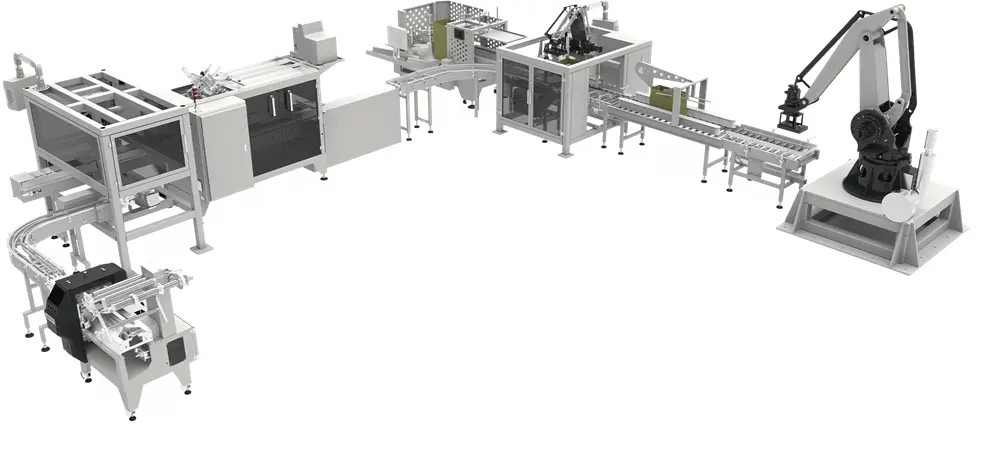
Soontrue Automated Flow Packaging Solution — complete line integrating servo flow wrapping with upstream and downstream automation
Digital Parameters for Multiple SKUs
Servo control also supports recipe based production. Parameters such as product length, film length, feeding speed and cutting position can be stored for different products and recalled when required. This reduces repeated manual adjustments and improves setup consistency between production runs. For manufacturers handling multiple SKUs, this parameter based approach makes the flow wrapper more adaptable to changing production schedules while maintaining repeatable packaging conditions.
How Servo Technology Improves Sealing and Cutting
Sealing and cutting require precise timing throughout every packaging cycle. Servo control allows the movement of the sealing and cutting mechanisms to be adjusted according to product and film requirements, helping maintain consistent package quality at different production speeds.
Controlling the Sealing Motion Profile
Servo driven sealing systems can control jaw position, movement speed, acceleration and dwell time. These parameters determine how the sealing mechanism approaches the package, maintains contact and completes each cycle. Engineers can adjust the motion profile to suit different film characteristics and product formats.
Matching Motion to Packaging Requirements
Sealing performance depends on the interaction between temperature, pressure, film and mechanical movement. Precise servo control helps maintain the required timing between film transport and sealing or cutting actions. This is particularly useful in high speed applications where accurate synchronization supports consistent seals, clean cuts and uniform package appearance.
How to Evaluate a Servo Flow Wrapper Before Buying
Choosing a servo flow wrapper requires attention to the complete motion control system. Maximum speed and servo motor count provide useful specifications, but production performance also depends on synchronization, feedback and repeatability.
|
Evaluation Factor |
Why It Matters |
|
Motion synchronization |
Keeps feeding, film and sealing movements coordinated |
|
Film registration |
Supports accurate package length and print alignment |
|
Motion profiles |
Allows movement to match different products |
|
Recipe management |
Improves consistency across multiple SKUs |
|
Position feedback |
Supports precise and repeatable motion |
|
Sustained speed |
Reflects practical production performance |
Testing should reflect actual operating conditions, including target speed, product characteristics, film type and SKU changes. This provides a clearer picture of how the machine will perform in daily production. For equipment buyers, a well designed servo packaging machine should combine precise motion control with practical adjustability. These capabilities provide a stronger basis for long term performance than individual specifications considered in isolation.
How Soontrue Applies Servo Technology to Flow Wrapping
Soontrue integrates servo driven motion control into flow wrapping solutions for food manufacturers with demanding requirements for precision, flexibility and production consistency. Its flow wrapping systems can be configured according to product characteristics, package dimensions, film requirements and target output. For high speed snack and bakery applications, coordinated servo movements support accurate feeding, film transport and cutting. Multi SKU production can benefit from recipe based parameter management, while products with different shapes and handling requirements can use adjustable motion profiles. By combining servo technology with application focused machine design, Soontrue helps manufacturers achieve more controlled and repeatable flow wrapping performance across different production requirements.
Conclusion
Smart servo technology has changed how flow wrapping machines manage motion, precision and production flexibility. Its value extends beyond higher operating speeds. Accurate synchronization between feeding, film transport, sealing and cutting helps maintain consistent package quality, while programmable motion profiles support different products and production requirements. Recipe based control also improves repeatability across multiple SKUs, and coordinated servo motion provides a stronger foundation for automated packaging line integration. For packaging engineers and equipment buyers, the most useful evaluation criteria are precision, stable production speed, motion control, repeatability and line compatibility. A servo flow wrapper designed around these capabilities can provide more consistent performance as product ranges and automation requirements evolve. Soontrue develops flow wrapping and packaging automation solutions that integrate servo driven motion with application specific production requirements, helping manufacturers build efficient and adaptable packaging operations. To discuss your specific packaging challenges, contact Soontrue.
FAQ
What is a servo flow wrapper?
A servo flow wrapper uses servo motors and digital motion control to coordinate functions such as product feeding, film transport, sealing and cutting. This allows machine movements to be adjusted more precisely according to product and packaging requirements.
How does servo technology improve flow wrapping accuracy?
Servo systems use controlled motion and position feedback to synchronize film feeding, product movement and cutting. This helps maintain consistent package length, print registration and cutting position during continuous production.
Does a servo flow wrapper always run faster?
Servo technology supports controlled high speed operation, but maximum speed is only one performance factor. Stable output, accurate film handling, consistent sealing and reliable product positioning are also important when assessing practical production speed.
How does servo control help with multi SKU production?
Servo systems can store production parameters as recipes. Operators can recall settings for different product and package formats, improving setup consistency and reducing repeated manual adjustments during SKU changes.
What should buyers consider when choosing a servo packaging machine?
Buyers should evaluate motion synchronization, film registration, feedback accuracy, recipe management, programmable motion profiles, sustained production speed and integration with other packaging equipment. These factors provide a broader view of machine performance than servo axis count alone. For further reading, see the complete guide to flow wrapping machines and related packaging automation resources.