
VFFS Packaging Problems: How to Diagnose Inconsistent Bag Length, Filling and Sealing
VFFS Machine Blog

If you're seeking packaging automation solutions, please contact us, and we'll be delighted to offer you the most tailored solution.
On many vertical form-fill-seal lines the same three issues keep returning: bags that refuse to stay the same length, fill weights that drift from bag to bag, and seals that look finished yet still fail. Left unchecked, each of these problems chips away at package uniformity, product shelf life and line throughput. The practical way forward is to sort the symptom first, then examine the mechanical, dosing or heat-sealing circuit that most often produces it. The sections that follow give clear diagnostic paths for the three most common fault groups and show how to confirm that an adjustment has actually worked.
Initial Checks for VFFS Packaging Problems
Before any covers are removed, a simple symptom table points the search in the right direction. Matching what operators see on the line with the most probable subsystem keeps early troubleshooting focused and avoids random part changes.
|
Observed Symptom |
Initial Diagnostic Focus |
|
Random bag length variation |
Film pulling stability and encoder feedback |
|
Consistently incorrect bag length |
Bag length settings and registration marks |
|
Variable fill weight |
Dosing repeatability and product flow |
|
Consistently incorrect fill weight |
Target weight and calibration |
|
Weak or leaking seals |
Sealing conditions and film compatibility |
|
Wrinkled or contaminated seals |
Film alignment and filling conditions |
Bag Length Variation and Film Registration Issues
Random Bag Length Variation
Bags that change length from one pack to the next with no repeating pattern almost always point to the film drive. Pull belts that have polished smooth, lost spring pressure or collected product dust let the film slip in short bursts. Tension that is higher on one side than the other produces the same scatter. Collecting a run of ten consecutive packs and noting the length range shows whether the variation is truly random. A steady drift in one direction belongs to a different cause; pure scatter belongs to belt condition and encoder signal quality.
Current vertical packaging machines use servo pull belts and closed-loop encoder feedback. Inspecting belt wear marks and cleaning the contact faces frequently returns length control within a single production shift.
Incorrect Bag Length Settings and Cut Position
When every bag is the same wrong length, the fault usually sits in the recipe or the print-registration loop. Confirm that the programmed length matches the printed repeat on the film roll. Photocell gain and mark contrast also matter. A faint registration mark or a sensor set too high can miss an occasional mark, so a few packs run long or short even when the average length looks acceptable.
Separating true film travel error from print-to-cut offset stops unnecessary mechanical work. When the printed design sits consistently high or low relative to the seal line, the registration offset value is the first parameter to review.
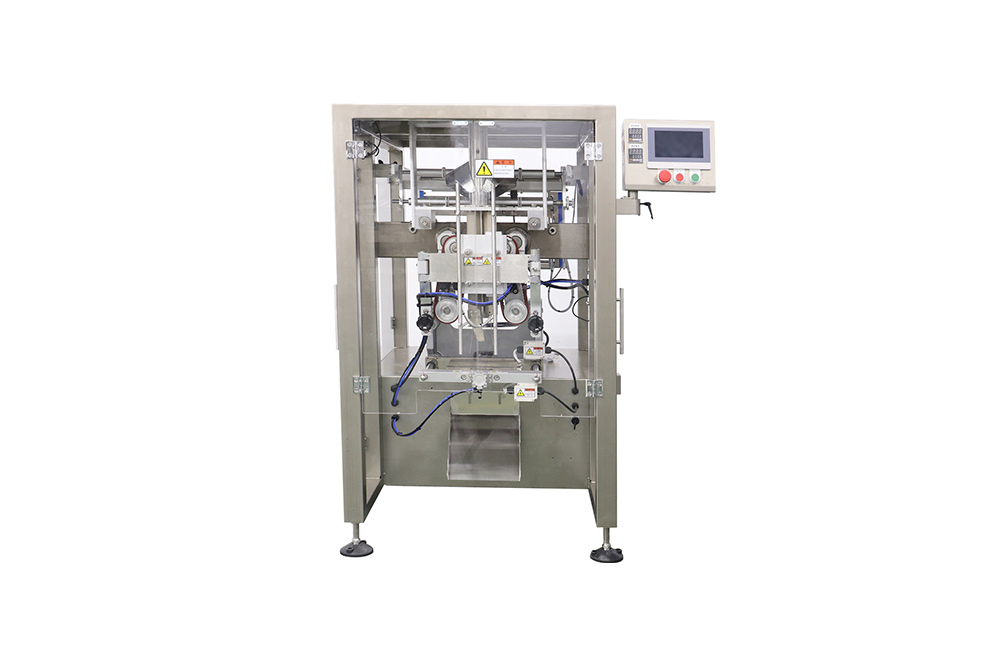
Soontrue ZL200P vertical form-fill-seal machine with servo film drive
Filling Accuracy and Dosing Consistency
Variable Fill Weights vs. Consistent Weight Deviations
Check-weigher data usually fall into two clear groups. Random bag-to-bag scatter signals that the dosing system is not repeating the same delivery each cycle. A fixed offset in the same direction, every pack light or every pack heavy, signals that the target value or the scale calibration has drifted. Sorting the pattern early decides which path to follow. Scatter leads to the dosing hardware; a constant bias leads to the set-point and calibration records.
Product Flow and Dosing System Performance
Powders frequently bridge in the hopper or stick to the auger flights. Verifying hopper vibration, agitator action and steady auger speed restores reliable flow. Free-flowing granules shift attention to the volumetric cups or multihead weigher discharge gates. Product that clings inside the cups creates under-fills. Liquid and paste systems need attention to pump stroke consistency and nozzle drip control after each cycle.
An auger filler packing machine built for fine powders manages bulk-density swings through servo speed control and optional level sensors. Choosing the dosing method that matches product behavior remains the surest route to stable net weight.
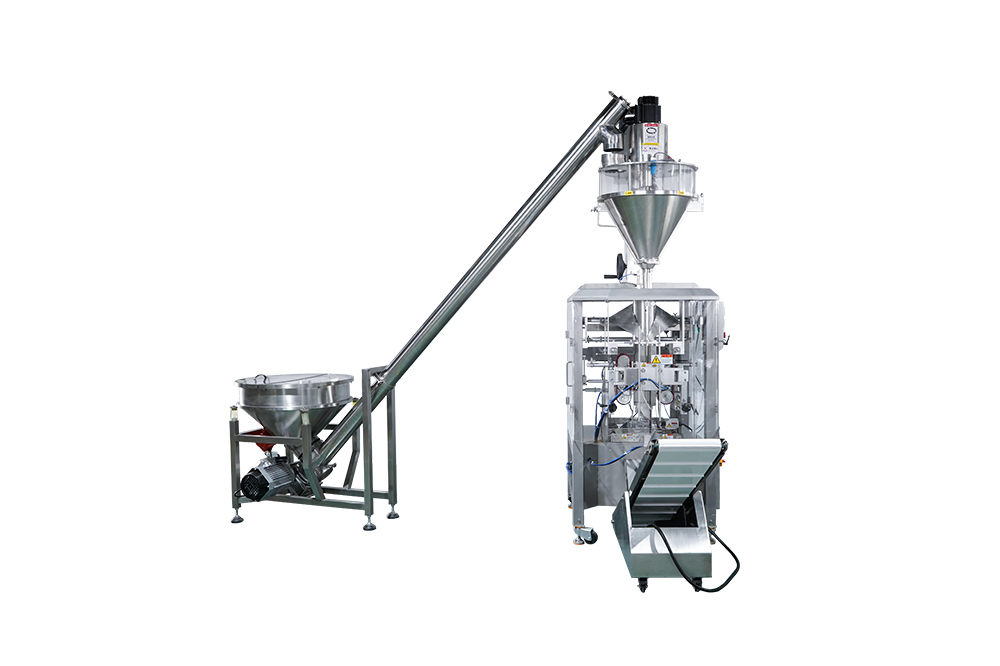
Soontrue auger filler system for precise powder dosing on VFFS lines
Seal Integrity and Defect Diagnosis
Weak or Leaking Seals
Seal strength is governed by the real temperature at the jaw surface, the pressure applied and the time the jaws stay closed. Display readings can lag behind actual surface temperature when thermocouples age or residue builds up. Film sealant chemistry also plays a part. A film formulated for a lower sealing window will fuse incompletely if the jaws run cool, or will scorch if the jaws run hot.
Wrinkled or Burnt Seals
Wrinkles in the seal zone often start with uneven film tension or jaws that have lost parallelism. Excess heat combined with high pressure burns the outer layers while the inner sealant remains under-fused. Restoring even tension and confirming jaw parallelism usually clears the wrinkles before any temperature change is needed.
Product Contamination in the Seal Area
Particles trapped between the film layers leave channels that later become leaks. The timing between product drop and jaw closure is decisive. Product still falling when the jaws meet leaves residue on the seal face. Cleaning the jaws and confirming that the fill cycle finishes before the seal cycle begins removes most contamination-related defects. Simply raising temperature rarely solves a product-in-seal problem.
A clear grasp of the VFFS working principle helps operators connect fill timing with seal quality. Servo-controlled horizontal jaws on current models allow independent adjustment of pressure and dwell without changing film speed.
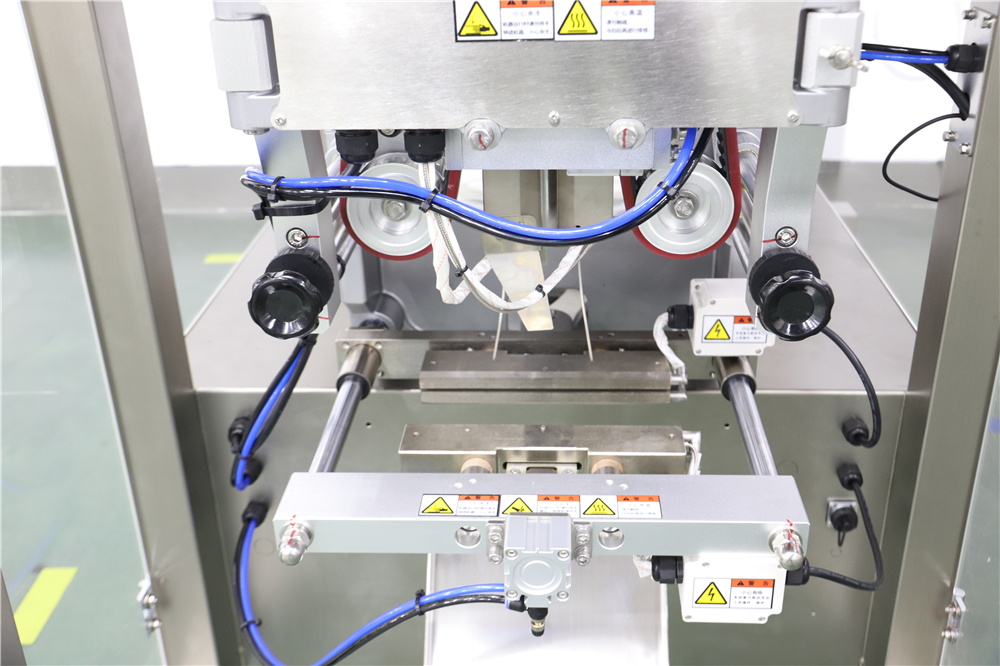
Horizontal sealing jaws on a Soontrue VFFS machine
Verification and Preventive Checks After Adjustment
Once a change is made, log the original symptom, the single parameter that was adjusted and the measured outcome. Note whether film, product recipe or line speed has changed in the recent past. Change only one controllable factor at a time so the effect can be isolated. Run a continuous sequence of packs and measure length, weight and seal integrity across the whole sequence rather than relying on a single sample.
If the same defect returns after a successful trial, or if temperature control, motor drives or safety interlocks behave irregularly, stop the machine and schedule a technical inspection according to the manufacturer’s guidelines. Early attention prevents secondary damage to film transport or sealing components.
Conclusion
Consistent bag length, accurate fill weight and reliable seals depend on matching each observed symptom to the right subsystem and confirming every change with measured results. Systematic checks of film transport, dosing repeatability and sealing conditions restore packaging uniformity and protect overall line efficiency.
Soontrue designs and manufactures a complete range of VFFS packaging equipment and integrated automated vertical packaging solutions. Teams reviewing equipment for powders, granules or liquids are welcome to contact Soontrue to explore configurations matched to product characteristics, bag formats and production targets.
Frequently Asked Questions
Why does a VFFS machine produce bags of different lengths?
Length differences most often come from film slip on the pull belts, incorrect bag-length settings, unstable encoder feedback or missed registration marks. Checking belt condition and registration contrast clears the majority of cases.
What causes inconsistent fill weights on a VFFS machine?
Variable weights arise from dosing-system repeatability, interruptions in product flow and incomplete discharge. Consistent offsets usually point to an incorrect target weight or a calibration drift on the scale or auger.
Why are VFFS bags leaking even when the seals look closed?
Micro-channels left by product particles, fine wrinkles that never fully fuse, or incomplete heat transfer through the film layers can leave a seal that appears closed yet still leaks under pressure or vacuum testing.
How can operators tell if a bag length error is mechanical or setting-related?
Measure a short run of consecutive packs. Random scatter from bag to bag usually indicates pull-belt slip or encoder noise. A steady, repeating length error that stays the same across many packs points to the programmed bag length, registration offset or photocell setup.
Does changing production speed affect VFFS seal quality?
Higher speeds shorten the available dwell time at the sealing jaws. If temperature and pressure are left unchanged, the seal may become incomplete. After a speed increase it is good practice to re-check jaw temperature, pressure and the actual dwell value, then confirm seal strength on a short trial run.
When is technical inspection necessary for a VFFS machine?
Repeated defects after correct adjustments, abnormal temperature control, unusual mechanical noise or any safety-related alarm call for a scheduled technical inspection rather than continued operator-level troubleshooting.