
Seafood Packaging Solutions: Matching Products, Packaging Formats, and Automation
Packaging Knowledge Hub

If you're seeking packaging automation solutions, please contact us, and we'll be delighted to offer you the most tailored solution.
Seafood processors face a distinct set of packaging demands. Moisture, temperature swings, irregular product shapes, and strict cold-chain requirements all influence how a packing system should be designed. A practical approach begins with the physical condition of the seafood, the intended market channel, and the required shelf-life performance. From those factors the suitable bag style, dosing method, sealing technology, and downstream handling can be selected. This product-first planning reduces later adjustments and supports consistent output across different seafood packing machine configurations.
Seafood Packaging Requirements
Moisture and Seal Integrity
Most seafood products release free water during freezing, thawing, or storage. That moisture can compromise seals if the packaging film or the sealing parameters are not matched to the product. Vacuum pouches and barrier laminates are frequently chosen because they limit oxygen exposure and keep liquid inside the pack. Seal strength must remain reliable after temperature cycling between production, frozen storage, and distribution.
When the product carries residual surface moisture, sealing jaw temperature, dwell time, and pressure need careful calibration. Testing with actual product samples under production conditions helps confirm that seals stay intact through the cold chain.
Product Handling and Portion Consistency
Shrimp, fillets, and value-added portions vary in size and shape. Manual portioning remains common for premium or irregular items because operators can inspect quality and orient the product before packing. Automated weighing and counting systems work well for more uniform pieces once the product has been graded. The goal is to keep net weight variation low while protecting the appearance of the seafood.
Gentle transfer from the processing area into the packing zone also matters. Drop heights, conveyor surfaces, and accumulation methods should avoid bruising or breaking fragile pieces.
Frozen Storage and Distribution
Packaging for frozen seafood must tolerate sub-zero temperatures without becoming brittle or losing seal integrity. Films selected for freezer use typically combine strength with sufficient flexibility at low temperatures. Once primary packs leave the filling machine, secondary packaging such as cartons and pallet loads needs to support efficient movement into cold storage and subsequent export or domestic distribution.
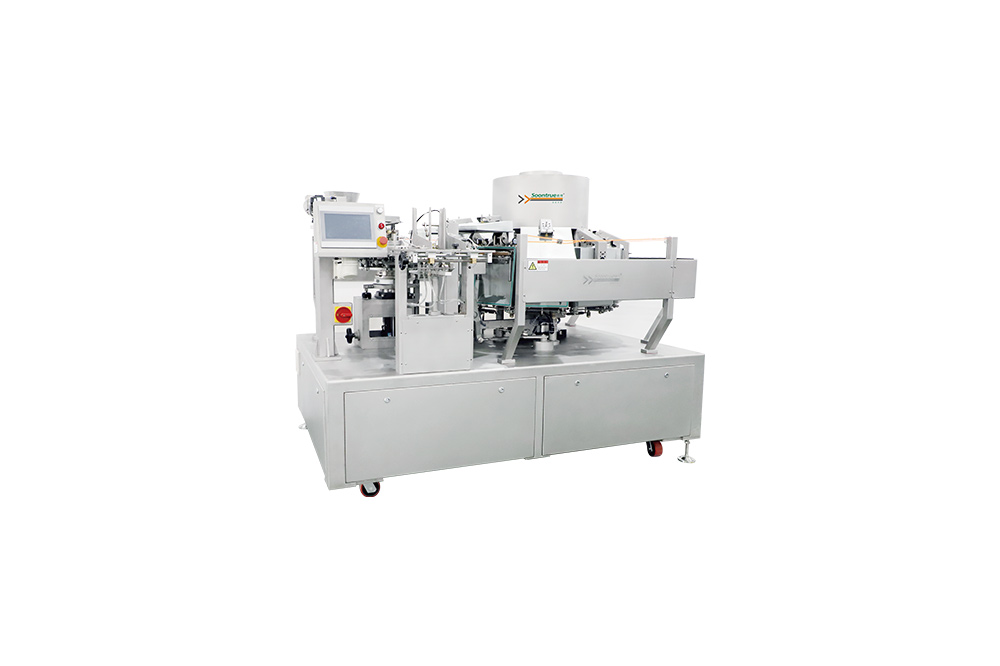
Soontrue GDSZ210-0810 Vacuum premade pouch packaging machine supports seal integrity and shelf-life for moisture-sensitive seafood products
Packaging Formats for Different Seafood Products
Different seafood categories align with different primary packaging formats. Matching the format to the product simplifies machine selection and improves pack quality.
|
Seafood Products |
Packaging Formats to Evaluate |
Key Considerations |
|
Frozen shrimp and seafood portions |
VFFS, premade pouch packaging |
Accurate dosing, controlled feeding, reliable sealing, and freezer-compatible film |
|
Fish fillets and portioned fish |
Flow wrapping, vacuum packaging |
Product dimensions, surface protection, and presentation for retail or foodservice |
|
Value-added seafood products |
Vacuum pouch packaging |
Bag style options, product moisture level, and consistent vacuum and seal quality |
|
Bulk seafood packs |
Large-format bagging and case packing |
Single-pack weight, bag strength, and downstream handling for cold-chain logistics |
For free-flowing frozen shrimp or mixed seafood portions, a vertical form-fill-seal system paired with a multihead weigher delivers precise weights into pillow or gusseted bags. When shelf appeal and reclosability become priorities, premade stand-up or zipper pouches provide a stronger retail presentation. Fish fillets or tray-packed portions often move through a horizontal flow wrapper that forms a pillow pack around the product while protecting its surface.
Vacuum packaging remains a frequent choice for value-added items such as marinated shrimp, prepared portions, or ready-to-cook seafood. Removing residual air slows oxidation and can improve the visual compactness of the pack.
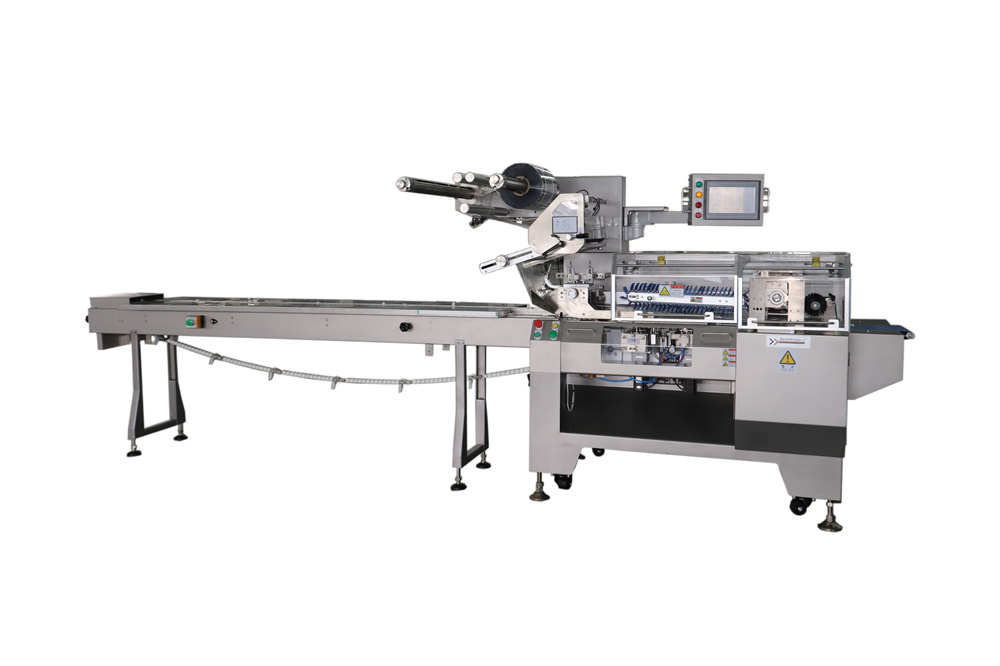
Soontrue SZ602 Horizontal flow wrapping machine provides gentle handling and consistent pillow packs for fillets and tray-packed seafood
Seafood Packaging Line Integration
A complete packaging line links product infeed, primary packing, inspection, and secondary handling into one continuous flow. Coordination among these stages determines overall efficiency and pack quality.
Product Feeding and Weighing
After processing or IQF freezing, seafood arrives at the packaging area. Multihead weighers or volumetric systems dose free-flowing products into the packaging machine. For irregular or premium items, operators may place product by hand into premade pouches or onto the infeed of a flow wrapper. Conveyors and accumulation tables smooth the transfer and keep the filling station supplied without overloading it.
Primary Packaging and Sealing
The primary machine forms or opens the bag, receives the product, and creates the final seal. Flow wrapping machines suit solid portions that travel horizontally. Vertical baggers handle free-flowing frozen pieces. Premade pouch systems, including vacuum models, accommodate a wide range of bag styles and allow visual inspection before sealing. Seal parameters must be validated with the actual film and product combination used in production.
Case Packing and End-of-Line Handling
Finished primary packs move into cartons or cases. Case packers can form, load, and seal cartons at speeds that match the primary equipment. Robotic palletizing then organizes the finished cases into stable pallet loads ready for cold storage or container loading. Integrating these stages reduces manual lifting and keeps the production pace consistent from filling through to the warehouse.
Soontrue GDS200-04 Seafood Vacuum Packaging Case
The GDS200-04 is a four-station vacuum premade pouch packing machine designed for seafood applications where operators benefit from direct product control. After shrimp or other seafood has been processed and portioned, the operator places the product into an open premade pouch. The machine then completes pouch transfer, vacuum evacuation, sealing, and discharge.
This semi-automatic arrangement is useful when product orientation, visual quality checks, or precise portion placement remain important. Applications include peeled shrimp, frozen shrimp portions, marinated seafood, and ready-to-cook products. Vacuum removal of residual air supports compact packs that travel well through chilled or frozen distribution.
In a typical workflow the sequence runs from raw shrimp feeding through automatic head removal and peeling, followed by inspection, manual loading into the vacuum premade pouch system, and finally secondary packaging. The GDS200-04 balances operator oversight with automated sealing performance, making it a practical step for factories that process irregular or high-value seafood items.
Film selection, vacuum level, pouch size, and target output should be confirmed with product samples before final machine configuration. This testing stage confirms that seals remain reliable after freezing and that the finished pack meets both technical and commercial expectations.
Seafood Packaging Equipment Selection
A short checklist helps guide the evaluation of packaging equipment for seafood lines.
- Product characteristics and condition: size range, moisture level, frozen or chilled state, and surface fragility.
- Bag format and sealing requirements: pillow bag, stand-up pouch, vacuum pouch, or large bulk bag, together with the needed seal strength and barrier properties.
- Target output and changeover frequency: expected packs per minute and how often product or bag size will change.
- Feeding method and automation level: multihead weigher, volumetric dosing, or manual placement for quality-critical items.
- Packaging material and sample testing: confirmation that the selected film performs under real production and storage conditions.
- Future line integration and technical support: compatibility with case packing, palletizing, and availability of installation and after-sales service.
Conclusion
Effective seafood packaging starts with a clear understanding of the product and the performance expected from the finished pack. Once those requirements are defined, the choice of bag format, dosing method, sealing technology, and line layout follows more naturally. Vacuum premade pouch systems, flow wrappers, and vertical baggers each serve specific product families and commercial channels.
Soontrue supplies a full range of primary packaging equipment and supports integration with secondary and end-of-line systems. Factories planning a new line or an upgrade can review product samples, target speeds, and layout constraints with our team to arrive at a practical configuration. For further discussion of seafood packaging options, visit the Soontrue meat, poultry and seafood solutions page or contact the technical team directly.
Frequently Asked Questions
What packaging formats work best for frozen shrimp?
Pillow bags produced on VFFS machines and premade pouches are the most common formats for frozen shrimp. The choice depends on target weight, retail presentation needs, and whether vacuum or standard atmosphere packing is required.
When is vacuum packaging preferred for seafood?
Vacuum packaging suits value-added products, marinated items, and any seafood that benefits from reduced oxygen exposure and a compact pack. It is also useful when longer shelf life or improved appearance in the freezer is a priority.
Can flow wrappers handle fish fillets?
Yes. Horizontal flow wrappers package fillets and portioned fish when the product travels on a conveyor and needs surface protection. Film selection and sealing parameters should be confirmed with actual product samples.
How important is line integration for seafood packaging?
Coordination between primary packing, case packing, and palletizing keeps the overall process stable. When these stages run at matched speeds, product accumulates less and labor requirements for handling finished packs decrease.
What information is needed to configure a seafood packing line?
Product photos or samples, target pack weights, preferred bag styles, required output, film specifications, and details of the existing processing layout allow a more accurate equipment recommendation and layout proposal.