
The Future of Flow Wrapping: 8 Technologies Food Manufacturers Should Watch
HFFS Machine Blog

If you're seeking packaging automation solutions, please contact us, and we'll be delighted to offer you the most tailored solution.
Food manufacturers face mounting pressure to raise throughput, cut waste, and adapt to shifting SKU mixes while meeting stricter sustainability and hygiene expectations. Flow wrapping sits at the center of many of these challenges. The machines that once focused mainly on speed now incorporate sensors, adaptive controls, and film-handling innovations that reshape entire packaging lines.
The following eight technologies already appear on leading production floors and continue to mature. Each offers measurable gains in uptime, pack quality, material efficiency, or operational flexibility. Understanding how they work together helps engineering and operations teams set realistic upgrade priorities and select equipment that remains relevant for the next production cycle.
1. AI-Powered Vision Inspection and Defect Detection
Modern vision systems combine high-resolution cameras with trained models that examine seal integrity, print registration, product presence, and film defects at line speed. Rejects occur in real time, and the data stream feeds root-cause analysis. This capability moves quality control from periodic sampling to continuous verification, a practical necessity when lines exceed several hundred packs per minute.
Food plants packaging biscuits, snack bars, or frozen portions benefit especially from early detection of incomplete seals or missing items. The same systems can verify date codes and lot information, supporting traceability requirements without slowing the line. Training the models on representative product and film samples during commissioning ensures accuracy from the first production run.
When specifying vision, confirm lighting stability under typical factory conditions, edge-processing options for low latency, and seamless integration with the reject mechanism. Platforms designed for ready connection to vision modules simplify later upgrades.
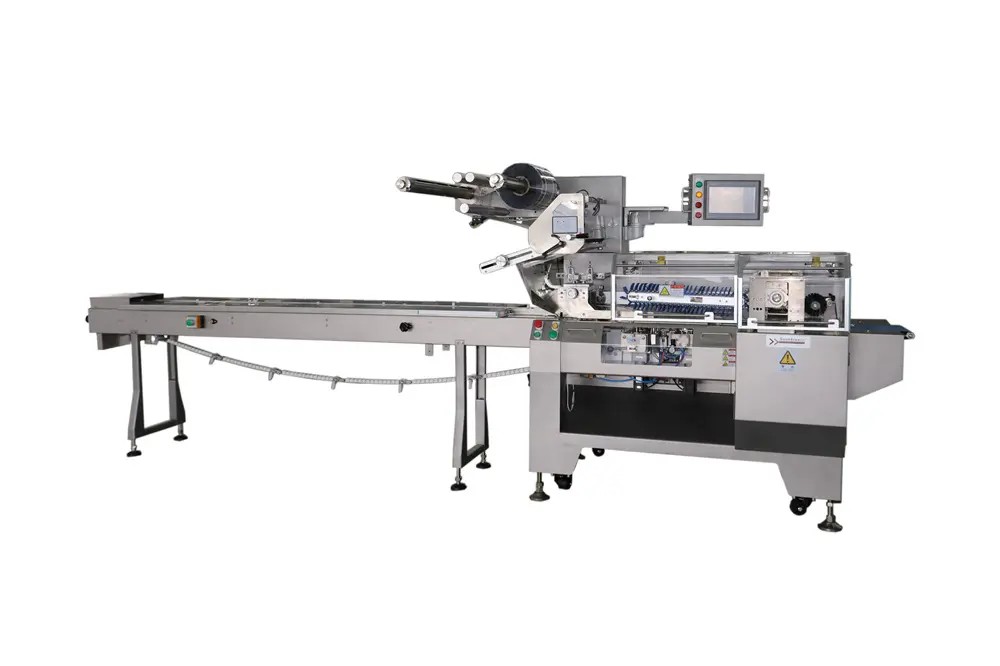
Soontrue SZ602 flow wrapping machine engineered for versatile film and product handling.
2. IoT Sensors and Predictive Maintenance
Vibration, temperature, torque, and film-tension sensors generate continuous data streams. Machine-learning models trained on historical patterns flag emerging wear weeks before failure. Maintenance teams schedule interventions during planned stops rather than reacting to sudden breakdowns. The result is higher overall equipment effectiveness and longer component life.
In practice, predictive alerts often surface issues such as bearing wear on film rollers or gradual drift in sealing temperature long before pack quality declines. Plants that combine sensor data with structured maintenance records refine the models over time, improving prediction accuracy. Successful pilots often begin with the highest-impact axes: sealing jaws, film drive, and infeed motors. Open data interfaces allow the same sensors to feed plant-wide dashboards. Equipment built with predictive-ready architecture shortens the path from sensor installation to actionable alerts.
3. Advanced Servo Motion Control and Multi-Jaw Sealing
Independent servo axes deliver precise film feed, product timing, and jaw motion. Multi-jaw or extended-dwell designs keep sealing pressure applied longer even at elevated speeds. This combination supports thinner gauges and mono-material films that demand tighter process windows. Energy use per pack declines because motors operate only when needed and sealing temperatures stay within efficient ranges.
Servo systems also enable finer control of acceleration profiles, which protects fragile products during high-speed transfers. Registration accuracy improves for printed films, reducing scrap from misaligned graphics. High-speed models such as the SZ580 series illustrate how servo platforms and optimized jaw geometry raise output while preserving seal integrity across a broad film range.
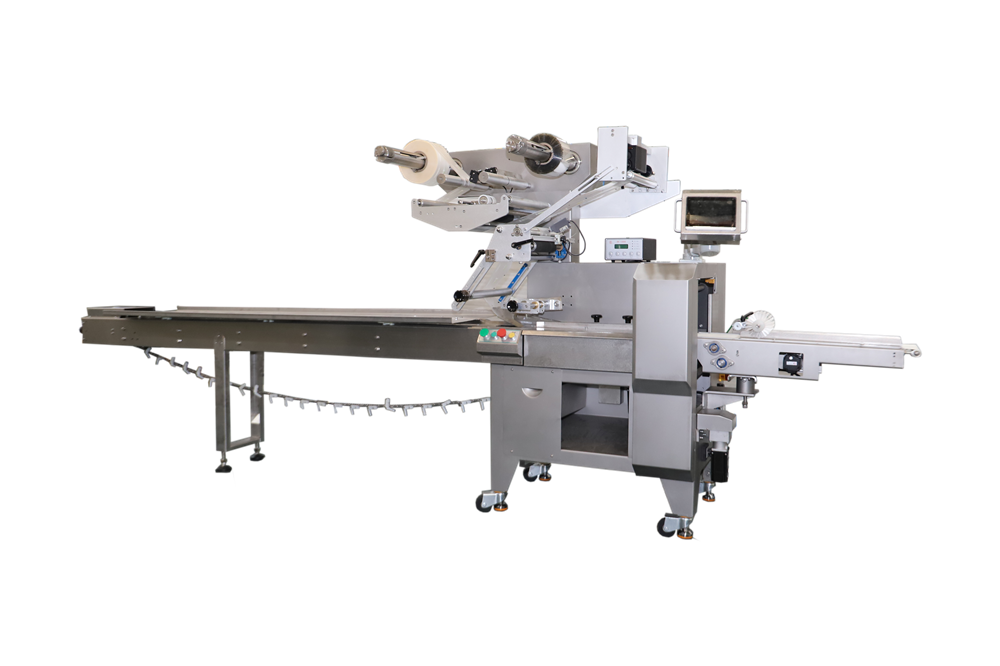
Soontrue SZ580 high-speed packaging machine delivering up to 500 packs per minute.
4. Sustainable Film Compatibility Technologies
Mono-PP, mono-PE, PCR content, and paper-based webs place new demands on forming boxes, fin wheels, and end-seal jaws. Temperature profiling, ultrasonic options, and cold-seal capability expand the usable film window. Extended dwell times compensate for the different melt and seal characteristics of these materials. Early validation of film and machine together remains essential to protect both speed and seal strength.
Many manufacturers run side-by-side trials of conventional and mono-material films on the same platform to quantify any speed or waste differences. Machinery that accepts a wide film spectrum without extensive tooling changes reduces the cost of material trials and supports gradual portfolio shifts toward recyclable structures. Documentation of validated film recipes becomes a valuable internal asset shared across sites.
5. Modular Architecture and Recipe-Driven Changeover
Modular frames accept add-on modules for coding, gas flushing, or additional inspection without redesigning the entire line. Stored recipes recall film tension, jaw temperature, and conveyor speeds at the touch of a screen. Servo-assisted or tool-less adjustments further compress changeover time. Multi-SKU and contract operations gain the ability to switch products within minutes rather than hours.
Changeover metrics tracked over successive runs typically show progressive improvement as operators become familiar with the recipe system. Complete automatic packing lines built on modular principles allow phased expansion as volume or SKU count grows. The same modular approach supports future addition of secondary packaging stations without major civil works.
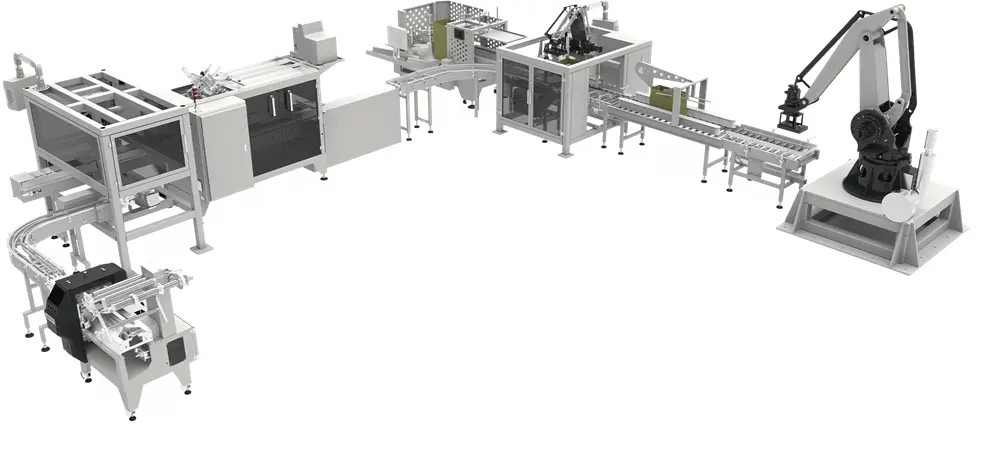
Integrated automatic packaging solution centered on flow wrapping technology.
6. Automated Infeed, Grouping, and Collaborative Robotics
Smart feeders, bias conveyors, and pick-and-place systems deliver products in the correct orientation and spacing. Collaborative robots handle irregular or fragile items that previously required manual placement. The upstream automation stabilizes the flow into the wrapper, reducing stops caused by misfeeds and protecting product quality. Labor previously dedicated to loading shifts toward higher-value supervision tasks. Integration of these systems with the wrapper’s recipe memory ensures that product-specific feed patterns activate automatically during changeovers.
7. Digital Twins and Real-Time Line Optimization
A digital twin mirrors the physical line and enables what-if simulations for speed changes, film switches, or layout adjustments. Live data from sensors updates the model so operators see the impact of parameter tweaks before implementing them. Plant-level orchestration platforms combine OEE dashboards with closed-loop control of film tension and conveyor rates. The same data foundation supports continuous improvement programs across multiple shifts and sites.
Early adopters report faster resolution of bottlenecks because the twin highlights the true constraint rather than the most visible stoppage. For frozen and delicate products, specialized configurations such as the frozen dumpling packing solution demonstrate how integrated controls maintain gentle handling while sustaining consistent output.
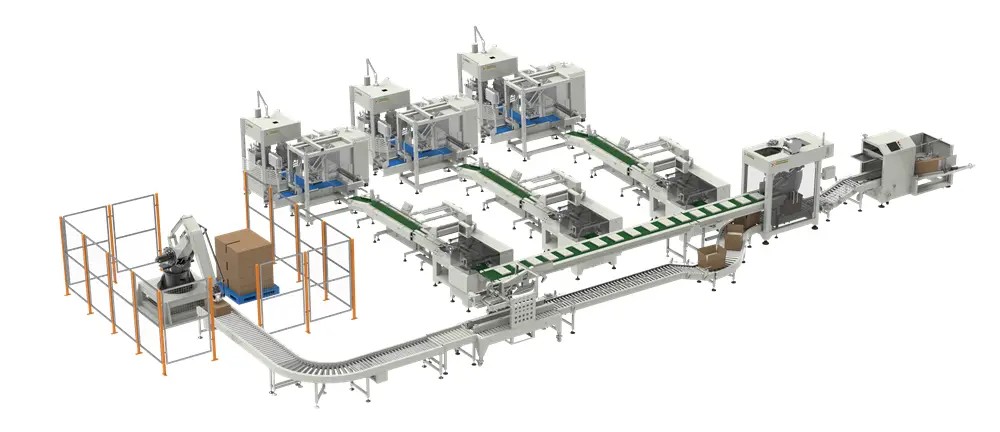
Automated packing solution designed for frozen dumplings and temperature-sensitive products.
8. Intelligent HMI and Remote Monitoring
Modern human-machine interfaces present clear status, guided recovery steps, and recipe selection on large touch screens. Remote connectivity lets specialists diagnose issues without travel, shortening mean time to repair. Natural-language or visual assistance further reduces the training burden for new operators. Consistent interfaces across a fleet of machines simplify multi-line supervision.
How These Technologies Reinforce One Another
Vision data improves predictive models. Servo precision expands the film types that sustainable sealing systems can handle. Modular frames make it practical to add robotics or additional inspection later. Digital twins benefit from the richer sensor sets that predictive maintenance already requires. A coherent technology roadmap therefore multiplies the return on each individual investment.
Practical Implementation Path
Teams often begin with vision and basic predictive sensing because both deliver rapid uptime and quality gains. Servo and modular upgrades follow when multi-SKU pressure or film changes become priorities. Full digital-twin and line-orchestration projects deliver the greatest value once foundational data infrastructure exists. Film trials remain a parallel activity that informs sealing-system choices at every stage.
Detailed guidance on matching machine characteristics to product requirements appears in theSoontrue packaging knowledge resources.
Selecting a Partner for Long-Term Capability
Equipment decisions today influence flexibility, film latitude, and data readiness for years. Look for platforms that already incorporate servo motion, open interfaces, modular expansion points, and proven performance across bakery, snack, and frozen applications. Support that includes film trials, line engineering, and remote diagnostics further protects the investment.
Soontrue develops flow wrapping systems and complete packaging lines with these future requirements in view. From high-speed rotary platforms to specialized frozen-product solutions and integrated secondary packaging, the portfolio supports progressive adoption of the technologies outlined above. Engineering teams that partner early gain both immediate performance gains and a clear path toward smarter, more sustainable packaging operations.
To discuss application-specific configurations or arrange a film trial, contact Soontrue technical team for tailored recommendations.
FAQ
What is the typical ROI timeline for adding AI vision or predictive maintenance to an existing flow wrapper?
Most plants recover the investment in 12 to 24 months through reduced scrap, fewer unplanned stops, and lower quality-related complaints. Vision systems that catch seal defects early often show payback in under a year on high-speed lines. Predictive sensors deliver value as soon as the first avoided failure is logged. Exact returns depend on current downtime costs and product value.
Can older flow wrappers be upgraded with these technologies, or is a new platform required?
Many machines accept retrofit sensors, camera mounts, and open PLC interfaces for basic predictive monitoring and vision. Full servo conversion or modular frame expansion usually requires a newer platform. A practical approach is to evaluate current machine condition and data openness first, then decide between targeted upgrades and a new servo-based model that already includes the interfaces.
How do mono-material and paper-based films affect sealing speed and strength?
These films often need tighter temperature control, longer dwell, or alternative sealing methods such as ultrasonic or cold seal. High-performance servo machines with extended-dwell or multi-jaw designs maintain competitive speeds while achieving reliable seals. Film trials on the actual machine remain the most reliable way to confirm throughput and seal quality before full production.
What data security considerations apply when connecting flow wrappers to plant networks or cloud platforms?
Modern systems support segmented networks, role-based access, and encrypted remote connections. Best practice is to keep production control on a separate industrial network while allowing only authorized diagnostic traffic outward. Ask the supplier for documentation on authentication methods, data ownership, and support for on-premise versus cloud options.
In what order should a mid-sized snack or bakery plant adopt these eight technologies?
Start with vision inspection and basic predictive sensors for quick quality and uptime gains. Next, improve changeover capability through recipe systems and modular options if multi-SKU volume is rising. Servo upgrades and sustainable-film capability follow when film changes or higher speeds become priorities. Digital twins and full line orchestration deliver the greatest value once sensor and data foundations are in place.
How important is automated infeed when moving to higher-speed or multi-SKU flow wrapping?
Stable product presentation is essential for high-speed performance and consistent seals. Automated feeders, grouping systems, and collaborative robots reduce misfeeds and product damage while freeing operators for supervision. On multi-SKU lines the same systems store product-specific feed patterns that activate with the recipe change, keeping overall changeover times short.
What should engineering managers look for when evaluating a supplier for long-term Industry 4.0 readiness?
Prioritize open data interfaces, native recipe management, modular mechanical design, and proven experience with vision and predictive packages. Support for film trials, remote diagnostics, and line engineering adds practical value. A supplier that already offers complete packing-line integration reduces the risk of interface gaps between the wrapper and upstream or downstream equipment.