
Solving Frozen Food Packaging Challenges: How Custom Automation Unlocks High Throughput and Scalability
Packaging Knowledge Hub

If you're seeking packaging automation solutions, please contact us, and we'll be delighted to offer you the most tailored solution.
Global demand for ready meals, frozen proteins, and individually quick-frozen (IQF) products continues to climb. Consumers expect consistent quality, longer shelf life, and attractive retail presentation. Meeting those expectations places heavy pressure on packaging lines that operate in sub-zero or high-moisture environments. Manual or semi-automated processes struggle under these conditions. Frost accumulates on film paths, seals fail when temperatures swing, and operators wearing heavy protective gear lose the dexterity needed for precise work.
Fully automated, custom-designed packaging lines remove many of these physical constraints. They protect cold-chain integrity from primary bagging through secondary cartoning and tertiary case packing, while delivering the throughput and flexibility modern frozen-food plants require. The following sections examine the most common obstacles, the architecture of a modern automatic line, the features that keep equipment reliable in harsh conditions, and how a specialized partner such as Soontrue engineers complete solutions for products ranging from dumplings to multi-component entrées.
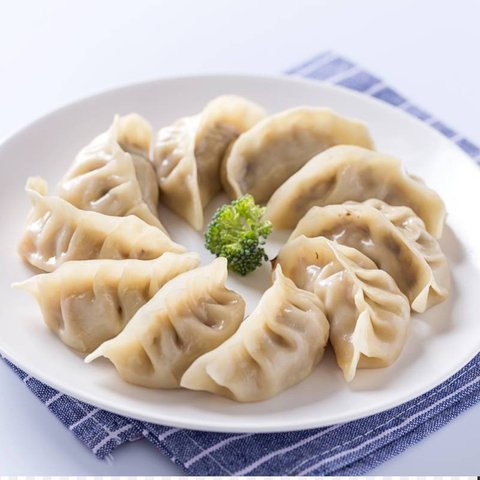
Frozen dumplings and related products commonly packaged on automated cold-chain lines.
The Hidden Challenges of Frozen Food Production and Packaging
Environmental Degradation and Condensation
Cold rooms and packaging halls create continuous temperature differentials. Warm, moist air meets chilled surfaces and deposits frost on film rollers, sealing jaws, and conveyor belts. The resulting ice crystals interfere with film tracking and produce weak or incomplete seals. Slippery film surfaces also cause frequent jams. Over time these micro-defects accumulate into measurable losses of product and packaging material. Equipment that lacks heated enclosures or specialized anti-frost coatings requires frequent stoppages for manual cleaning, cutting overall equipment effectiveness.
Product-Specific Handling Hurdles
Seafood portions and IQF proteins often arrive sticky, wet, or irregularly shaped. Conventional grippers and belts designed for dry bakery items struggle to orient and portion these products without damage. Ready meals and entrées present a different set of demands: multi-component feeding, delicate tray sealing, and protection of fragile crusts or toppings. Each product family needs its own combination of feeders, guides, and end-effectors. A single standardized machine rarely satisfies all of them at the required speed and quality level. Specialized frozen food packaging solutions address these variations through tailored feeding and handling systems.
The End-of-Line Bottleneck
Primary packaging equipment—multi-head weighers linked to vertical or horizontal form-fill-seal machines—can run at high cycle rates. Secondary packaging (cartoning) and tertiary packaging (case packing and palletizing) frequently lag behind. When operators must manually load bags into cartons or stack cases onto pallets, the entire line slows to the pace of the slowest manual station. The result is inventory buildup after the bagger, increased labor hours, and lost opportunity to ship finished goods. Integrating a complete automatic packing line closes this gap by matching secondary and tertiary speeds to primary output.
Labor in Harsh Cold Environments
Working for extended periods in cold rooms raises turnover rates and safety risks. Protective clothing reduces manual dexterity, while mandatory warm-up breaks interrupt production flow. Recruiting and retaining skilled packers for these conditions grows more difficult each year. Automation that removes operators from continuous cold exposure simultaneously improves ergonomics and stabilizes output.
Strict Sanitation and Washdown Demands
USDA and FDA hygienic standards require frequent and thorough cleaning. Standard industrial electronics tolerate neither high-pressure washdown nor residual moisture. Corrosion of frames, bearings, and connectors shortens equipment life. Lines built with stainless-steel construction, IP65 or IP66 enclosures, and sealed cable entries meet these regulatory requirements while remaining serviceable over many years of aggressive sanitation cycles.
Anatomy of a Modern Automatic Frozen Food Packing Line
A complete automatic packing line for frozen foods integrates three sequential stages. Each stage is engineered for the temperature, moisture, and product characteristics unique to the cold chain.
Primary Packaging: Form-Fill-Seal and Flow Wrapping
Multi-head weighers or volumetric feeders deliver precise portions into high-speed vertical form-fill-seal (VFFS) or horizontal flow-wrapping machines. These units form pillow bags, stand-up pouches, or thermoformed trays. Advanced sealing systems combine heated jaws with cold-chain-resistant films. Optional Sense & Seal technology detects product or film contamination in the seal area and rejects defective packs before they leave the machine. Nitrogen flushing can be added to extend shelf life of oxygen-sensitive products. For delicate items such as frozen dumplings, gentle infeed conveyors and soft-landing chutes minimize surface damage. Models such as the SZ602 Flow Wrapping Machine are engineered specifically for frozen dumplings, tray-packed items, and ready meals.
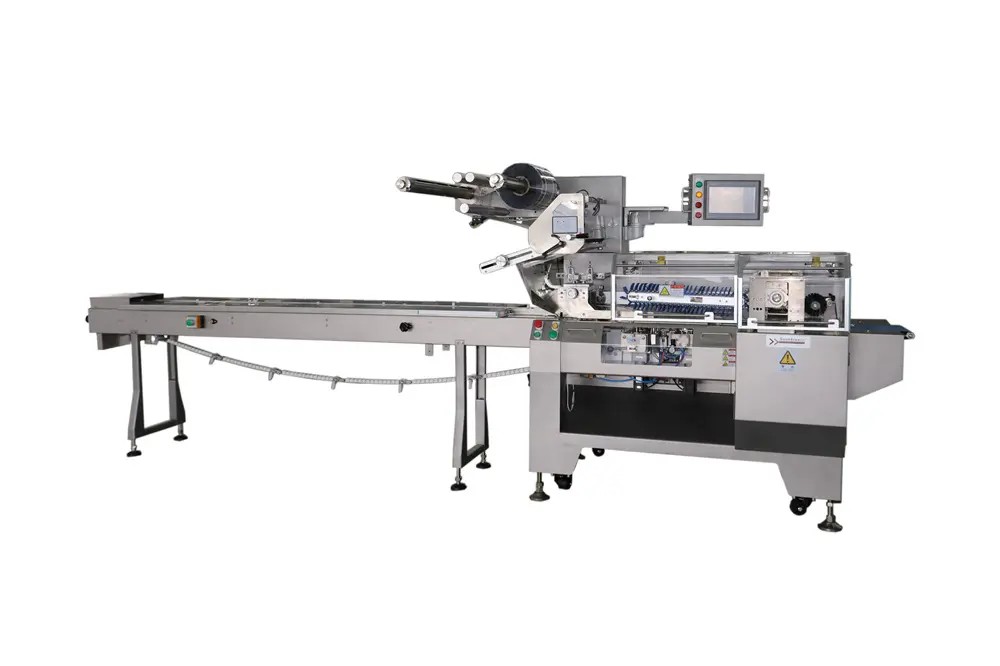
SZ602 Flow Wrapping Machine designed for frozen dumplings, tray-packed products, and ready meals.
Secondary Packaging: Cartoning and Robotic Pick-and-Place
Once primary packs leave the bagger or tray sealer, automated cartoners erect, load, and close cartons at matching speeds. Delta robots fitted with anti-stick or vacuum grippers handle cold, slick packages without tearing film or crushing product. Recipe-driven changeovers allow the same cell to switch between different carton sizes or bag counts within minutes. This stage eliminates the classic bottleneck between high-speed primary packaging and manual cartoning.
Tertiary Packaging: Case Packing and Palletizing
Top-load or wraparound case packers group finished cartons into shipping cases. Robotic palletizers then stack cases according to optimized patterns that fit the limited floor space of cold-storage warehouses. Compact footprints and vertical integration keep the entire end-of-line system within the temperature-controlled envelope, reducing the distance products travel between packaging and frozen storage.
Key Automation Features for Cold-Chain Reliability
Hygienic, Washdown-Ready Construction
Frames fabricated from 304 or 316 stainless steel resist corrosion under repeated high-pressure cleaning. Electrical enclosures rated IP65 or IP66 keep moisture away from drives, sensors, and control boards. Smooth surfaces and open-frame designs allow rapid drainage and visual inspection, supporting compliance with food-safety audits.
Thermal Protection of Critical Components
Heated electrical cabinets maintain internal temperatures above dew point. Anti-freeze pneumatic components and specialized lubricants keep cylinders and valves functional at low ambient temperatures. Anti-corrosion coatings on exposed metal parts further extend service intervals in high-humidity zones.
Modular and Compact Footprints
Temperature-controlled real estate is expensive. Modular machine designs allow capacity to be added or reconfigured without expanding the cold room. Compact layouts also shorten product travel distances, reducing the risk of partial thawing between process steps.
Fast SKU Changeover and Intelligent Interfaces
Recipe-driven HMIs store parameters for film type, bag length, carton style, and robot trajectories. Operators select a new product code and the line adjusts automatically. Tool-less change parts further cut downtime when switching between single-serve and family-size formats.
Why Soontrue: Partner for Customized Frozen Food Packaging
Soontrue approaches each project as a tailored engineering exercise rather than a catalog selection. Engineers begin with the plant footprint, product characteristics, and target throughput, then design a continuous flow from primary packaging through secondary and tertiary stages. The resulting system matches the specific handling needs of frozen dumplings, IQF seafood, or multi-component ready meals.
Full-line integration links multi-head weighers, flow wrappers or VFFS machines, robotic cartoners, case packers, and palletizers into a single coordinated cell. Communication protocols and shared recipe management keep every station synchronized. For plants already operating dumpling forming equipment, Soontrue offers direct mechanical and control interfaces so product moves from forming to frozen storage without intermediate manual handling. One proven example is the automated packaging solution tailored for frozen dumplings, covering gentle transfer, strong sealing against freezer burn, and downstream cartoning.
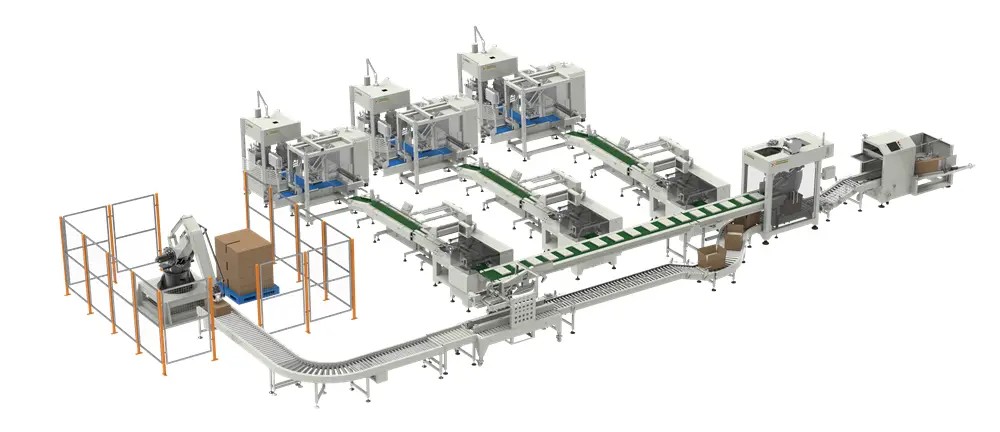
Complete automated packaging solution for frozen dumplings, integrating primary, secondary, and tertiary stages.
Equipment is built for the realities of cold-chain environments: stainless frames, moisture-protected electrics, and hygienic washdown capability. After installation, Soontrue provides site planning support, vertical start-up assistance, operator training, and responsive technical service. Spare-parts availability and remote diagnostics keep lines running with minimal unplanned downtime. Explore broader frozen food packaging solutions and complete packing line configurations to match specific plant requirements.
Conclusion
End-of-line bottlenecks and the physical strain of cold-room labor no longer need to limit growth in frozen-food production. Custom automatic packing lines address the environmental, product-handling, and regulatory constraints that slow traditional operations. By integrating primary, secondary, and tertiary packaging into a unified, washdown-ready system, plants achieve higher throughput, more consistent quality, and greater operational flexibility.
Soontrue combines three decades of packaging-automation experience with deep knowledge of frozen-food requirements. The engineering team designs solutions that fit existing plant layouts and product portfolios, then supports them through the full equipment life cycle. Ready to optimize a frozen food packaging line? Contact Soontrue’s engineering experts for a custom line assessment and consultation.
FAQ
1. Can an automated line connect directly to existing dumpling or forming machines?
Yes. Interfaces are designed for seamless mechanical and control integration so product flows continuously from forming into packaging without manual transfer points. See the frozen dumpling packaging solution for integration details.
2. How does packaging protect products from freezer burn?
Strong, consistent seals, films selected for low-temperature performance, and optional gas flushing create a reliable barrier that maintains product quality throughout cold storage and distribution.
3. Is the same line able to handle multiple pack sizes?
Recipe-driven changeovers and modular tooling support rapid switches between single-serve, multi-packs, and family-size formats, keeping downtime low when SKUs change.
4. Are delicate frozen items suitable for high-speed automation?
Specialized feeders, soft-handling conveyors, and vacuum or anti-stick grippers maintain product integrity while still achieving the cycle rates required for commercial volumes.
5. What support is available after installation?
Soontrue supplies operator training, remote diagnostics, spare-parts logistics, and on-site technical assistance so plants can maintain high uptime over the long term.