
How to Select an Automatic Packing Line for Snack Foods
Packaging Knowledge Hub

If you're seeking packaging automation solutions, please contact us, and we'll be delighted to offer you the most tailored solution.
Snack manufacturers face a quiet but persistent drain on margins every day. Broken chips, overweight bags that give away free product, unexpected stoppages, and the steady cost of extra hands on the line all add up. These issues rarely appear on a single report, and they steadily reduce the return on every batch that leaves the fryer or extruder.
Moving from a collection of standalone machines to a fully integrated automatic packing line changes that equation. The right line matches the physical behavior of the snack, the speed of upstream processes, and the real constraints of the factory floor. This guide lays out a practical framework for making that selection: matching product traits to equipment, calculating the metrics that matter, planning the layout, integrating quality and secondary packaging, evaluating total cost of ownership, and choosing a partner who can deliver a complete solution.
Map Your Snack Product Characteristics to Equipment Types
Equipment selection starts with the product itself. Shape, density, surface texture, and sensitivity to impact determine whether a vertical form-fill-seal system, a horizontal flow wrapper, or a specialized gentle-handling line will deliver consistent results at the required speed.
Lightweight and Fragile Snacks
Potato chips, puffed corn, and extruded snacks share a combination of low bulk density and high breakage risk. High drop distances or aggressive handling quickly turn finished product into waste. Vertical form-fill-seal machines paired with multihead weighers address these challenges directly. Low-drop transfer angles, cushioned weighing buckets, and carefully timed discharge reduce impact. Nitrogen flushing during the seal cycle further protects shelf life by limiting oxygen exposure inside the finished bag. These systems routinely achieve the high packs-per-minute rates that match continuous fryer or extruder output while keeping product integrity intact.
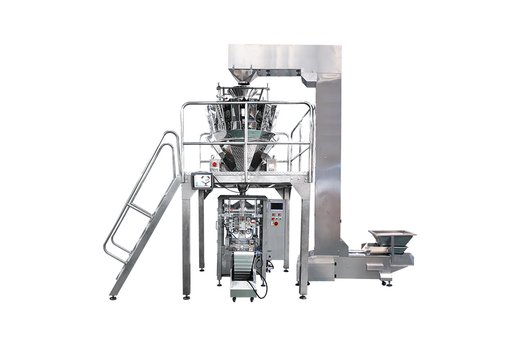
Multihead weigher integrated with vertical packing system for precise, low-breakage snack dosing
Individual and Solid Unit Snacks
Protein bars, biscuits, waffles, and chocolate pieces require precise orientation and gentle contact. Horizontal flow wrappers excel here. Automated smart feeding systems align each piece on the infeed conveyor, while servo-driven film tracking maintains consistent package length and seal quality even at elevated linear speeds. Sorting belts and reject stations remove misaligned or damaged items before they enter the wrapping zone, protecting both product presentation and overall line efficiency. For multi-piece or chain packs, collating systems group items accurately before the final wrap, supporting both retail and club-store formats.
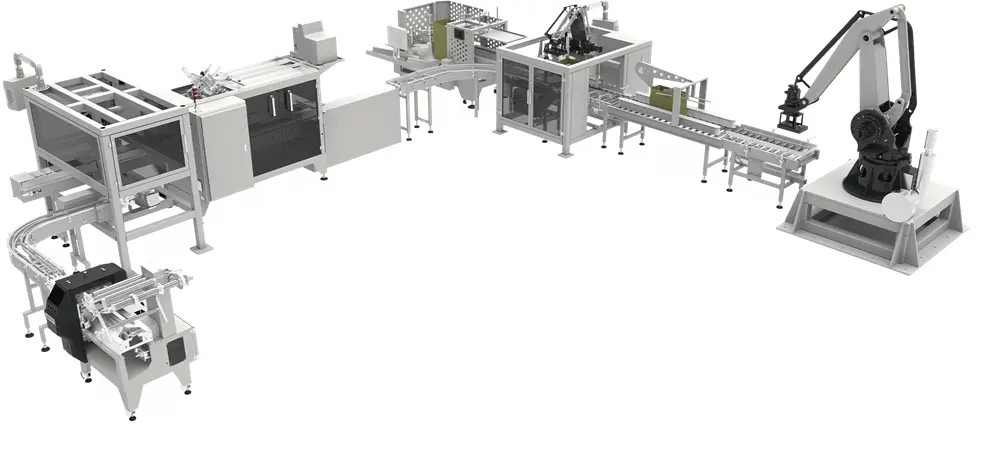
Complete automated flow packaging line for solid unit snacks such as biscuits and protein bars
Oily, Salty, or Dust-Heavy Snacks
Roasted nuts and seasoned tortilla chips introduce dust and residual oils that can compromise seals and accelerate wear on contact surfaces. Machines built with IP65 or IP66 stainless steel frames (SUS304 or SUS316) resist corrosion and support thorough washdown. Integrated dust extraction at critical transfer points keeps sealing jaws clean, while continuous heat-seal technology maintains consistent bag integrity even when film surfaces carry light residue. These design choices keep the line running longer between cleanings and reduce unplanned maintenance.
Calculate Key Production and Throughput Metrics
Capacity planning prevents two common errors: buying a line that cannot keep pace with upstream production, or investing in excess speed that remains unused. Target packs per minute must align with the sustained output of ovens, fryers, or extruders after accounting for typical stoppages and changeovers. Multihead weighers deliver the dosing precision that keeps giveaway under control; accurate weighing can save substantial quantities of product over a year of continuous operation.
SKU diversity adds another layer. Lines that support rapid film and bag-former changeovers, ideally tool-less and guided by stored recipes on the HMI, allow manufacturers to switch between bag sizes and styles without long downtime. Evaluating how many different pack formats the plant runs each week helps determine the level of flexibility required. Modern systems store dozens of product recipes, so operators can recall the correct film tension, sealing temperature, and conveyor speeds with a single selection on the touchscreen.
Factory Layout and Environmental Considerations
Even the best equipment underperforms when the physical plant cannot support it. Layout decisions and environmental readiness therefore belong in the selection process from the start.
Spatial Constraints and Line Layouts
Linear layouts suit high-speed, single-SKU operations where product flows in a straight path from primary packaging to case packing. U-shaped and L-shaped arrangements make better use of limited floor space and can reduce the walking distance for operators who still interact with the line. Vertical clearance deserves equal attention: multihead weighers and bucket elevators require sufficient headroom, and early measurement of ceiling height avoids costly redesigns later.
Hygiene, Safety, and Maintenance Access
Snack packaging lines must meet food-safety expectations set by HACCP, FDA, and CE requirements. Washdown-ready construction, smooth surfaces that shed debris, and tool-less disassembly of contact parts all support daily sanitation. Open machine designs that give technicians clear access to drives, belts, and sealing assemblies reduce the time needed for both routine maintenance and unexpected interventions.
Beyond Bagging: End-to-End Line Integration
A modern packing line is more than a bagger. Primary packaging—whether vertical form-fill-seal or horizontal flow wrap—forms only the first stage. Quality-assurance modules and secondary packaging complete the system.
Inline checkweighers reject underweight or overweight bags before they reach the case packer, protecting both compliance and brand reputation. Metal detectors and X-ray inspection systems add another layer of security by identifying foreign materials. These stations integrate directly into the conveyor flow so that rejected packs leave the line without interrupting continuous operation.
Secondary packaging then takes the finished bags into cases. Automatic case packing, robotic pick-and-place cells, and end-of-line palletizing convert individual packs into warehouse-ready loads. When every stage shares synchronized controls and a common data interface, the entire line operates as a single coordinated system rather than a sequence of independent machines. Open communication protocols such as OPC-UA further allow the packaging line to exchange real-time data with plant MES or ERP systems, supporting traceability and production planning.
Calculating True Cost of Ownership and ROI
Capital cost is only the starting point. Labor reduction typically delivers the largest ongoing saving. A fully automated snack line can often operate with one or two operators where six to eight people were previously required for feeding, monitoring, and packing. Material waste falls as well: servo-driven film tracking and precise weighing cut giveaway and reduce scrap film. Reliable PLC controls and clear HMI interfaces further lower the frequency and duration of maintenance stops.
A realistic total-cost-of-ownership model includes purchase price, installation, training, expected labor hours, film and product savings, energy use, and projected maintenance over a five- to seven-year horizon. When these figures are assembled, the payback period for a well-specified turnkey line commonly falls between 18 and 36 months, depending on local labor rates and shift patterns.
Why Turnkey Solutions Deliver Stronger Results
Assembling a line from multiple independent suppliers often creates hidden friction. Communication gaps appear during commissioning, and responsibility for performance shortfalls becomes difficult to assign. A single-source turnkey approach removes those points of friction and places full accountability with one engineering partner.
Soontrue designs complete packing lines around the specific profile of each snack product. From the first layout consultation, the engineering team maps product characteristics such as fragility, oil content, size variation, and target speed directly into the choice of primary packaging technology, feeding systems, and downstream modules. Conveyor systems, bag formers, and product-transfer mechanisms are engineered together so that every hand-off remains gentle and continuous, protecting chips, bars, nuts, and extruded snacks throughout the process. Dedicated solutions such as the automatic packaging line for rice rollers and similar products demonstrate how specialized gentle handling is applied to cylindrical and fragile snacks.
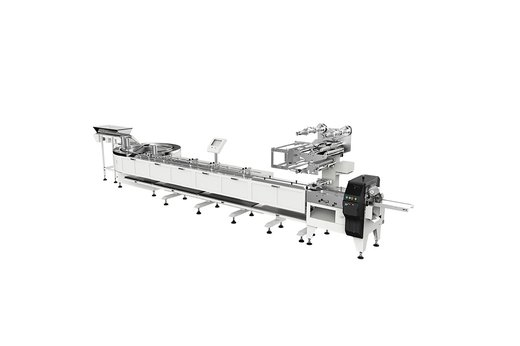
Specialized automatic packaging line for rice rollers, egg rolls, and similar fragile snack products
The full portfolio integrates seamlessly. Soontrue flow wrappers for individual solid items, vertical form-fill-seal systems for lightweight or bulk snacks, multihead weighers, and automated feeding networks share a common control architecture. This synchronization enables precise speed matching between stages, simplified operator training, and a single HMI interface that oversees the entire line. Recipe management, fault diagnostics, and production data collection become centralized rather than scattered across unrelated machines.
Customization extends beyond standard modules. Feeding mechanisms can be adapted for delicate potato chips or sticky protein bars. Bag formers support pillow packs, gusseted bags, or multi-piece chain packs. Secondary packaging can incorporate case erecting, robotic packing, and palletizing sized to the plant’s downstream logistics. Because every element is designed and tested as part of one system, factory acceptance testing validates the complete line under realistic production conditions before shipment.
Single-point accountability covers the full project lifecycle. From initial layout design and CAD simulation through installation, operator training, and long-term aftermarket support, one team remains responsible for performance. Spare parts, remote diagnostics, and on-site service follow the same coordinated channel. For snack manufacturers seeking both technical fit and operational reliability, this integrated approach converts packaging from a fragmented cost center into a predictable competitive advantage. Explore the full range of Soontrue packing line solutions to match your product and capacity requirements.
Conclusion
Selecting the right automatic packing line for snack foods rests on four practical pillars: a clear understanding of product behavior, accurate matching of line capacity to upstream output, thoughtful use of available floor space and hygiene standards, and a realistic calculation of long-term ownership cost. When these elements are addressed together, the resulting system protects product quality, reduces operating expense, and scales cleanly with future demand.
With decades of experience delivering integrated solutions for chips, bars, nuts, and extruded snacks, Soontrue provides the combination of application knowledge and complete-line accountability that turns packaging from a cost center into a reliable competitive advantage. Ready to upgrade your snack packaging line? Contact Soontrue’s engineering team today for a custom layout assessment and turnkey project quote.
FAQ
1. What is the typical ROI period for a fully automated snack packing line?
Most snack manufacturers achieve payback between 18 and 36 months. The exact timeline depends on local labor costs, the number of shifts operated, current giveaway levels, and the complexity of the line. A detailed cost-benefit analysis based on actual plant data provides the most accurate projection.
2. How much floor space does a complete turnkey line require?
Footprint varies with capacity and configuration. Soontrue engineering teams work from the plant’s CAD drawings to develop modular layouts that fit existing space. Linear, U-shaped, and L-shaped arrangements, along with mezzanine options for multihead weighers, help optimize limited floor areas while maintaining efficient product flow.
3. How long does a product changeover typically take?
With SMED principles, stored HMI recipes, and tool-less adjustments, a trained operator can usually complete a changeover in 15 to 25 minutes. Most film and bag-former changes require no tools, supporting high-mix production schedules with minimal downtime.
4. Can the control system integrate with existing MES or ERP platforms?
Yes. Soontrue lines use open-architecture controls that support industry protocols such as OPC-UA. This enables real-time data exchange with plant Manufacturing Execution Systems and Enterprise Resource Planning software for production tracking, traceability, and planning.
5. How does Soontrue handle fragile or oily snack products?
For fragile items such as potato chips and puffed snacks, low-drop multihead weighers, cushioned buckets, and soft-transfer conveyors minimize breakage. For oily or dusty products, IP65/IP66 stainless construction, dust extraction, and specialized sealing technology maintain hygiene and seal integrity throughout continuous production. See also the puffed food packaging solutions page for more application details.
6. What after-sales support is available after installation?
Soontrue provides global service coverage that includes remote diagnostics, local spare-parts availability, on-site engineering support, and operator training. A single point of contact manages both the original project and long-term maintenance, ensuring consistent response when production needs arise.
7. Is the line scalable if production volume increases later?
Modular design allows additional functions—such as extra case packing capacity, robotic cells, or palletizing—to be added without replacing the core primary packaging system. This scalability protects the original investment as market demand grows.