
How Automated Packaging Machinery Is Reshaping Manufacturing Investment Decisions
Industry news

If you're seeking packaging automation solutions, please contact us, and we'll be delighted to offer you the most tailored solution.
The most significant shift in packaging automation is not that machines have become faster or more intelligent. The real change lies in how manufacturers decide whether an equipment investment is worthwhile. Earlier decisions centered on purchase price, rated speed, and direct labor savings. Today those factors remain relevant, while effective capacity, SKU complexity, labor availability, equipment life cycle, production flexibility, and future expansion potential carry equal or greater weight. This article explores why the investment equation has expanded, why maximum speed alone has become a limited metric, and how manufacturers can evaluate projects that build durable production capacity.
Packaging Automation Is Becoming a Capital Strategy
Packaging automation has moved from a production-department equipment decision into a question that affects overall capital planning. Industry research consistently points to flexibility, workforce challenges, and disciplined capital spending as forces shaping equipment choices. These pressures turn packaging systems into strategic assets that influence how plants protect throughput and respond to market change.
Labor Is Shifting From Cost Factor to Capacity Risk
Traditional automation proposals often calculated value mainly through reduced headcount. Manufacturing plants now face a different reality. Recruiting and retaining workers for repetitive packaging roles has become consistently difficult. High turnover and uneven attendance introduce variability that can limit actual output even when theoretical capacity exists. Automation therefore delivers value by reducing dependence on labor availability and converting labor from a pure operating cost into a capacity risk that must be managed.
SKU Proliferation Is Making Flexibility an Economic Metric
Food and consumer-goods manufacturers operate with more products and shorter runs than in previous decades. Equipment that cannot change formats efficiently loses effective production time through extended changeovers and lower utilization. Investment analysis that compares only packs per minute therefore misses a critical dimension. Flexibility has become an economic metric because it determines how much usable output a system can deliver across the full production plan. Systems that maintain high effective output under frequent changeovers protect capital productivity in high-mix environments.
Sustainability and New Packaging Materials Are Changing Equipment Requirements
Recyclable, thinner, and alternative packaging materials continue to enter production. Equipment selected solely for today's film or board may later require costly modifications. From an investment standpoint, the question expands beyond current material compatibility. Decision makers evaluate whether a system can adapt to future substrate changes without major rework. Part of the capital outlay therefore purchases adaptive capacity for materials still entering the market.
Resilience Is Becoming Part of the Investment Equation
Labor shortages, demand swings, SKU shifts, material transitions, and unexpected interruptions all affect delivery reliability. An automated system that adjusts quickly and maintains stable output contributes to operational resilience. This contribution does not always appear as a single line item in a traditional ROI table. Risk reduction and resilience value nevertheless influence the true return on capital by protecting order fulfillment and reducing the cost of disruption.
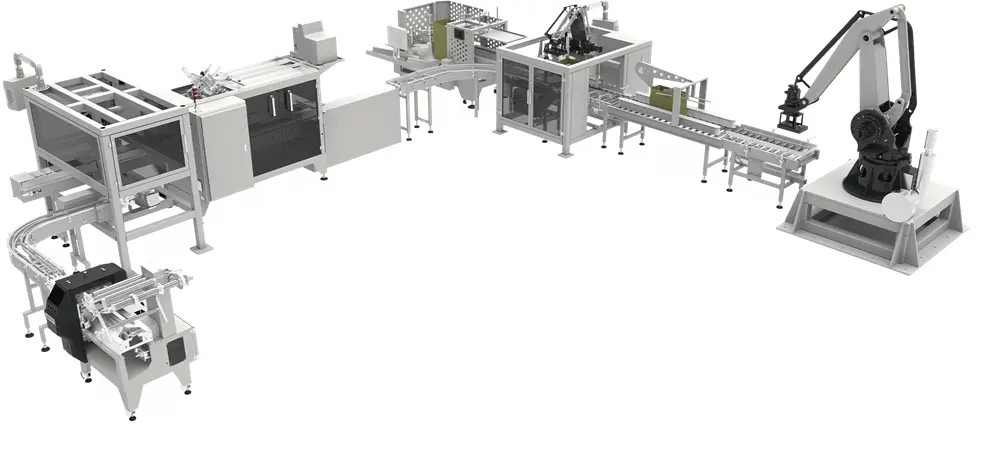
An integrated automated flow packaging solution supports high-mix production and downstream automation.
The Investment Equation Is Moving Beyond Machine Price
Comparing only equipment quotations can undervalue an automation project. A clearer evaluation examines five layers: acquisition cost, operating cost, productivity value, flexibility value, and risk value. The shift is from machine price to production-economics impact.
Acquisition Cost Is Only the Starting Point
Purchase price covers only the first layer. Installation, commissioning, training, and integration add further outlay. A lower equipment price does not automatically equal lower total investment cost inside a complete production flow.
Operating Cost Reveals the Long-Term Economics
Over the operating life, labor, energy, maintenance, parts, consumables, and downtime accumulate into significant sums. Initial price differences often form only a fraction of lifetime economics, shifting attention toward life-cycle cost.
Productivity Value Matters More Than Rated Speed
Rated speed indicates theoretical capability. Effective output under actual conditions determines real contribution. Changeovers, stops, product variation, and downstream constraints reduce usable production time. Prioritizing effective output aligns capital with plant results.
Flexibility Creates Value Beyond Today's Production Plan
When future SKUs or pack formats differ from today’s plan, equipment adaptability influences asset life and later capital needs. Systems that accommodate product changes can defer subsequent purchases and rebuilds, extending the economic life of the original investment.
Risk Reduction Should Be Part of ROI Thinking
Lower dependence on scarce labor, fewer unstable steps, faster recovery from stops, and improved schedule predictability reduce operational risk. These benefits affect delivery performance and cost of disruption even when they resist simple dollar conversion. Combining financial return with risk reduction yields a fuller assessment.
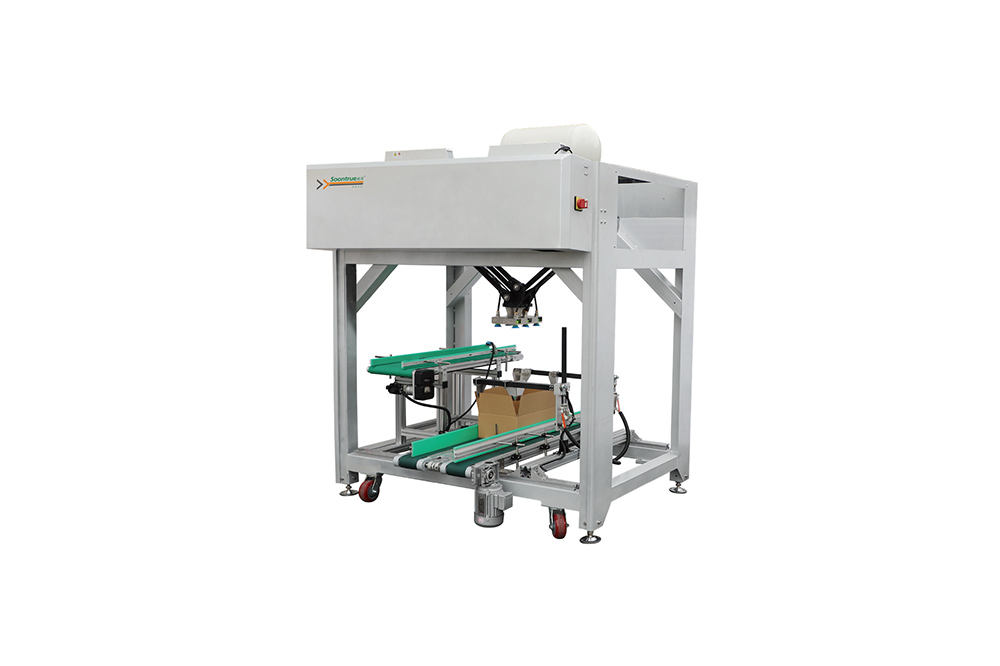
Robotic case packing cells convert labor-intensive secondary packaging into stable processes.
Why Maximum Speed Is Becoming a Poor Investment Metric
A practical evaluation path runs from rated speed to sustainable speed to effective output. Rated speed is maximum capability under ideal conditions. Sustainable speed is the rate maintainable over full shifts. Effective output accounts for changeovers, rejects, downtime, and constraints. Decisions improve when attention moves toward real production conditions.
Rated Speed Does Not Equal Productive Output
Feeding variability, product differences, changeovers, rejects, and unplanned stops erode theoretical capacity. A machine with high packs per minute may deliver far lower average output across a production week. Focusing on rated speed alone risks overestimating contribution.
The Real Metric Is Output Under Actual Production Conditions
The useful question asks how many units a system will reliably produce per shift under the plant’s SKUs, changeover patterns, and supporting equipment. Comparing systems on this basis aligns capital with capacity that operations can schedule.
From Buying Machines to Building Potential Production Capacity
Capital planning benefits when purchases are viewed as steps in building capacity that can grow and adapt. Today’s investment should support tomorrow’s product mix and higher automation levels without forcing complete replacement.
Plan for Automation in Stages
Full-factory automation is rarely required in one project. Plants can address the most binding constraints first and expand later. Each stage benefits from attention to interfaces, space, protocols, and compatibility so earlier investments remain useful as scope increases.
Evaluate Equipment for Future Product and Format Changes
Beyond current products and pack styles, decision makers consider possible increases in SKU count, new formats, or altered production rhythms. Recipe management, adjustment speed, and format range therefore affect life-cycle return.
Supplier Capability Becomes Part of the Investment
Automation projects continue after installation. Commissioning quality, operator training, spare-parts availability, technical support, and later upgrades all influence long-term performance. Evaluating supplier capability alongside equipment features protects the full value of the capital commitment.
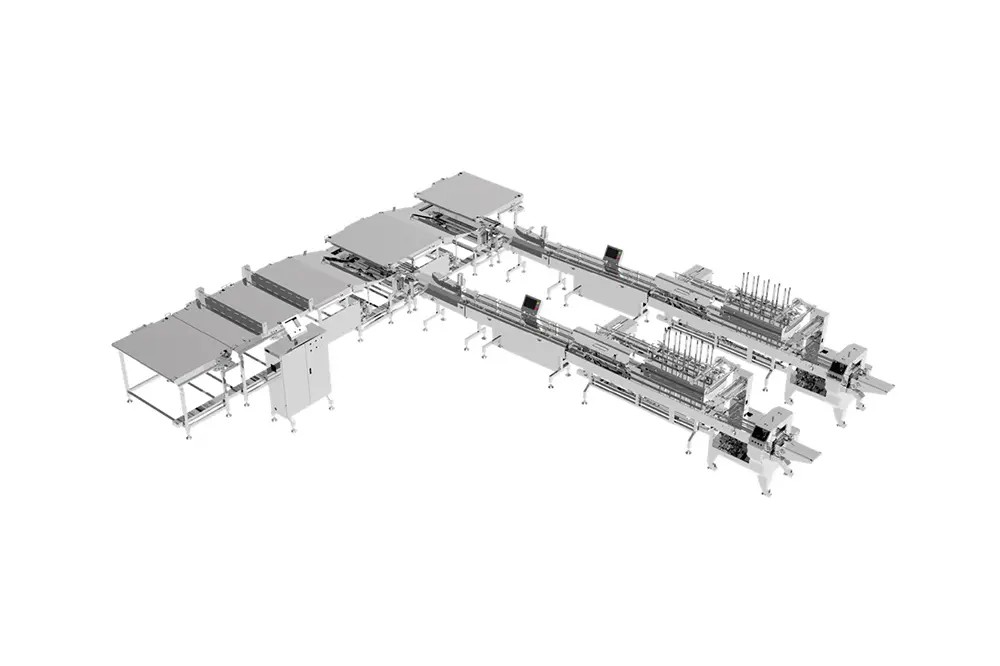
Modular secondary packaging such as tray systems expands the value of primary wrapping equipment over time.
A New Checklist for Packaging Automation Investment Decisions
Before approving an automation project, manufacturers need to look beyond the equipment quotation. A more complete evaluation should connect the proposed investment with current production constraints, operating costs, future product changes and long-term capacity requirements. The following checklist can help decision-makers assess whether a packaging automation project addresses the right business priorities.
Production Constraints to Be Removed
Start by identifying the actual bottleneck in the packaging process. It may be a shortage of operators, limited throughput, frequent changeovers, inconsistent product handling or excessive downtime. Defining the constraint first prevents manufacturers from investing in automation simply because a newer machine offers higher specifications. The right solution should address the factor that is currently limiting production performance.
Effective Capacity to Be Added
Evaluate how much additional output the investment can generate under real production conditions. Rated machine speed is only one part of the equation. Changeover time, downtime, product variation, feeding performance and downstream capacity can all affect actual output. Comparing expected effective capacity with current production requirements provides a more realistic basis for evaluating the investment.
Labor Dependency to Be Reduced
Assess how strongly the current packaging process depends on the availability of operators. The evaluation should consider not only current labor costs but also recruitment difficulty, training requirements, turnover and the risk of production disruption when staffing levels are insufficient. Automation can create value by making production capacity less dependent on the availability of labor for repetitive tasks.
SKU and Format Flexibility
Consider how frequently products, SKUs and packaging formats are likely to change throughout the equipment's operating life. For manufacturers serving multiple products or shorter production runs, flexibility can directly affect productive time and equipment utilization. A system that accommodates product variation and efficient changeovers may provide greater long-term value than equipment optimized only for today's production requirements.
Full Lifecycle Cost
Look beyond the initial equipment price and evaluate the total cost over the expected operating life. Installation, commissioning, labor, energy consumption, maintenance, spare parts, downtime and future upgrades can all affect the final economics of an automation project. Lifecycle cost provides a more useful basis for comparing equipment than purchase price alone.
Future Scalability
Consider whether the proposed equipment can support changes in production volume, product mix and automation requirements. A scalable solution can allow manufacturers to expand automation in stages as demand grows, reducing the risk that an initial investment becomes a constraint on future production. Compatibility with additional equipment and broader packaging workflows should therefore be considered before the investment is approved.
Cost of Delaying Investment
The final consideration is the cost of waiting. Manufacturers often calculate the potential return generated by automation but overlook the operational costs of maintaining the existing process. Continued labor dependency, lost production capacity, frequent downtime or difficulty handling new orders can all create costs over time. Including the consequences of delaying automation gives decision-makers a more complete view of the investment and its potential business impact.
How Soontrue Approaches Packaging Automation Investment
Soontrue supports manufacturers by treating packaging automation as a system-level investment. Solutions are developed around product characteristics, capacity targets, packaging flow, automation scope, and future expansion needs. The approach covers individual packaging machines through complete automated lines, with attention to practical flexibility, reliable performance, and configurations that fit real factory constraints. Soontrue positions itself as a long-term partner that helps evaluate current bottlenecks, plan new packaging lines, and upgrade existing processes so that capital delivers lasting production capability.
To review system options or discuss a specific production requirement, visit the Soontrue for packaging solutions overview.
Frequently Asked Questions
1. Is packaging automation a good investment for manufacturers?
Packaging automation can create value when it addresses clear production constraints such as labor dependency, limited capacity, frequent changeovers or inconsistent output. The potential return depends on the manufacturer's production volume, operating costs, product mix and future growth plans. A meaningful evaluation should consider effective capacity, lifecycle costs and operational risks instead of relying on equipment price alone.
2. How do you calculate the ROI of packaging automation?
Packaging automation ROI can be evaluated by comparing the investment with measurable gains such as labor savings, increased effective output, reduced waste, lower downtime and improved production consistency. Installation, maintenance, energy, training and other lifecycle costs should also be included. For a more complete investment assessment, manufacturers can consider both direct financial returns and the operational risks reduced by automation.
3. What should manufacturers consider when buying automated packaging machinery?
Manufacturers should evaluate more than machine specifications and purchase price. Key considerations include effective throughput, product and SKU flexibility, changeover requirements, integration with existing production processes, lifecycle costs, maintenance support and future scalability. The equipment should be assessed against the manufacturer's actual production conditions and long-term capacity requirements.
4. Is machine speed the most important factor when choosing packaging equipment?
Machine speed is important, but it does not necessarily represent actual production output. Feeding performance, changeover time, downtime, product characteristics, rejects and downstream bottlenecks can all reduce effective throughput. Manufacturers should therefore compare the output that a machine can consistently deliver under real operating conditions, rather than focusing only on its maximum rated speed.
5. How does SKU growth affect packaging automation investment?
A growing number of SKUs can increase changeovers, shorten production runs and make production planning more complex. This makes flexibility an increasingly important part of the investment decision. Equipment that can efficiently accommodate different products and packaging formats may help manufacturers maintain productive time as their product portfolio expands.
6. What is the role of total cost of ownership in packaging machinery investment?
Total cost of ownership provides a broader view of what an automation project will cost throughout its operating life. In addition to the initial purchase price, manufacturers may need to consider installation, labor, energy, maintenance, spare parts, downtime and future upgrades. TCO helps decision-makers compare the long-term economics of different automation options.
7. How can manufacturers future-proof a packaging automation investment?
Future-proofing starts with considering how production requirements may change after the equipment is installed. Manufacturers can evaluate whether the system can accommodate new SKUs, packaging formats, materials, production volumes and additional automation. A scalable solution can also allow automation to expand in stages, helping the initial investment remain useful as the business grows.
8. What is the cost of delaying packaging automation?
The cost of delaying automation can include continued labor dependency, lost production capacity, recurring downtime, limited ability to handle new orders and additional pressure on existing production resources. These costs may not appear as a single line item in an investment proposal, but they can affect long-term production economics. Including the potential cost of waiting alongside the expected benefits of automation can provide a more complete basis for investment planning.