
Flow Wrapper vs VFFS for Bakery: Choosing Your Packaging Machine
HFFS Machine Blog

If you're seeking packaging automation solutions, please contact us, and we'll be delighted to offer you the most tailored solution.
What is a Flow Wrapper (HFFS)?
A flow wrapper, also known as a Horizontal Form Fill Seal (HFFS) machine, is a packaging machine designed to wrap solid products in a continuous, horizontal motion. It is the best choice for uniform bakery items that are fragile, decorated, or require gentle handling to maintain their product integrity and shelf appeal.
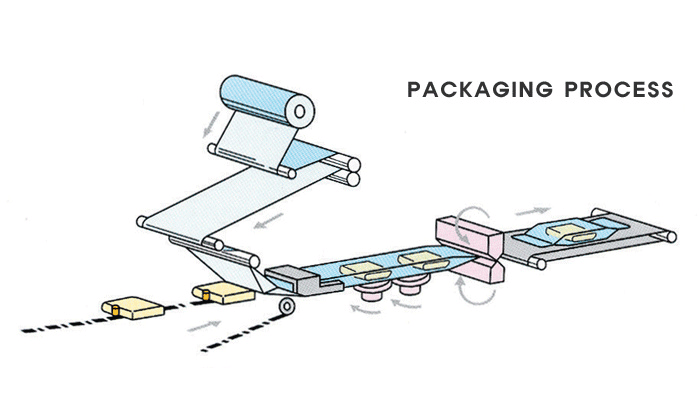
How Horizontal Form Fill Seal Works
A flow wrapper uses a single roll of packaging film that is formed into a tube around the product as it moves horizontally along a conveyor. The machine's sealing jaws create a longitudinal "fin seal" along the bottom and end seals to create a finished, sealed package. This horizontal product infeed minimizes drops and impacts.
Common Bakery Applications for Flow Wrappers
Flow wrappers are best suited for discrete, solid bakery products that require individual wrapping or are placed in trays. Examples include:
- Single brownies, cookies, or muffins
- Croissants and pastries
- Biscotti and granola bars
- Decorated or iced items requiring careful handling
- Multi-pack trays of baked goods
What is a VFFS Machine?
A Vertical Form Fill Seal (VFFS) machine is a packaging system optimized for loose, granular, or multi-unit bakery products sold by weight or count. These machines operate vertically to form a bag, fill it from above, and seal it, making them highly efficient for high-speed, bulk packaging applications where space is a premium.
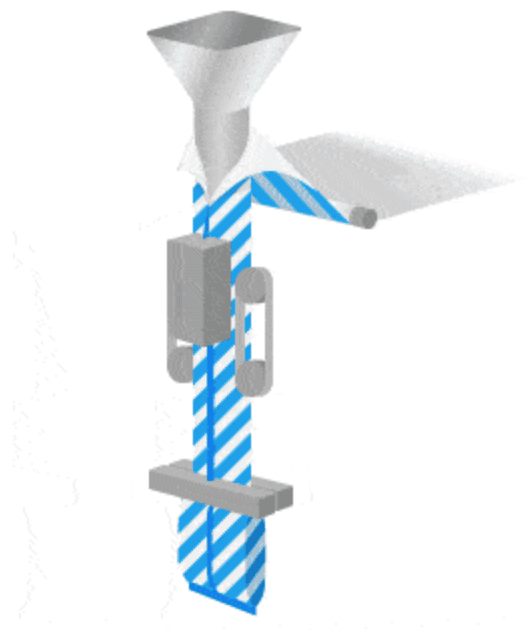
How Vertical Form Fill Seal Works
VFFS machines pull a roll of film vertically over a forming tube to create a bag. The machine makes a bottom seal, and the product is dropped into the bag using a specialized filler (like a multi-head weigher or auger filler). Once filled, the top of the bag is sealed, and the finished package is cut. This gravity-fed process is fast and efficient for non-uniform products.
Common Bakery Applications for VFFS
VFFS machines are the standard for loose or multi-component bakery items. Examples include:
- Bags of mini cookies or crackers
- Granola or granola clusters
- Croutons and breadsticks
- Broken pretzel pieces
- Frozen dough pucks
Head-to-Head Comparison: Flow Wrapper vs. VFFS at a Glance
This table provides a quick overview of how flow wrappers and VFFS machines compare across key attributes for a bakery setting.
| Feature | Flow Wrapper (HFFS) | VFFS Machine |
| Product Handling | Horizontal, gentle, conveyor-fed | Vertical, gravity-fed, dropped |
| Packaging Style | Individual wraps or tray multipacks | Bags of loose or bulk items |
| Typical Product State | Solid, uniform, often fragile | Loose, multi-unit, or free-flowing |
| Machine Footprint | Long and linear | Compact and vertical |
| Sealing Method | Fin or lap seal (back seal) | Fin seal (back seal) (most common) |
| Common Fillers | Manual or automated infeed conveyor | Multi-head weigher or auger filler |
Decision Factor : Your Bakery Product's Characteristics
 |
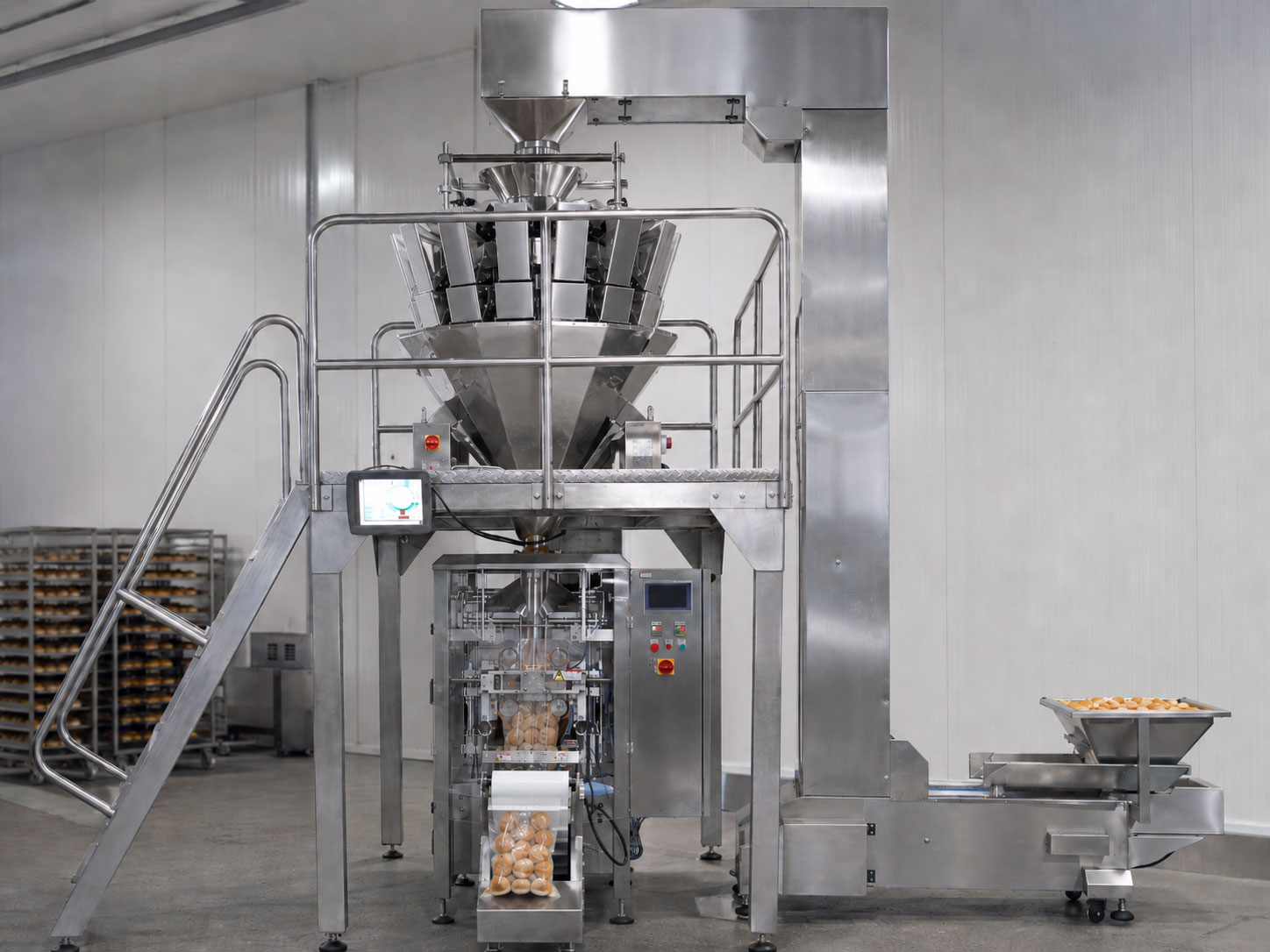 |
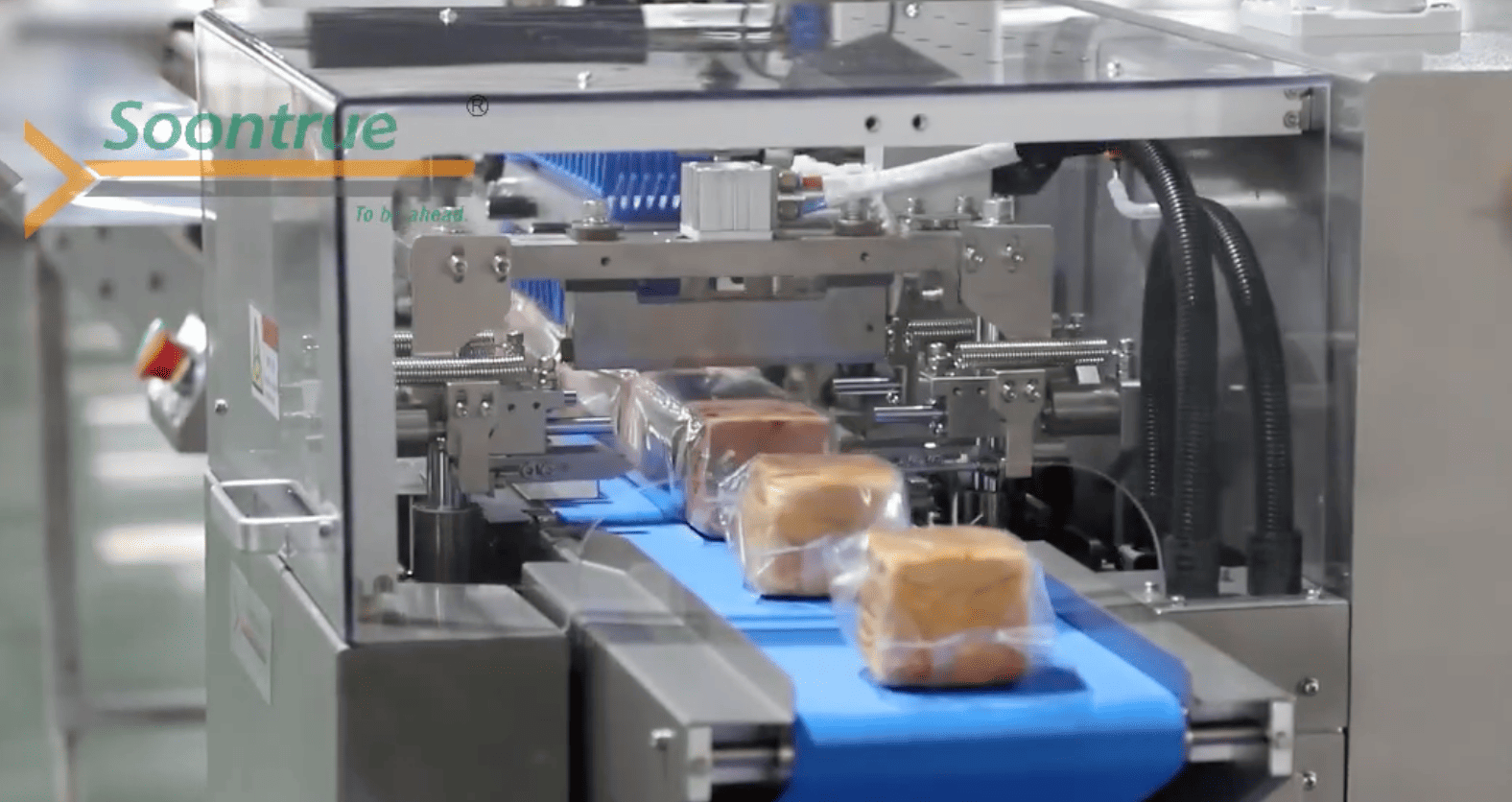
The most critical factor in the flow wrapper vs. VFFS bakery decision is your product's physical state. Solid, uniform items suit flow wrappers, while loose or granular products require VFFS machines.
Solid & Uniform vs. Loose & Variable
If your products are solid and discrete (e.g., brownies, croissants), a flow wrapper provides the precise handling needed for a consistent, high-quality wrap. For loose or variable items sold by weight like granola or mini cookies, the gravity-fed system of a VFFS machine is far more efficient.
Handling Fragile or Sticky Products
Fragile items with delicate toppings (e.g., iced pastries, macarons) demand the gentle horizontal handling of a flow wrapper to prevent damage. For sticky products, VFFS machines can be equipped with specialized anti-stick coatings and precise fillers to ensure a smooth and consistent product flow.
Decision Factor : Operational & Financial Metrics
Beyond the product itself, your choice depends on operational and financial goals. VFFS machines generally offer higher speeds and a smaller footprint for high-volume operations, whereas flow wrappers provide more flexibility for varied product shapes at a moderate throughput.
Speed, Throughput, and OEE
Flow wrappers typically operate at speeds of 60-150 packages per minute (PPM), ideal for small to medium-throughput bakeries. High-end VFFS machines can exceed 200 PPM, making them better suited for large-scale production where Overall Equipment Effectiveness (OEE) is critical.
Footprint and Plant Layout Integration
Flow wrappers require a long, linear footprint to accommodate the horizontal infeed conveyor, which can be a challenge in space-constrained facilities. VFFS machines, with their vertical design, offer a compact solution that is easier to integrate into a crowded bakery floor.
Changeover Time and Cost of Ownership
Flow wrappers are generally more flexible for product shape and size variations, often featuring faster changeover times. However, the total cost of ownership for a VFFS system can be higher due to the need for expensive, precise fillers like multi-head weighers. The final cost-per-package depends heavily on production volume and the level of automation.
Conclusion: Making the Right Choice for Your Bakery
The choice between a flow wrapper and a VFFS machine is not about which is "better," but which is right for your specific bakery product and operational scale.
- Choose a Flow Wrapper (HFFS) if you package solid, uniform, or delicate items like pastries, cookies, and bars.
- Choose a VFFS Machine if you package loose, bulk, or granular items like granola, croutons, or bags of mini-cookies.
To make the final decision, audit your product line, measure your available floor space, and calculate your required throughput. For a detailed analysis, consult with a packaging automation specialist to ensure your investment aligns with your growth strategy.
Related Resources
- What Is a Flow Wrapping Machine?
— Complete guide to flow wrapping technology, types, and applications
- Working Principle of Flow Wrapping Machines
— How horizontal wrappers really work
- VFFS vs HFFS: Which Packaging Machine Is Right?
— Deeper dive into VFFS and HFFS comparison
- Bakery Packaging Solutions
— End-to-end bakery packaging line overview
- How to Choose the Right Horizontal Flow Packing Machine
— Flow wrapper selection guide
- Flow Wrapping Machine Series
— Browse all flow wrapping machines
- Vertical Packing Machine Series
— Browse all VFFS machines
- End-of-Line Packaging
— Complete your line with case packing and palletizing

Frequently Asked Questions (FAQ)
Q1: Which is better for fragile bakery items like decorated cookies?
A1: A flow wrapper is definitively better for fragile items like decorated cookies. Its horizontal handling system carries the product gently on a conveyor, minimizing the risk of breakage or smudged icing that can occur with the vertical drop in a VFFS machine.
Q2: Can a flow wrapper handle bags of cookies?
A2: No, a flow wrapper is designed to wrap individual items or items in a tray, not to create a bag and fill it with loose products. For packaging bags of cookies, a VFFS machine paired with a counter or weigher is the correct solution.
Q3: What is the main cost difference between a flow wrapper and a VFFS machine?
A3: While the base machine costs can be similar, the total investment often differs. VFFS systems frequently require expensive auxiliary equipment like multi-head weighers, which can make the total line cost higher. However, for high-volume production, the VFFS machine's speed can result in a lower long-term cost-per-package.
Q4: Which machine takes up less space in a bakery?
A4: A VFFS machine takes up significantly less floor space. Its vertical design gives it a much smaller footprint compared to the long, linear layout required for a flow wrapper's infeed and wrapping sections, making it ideal for bakeries with limited square footage.