
10 Signs Your Factory Has Outgrown Manual Packaging: How to Know When It's Time to Invest in an Automatic Packing Line
Packaging Knowledge Hub

If you're seeking packaging automation solutions, please contact us, and we'll be delighted to offer you the most tailored solution.
Many manufacturers pour resources into faster production equipment only to discover that finished goods still sit waiting for shipment. Orders pile up, delivery windows tighten, and overtime becomes routine. In a surprising number of plants the real constraint has shifted downstream: packaging can no longer keep pace with upstream output.
Recognizing that shift early protects margins and market position. The following guide outlines the clearest operational signals that manual or semi-manual packaging has reached its limit, and explains how a carefully planned automatic packing line restores balance across the entire factory.
Is Packaging Becoming Your Factory's Biggest Bottleneck?
Production managers often focus on machine cycle times, fill rates, and overall equipment effectiveness on the processing side. Those metrics improve, yet finished goods continue to accumulate on the floor or in staging areas. The mismatch creates several visible indicators that deserve attention.
Common Manufacturing Dilemma
Investment in high-speed processing or filling lines raises theoretical capacity. When packaging remains labor-intensive, the extra volume simply transfers the constraint. Operators work longer shifts, temporary staff join the packing tables, and inventory of unfinished packs grows. The factory looks busy, but throughput to the warehouse or shipping dock stays flat.
Visible Warning Indicators
- Production lines pause or slow because packaging stations cannot clear product fast enough.
- Work-in-process inventory builds up between processing and the packing area.
- Overtime hours and temporary labor costs climb month after month.
- Customer delivery promises begin to slip despite adequate raw material and processing capacity.
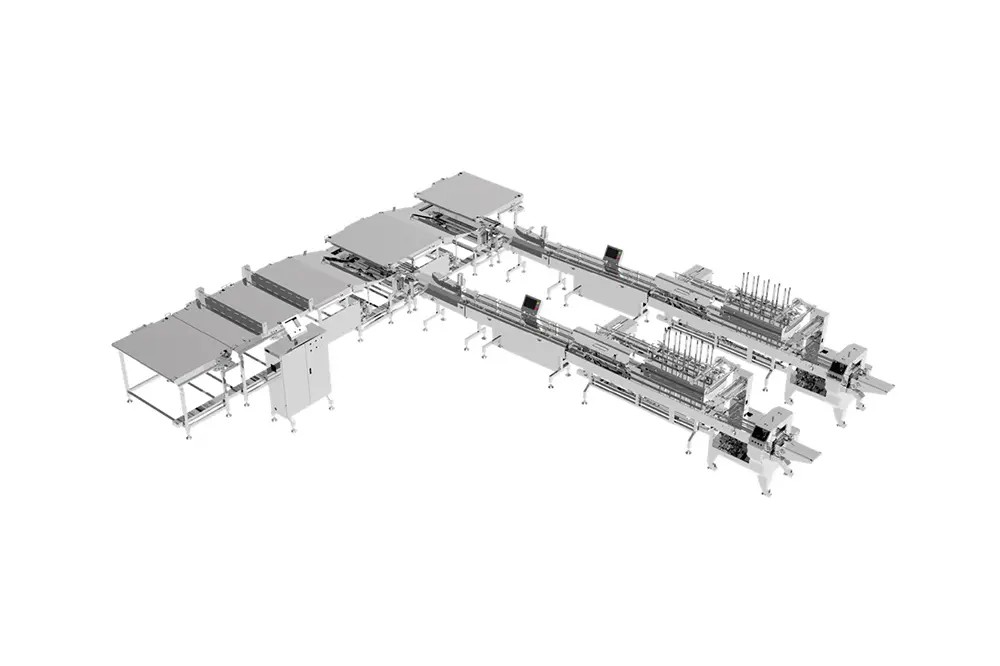
Soontrue Automatic Packaging Line with Tray – integrated tray loading and pillow bag wrapping
10 Warning Signs You Shouldn't Ignore
1. Packaging Can No Longer Match Production Speed
When processing equipment runs at design speed for extended periods, packaging stations fall behind. Operators struggle to maintain the same pace, leading to bottlenecks that force upstream machines to throttle back. An automatic packing line restores balance by matching or exceeding the output rate of the production equipment, allowing the entire plant to operate at its designed capacity.
2. Labor Costs Keep Increasing While Output Doesn't
Rising wages and difficulty recruiting reliable packing staff push unit costs higher even when total packaged volume stays level. Automation converts variable labor expense into a predictable capital investment. Once installed, the line delivers consistent output with a smaller core team focused on supervision and quality checks rather than repetitive manual tasks.
3. Packaging Quality Is Inconsistent
Manual packing introduces natural variation in seal integrity, label placement, case counts, and presentation. Customer complaints about damaged or poorly finished packs increase. Automatic systems apply the same force, timing, and alignment on every cycle, delivering uniform package quality that strengthens brand reputation and reduces returns.
4. Frequent Downtime Is Hurting Output
Manual lines depend on continuous human presence. Absenteeism, fatigue, or training gaps create unplanned stops. Equipment that requires constant adjustment or frequent film and carton changes adds further interruptions. A well-designed automatic packing line incorporates quick-change features and recipe-driven settings that keep the system running through scheduled shifts with minimal intervention.
5. Your Orders Are Growing Faster Than Capacity
New retail contracts, e-commerce growth, or seasonal peaks push volume beyond what the current packing crew can handle. Adding more people yields diminishing returns once floor space and supervision limits are reached. An automatic line scales capacity in a controlled way, often allowing a single shift to deliver what previously required two or three. Explorehigh-speed single or multi-piece packaging lines designed for growing volumes.
6. You Need Better Food Safety and Compliance
Regulatory expectations and retailer audits place increasing emphasis on hygienic handling and traceability. Manual packing multiplies contact points and makes consistent sanitation harder to document. Closed automatic systems reduce human contact, support clean-in-place routines, and integrate coding and inspection devices that create complete electronic records for every batch.
7. Product Changeovers Take Too Long
High-mix production demands frequent switches between pack sizes, film types, or carton formats. Manual changeovers consume hours of labor and generate scrap during the restart period. Modern automatic packing lines store product recipes on the HMI and use tool-less adjustments so trained operators can complete a change in minutes rather than hours, protecting overall equipment effectiveness.
8. Packaging Errors Are Increasing Customer Complaints
Incorrect counts, missing inserts, misapplied labels, and weak seals generate costly returns and erode retailer confidence. Vision systems, checkweighers, and metal detectors integrated into an automatic line catch defects before they leave the plant. The same systems generate data that help identify root causes and drive continuous improvement.
9. You're Expanding Into New Markets
Entering export markets or large retail chains often brings stricter packaging specifications, higher volume commitments, and demands for consistent presentation. Manual processes struggle to meet these requirements at scale. An automatic packing line provides the speed, precision, and documentation needed to satisfy new customer standards while protecting existing domestic business.
10. You're Planning a Smart Factory Upgrade
Digital transformation initiatives require machines that can exchange data with MES and ERP platforms. Stand-alone manual stations create information gaps. Automatic packing equipment built on open architectures supplies real-time production counts, OEE figures, and alarm histories, turning the packaging area into a visible and controllable part of the connected factory. Learn more about end-of-line packing series that support seamless integration.
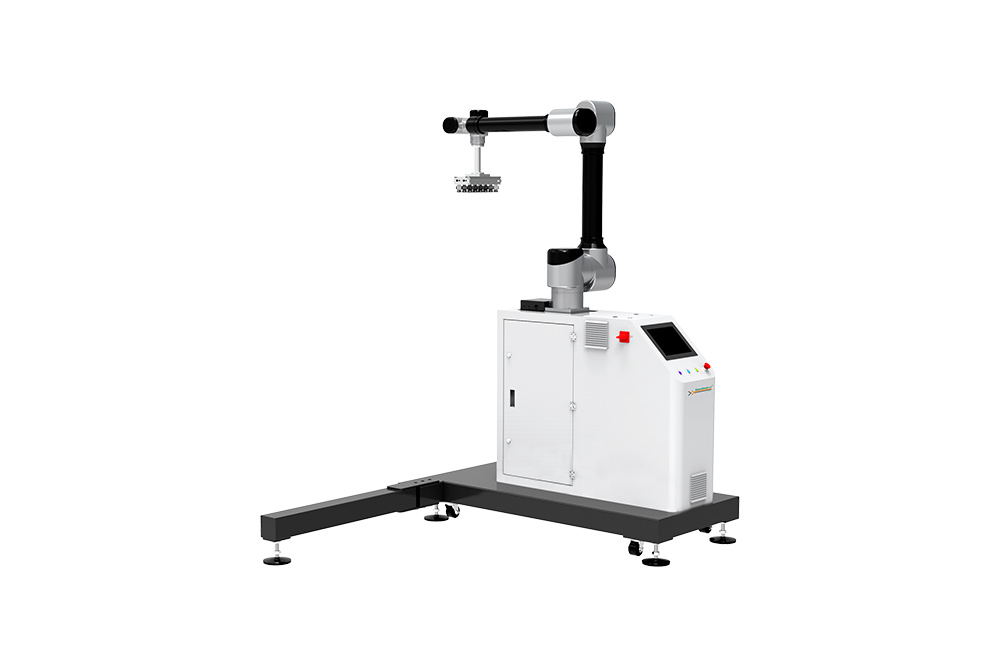
Soontrue Robotic Palletizing System – final stage of automated end-of-line packaging
How Soontrue Helps Factories Upgrade at the Right Time
Recognizing the signs is only the first step. Successful automation depends on matching equipment capability to actual production needs and integrating the new system without disrupting ongoing output. Soontrue approaches each project with a practical, phased methodology that reduces risk and accelerates payback.
Assessing Automation Fit
Every factory operates under unique constraints of product mix, floor layout, and labor availability. Soontrue engineers begin with a detailed review of current packaging rates, changeover frequency, quality data, and growth projections. The assessment identifies which stations deliver the greatest return when automated and which processes can remain manual in the near term.
Line Integration
New equipment must connect smoothly with existing upstream processing and downstream logistics. Soontrue designs conveying interfaces, control handshakes, and safety interlocks so the automatic packing line becomes a natural extension of the current plant rather than an isolated island. Layout proposals account for material flow, operator access, and future expansion space.
Phased Upgrade Approach
Full replacement of every packaging station in a single project creates unnecessary disruption and capital strain. Soontrue structures upgrades in logical stages: primary packaging first, then case packing, then palletizing. Each phase delivers measurable gains that help fund the next, while operators gain familiarity with the technology before the next module arrives.
End-to-End Support
Installation, commissioning, and operator training form part of every project. Soontrue field teams remain on site until the line meets agreed performance targets. After start-up, remote diagnostics, spare-parts programs, and scheduled maintenance visits keep the equipment available for the long term. The combination of reliable machinery and responsive service turns the automatic packing line into a durable competitive asset.
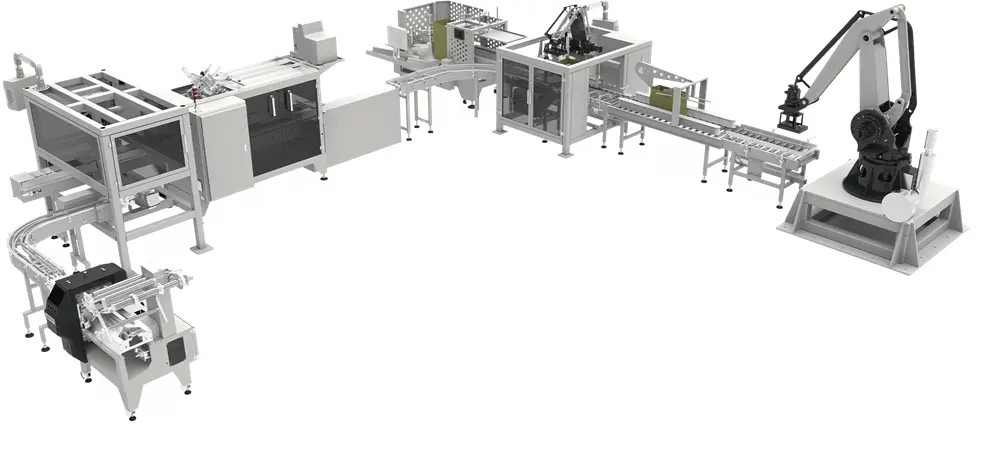
Soontrue Automated Packing Solution with Flow Packaging – one-stop system from primary to end-of-line
Moving Forward with Confidence
The ten signs described above rarely appear in isolation. When several of them surface together, the cost of continuing with manual packaging begins to exceed the investment required for automation. Factories that act at the right moment protect their ability to meet rising demand, maintain consistent quality, and control labor expense.
Soontrue has supported food and consumer-goods manufacturers through exactly this transition. From initial assessment through phased implementation and ongoing service, the focus remains on practical solutions that deliver measurable results. Plants ready to examine their packaging constraints can contact Soontrue for a tailored evaluation that clarifies both the opportunity and the path to realizing it.
FAQ
1. What is a realistic payback period for an automatic packing line?
Most projects achieve payback between 18 and 36 months. The exact period depends on local labor rates, the number of shifts operated, and the degree of automation implemented. A detailed cost-benefit model prepared during the assessment phase provides a plant-specific projection based on measurable savings in labor, waste, and capacity.
2. How much floor space does a complete line require?
Space requirements vary with capacity and configuration. Modular design principles keep footprints compact. During the planning stage, engineers work from existing CAD drawings of the facility to produce a layout that optimizes material flow and leaves clear access for maintenance and future expansion.
3. Can changeovers be completed quickly on an automatic line?
Modern systems apply SMED principles and store product recipes in the control system. Tool-less adjustments and guided setup sequences allow trained operators to switch between formats in 15 to 25 minutes in typical applications, preserving high overall equipment effectiveness even in high-mix environments.
4. Will the new equipment communicate with existing plant systems?
Open-architecture controls support industry-standard protocols such as OPC-UA. Real-time production data, status signals, and quality records can flow directly into MES and ERP platforms, giving managers a complete view of packaging performance alongside upstream processes.
5. How is production disruption minimized during installation?
Project schedules are aligned with planned plant shutdowns or low-demand periods whenever possible. Pre-assembly and thorough factory acceptance testing reduce the time required on site. Clear communication with production teams ensures that temporary packaging arrangements keep critical SKUs moving while the new line is commissioned.