
The Ultimate Guide to Automatic Carton Packing Machines (2026 Trends & Buying Strategies)
Packaging Knowledge Hub

If you're seeking packaging automation solutions, please contact us, and we'll be delighted to offer you the most tailored solution.
By 2026, the competition in manufacturing is so fierce that there is virtually no room for error. Due to ever-increasing labor costs, unreliable workforce availability, and the extreme pressure to produce products faster and more sustainable than ever before, traditional pack lines have reached maximum capacity limits. If your facility still uses human hands to build, fill and seal boxes, you have already created the greatest bottleneck in your production capacity and revenue growth.
The ultimate solution to this challenge facing all manufacturers is intelligent automation. As a pioneer of packaging machinery for over 30 years, Soontrue has experienced the evolution of these machines from simple mechanical devices into intelligent, adaptable machines that also collect data and can be considered core assets. As manufacturers package products such as pharmaceuticals, consumer goods, food items and even fragile electronics, it is critical to know how to utilize these next-generation machines if you plan on growing your business operations. This complete guide will explore the specific capabilities of these machines, the positive impact on your business and how to choose the ideal model for your facility, along with the trends you need to be aware of in 2026.
What Exactly is an Automatic Carton Packing Machine?
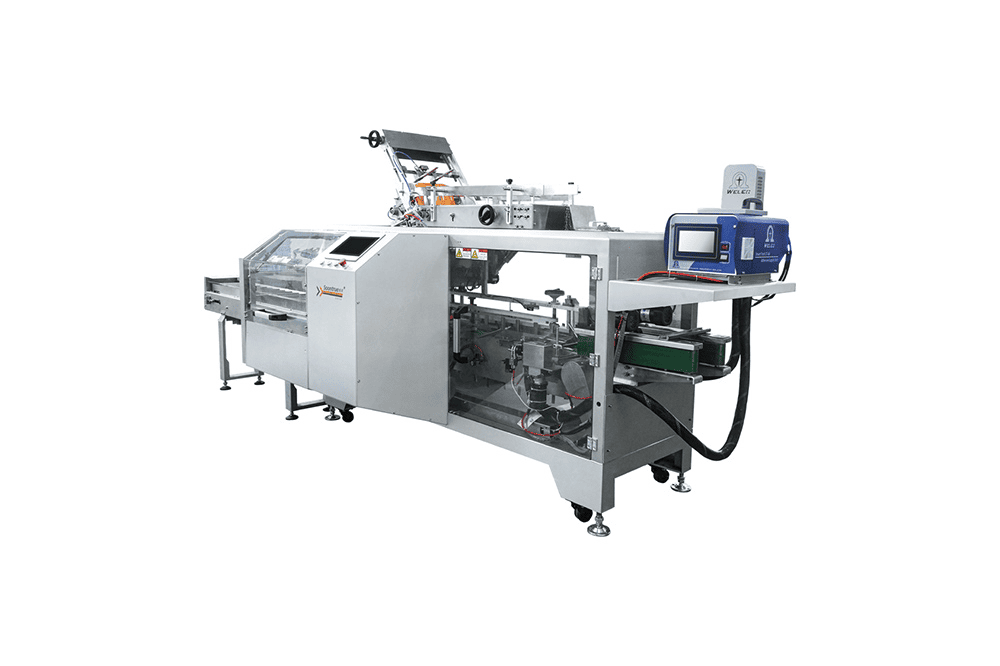
An automatic cartoning machine—or cartoner—is a highly-specialised piece of automated engineering that packages products into cartons with no human intervention. These machines can automatically take flat cardboard blanks, convert them to rigid, three-dimensional boxes, accurately insert products into those boxes, and securely close the boxes—all in a fraction of a second. Understanding this makes it easier to appreciate the value of a modern cartoner by understanding the four primary functions it performs in an unbroken, high-speed cycle.
- Carton Erecting (Forming): The machine utilizes advanced vacuum suction cups to pull a flat, pre-glued carton blank from a high-capacity magazine. It then mechanically forces the blank open, squaring it up into a sturdy, three-dimensional shape. Modern 2026 erectors have achieved significant design breakthroughs, allowing them to handle a much wider variety of 100% recycled papers and ultra-thin board grades without jamming or tearing.
- Intelligent Product Filling (Loading): Depending on the machine architecture, the product is pushed, dropped, or robotically placed into the open carton. Today's machines heavily utilize "intelligent tracking types" to perfectly synchronize the product's forward movement with the carton's progression, ensuring zero misalignments even at maximum operational speeds. Advanced equipment can also simultaneously insert instruction leaflets, protective liners, or promotional cards alongside the primary product.
- Sealing and Closing: Once the product is safely nested inside, the machine precisely folds the dust flaps and major flaps. The carton is then permanently sealed using hot melt adhesive (glue), a mechanical tuck-in flap, or tamper-evident tape, guaranteeing the package's absolute security during transit.
- Labeling and Coding: Before the finished carton exits the machine, integrated coding systems (such as high-resolution inkjet printers or laser coders) apply vital data directly onto the cardboard. This includes batch numbers, expiration dates, and dynamic QR codes, satisfying strict regulatory compliance and enabling full-chain traceability.
The Business Impact: Why Upgrade to Automation in 2026?
Investing in heavy automated equipment is a major capital decision, but the transition from manual cartoning to automated packaging has consistently proven to offer one of the fastest returns on investment (ROI) in the entire manufacturing sector.
Exponential Surges in Efficiency and Throughput
Manual packaging speeds fluctuate wildly based on worker fatigue, shift changes, and mandatory breaks. An automatic carton packing machine, however, operates at a relentless, untiring pace. While a human operator might yield a dozen boxes a minute, even an entry-level automated system effortlessly processes 20 to 50 cartons per minute. High-speed 2026 models can stably exceed 150 cartons per minute. This massive, predictable surge in throughput empowers enterprises to effortlessly take on bulk orders and handle seasonal demand spikes without scrambling for temporary labor.
Future-Proof Cost Savings and Long-Term ROI
By automating the cartoning process, businesses drastically reduce their reliance on manual labor. This allows you to reallocate your valuable workforce to higher-level tasks, such as quality assurance, equipment maintenance, or facility management. Furthermore, modern machines offer incredible modular flexibility. This ensures that your capital investment can easily adapt to new product lines and changing packaging dimensions over the next decade, securing a robust, long-term return on investment. Precise glue control and gentle mechanical handling also significantly drive down packaging material waste.
Unmatched Precision and Brand Consistency
At the retail level, packaging is frequently the first physical interaction a consumer has with your brand. A crushed corner, a misaligned flap, or poor gluing subconsciously damages brand perception. Automatic carton packing machines are engineered for millimeter-perfect precision. They ensure that every single carton coming off the line is flawless and identical, protecting and elevating your brand's premium reputation in the market.
Eliminating Injury Risks and Enhancing Workplace Safety
Manual packaging is highly repetitive. Workers performing the exact same bending, folding, and lifting motions for hours on end face extremely high risks of repetitive strain injuries (RSIs) and chronic back problems. Automating these physically demanding tasks not only creates a fundamentally safer work environment but also drastically reduces workers' compensation claims, elevating the overall modernization and morale of your factory floor.
Core Model Comparison: How to Choose the Right Cartoner
Selecting the correct machine depends entirely on the physical characteristics of your product and the spatial layout of your facility. Below is a detailed comparison of the three primary types of automatic carton packing machines dominating the market in 2026:
| Machine Type | Best Suited For | Core 2026 Technological Advantage | Footprint |
|---|---|---|---|
| 1. Horizontal | Blister packs, trays, baked goods, tubes, and solid items. | Ultra-high-speed continuous motion with AI fault detection for massive output. | Large |
| 2. Vertical | Powders, granules, bottles, jars, and tall/loose items. | Gravity-assisted filling equipped with intelligent tracking for gentle drops. | Compact |
| 3. Robotic | Delicate items, irregular shapes, or complex mixed-SKU packaging. | Ultimate flexible adaptability; easily integrates with palletizing automation. | Variable |
1. Horizontal Carton Packing Machines
In a horizontal cartoner, the product is pushed horizontally into the side of the open carton. These are the undisputed workhorses of the packaging industry, ideal for sturdy, stable products like frozen foods, soap bars, or pharmaceutical blister packs. They are typically deployed in high-volume environments where speed is the ultimate priority. The latest models feature enhanced, servo-driven pushers capable of handling products much more gently and precisely than older pneumatic systems.
2. Vertical Carton Packing Machines
Vertical cartoners erect the carton in an upright position, allowing the product to be dropped in from above. This gravity-fed approach is perfect for items that are difficult or impossible to push horizontally, such as loose hardware, granular foods, or fragile glass cosmetics bottles. Because they utilize a top-loading design, these machines generally have a significantly smaller footprint, making them the perfect choice for factories dealing with severe space constraints.
3. Robotic Carton Packing Systems
Robotic systems represent the absolute pinnacle of modern packaging flexibility. Utilizing multi-axis articulated arms or high-speed Delta robots paired with advanced vision systems, these machines guide robotic grippers to precisely pick products off a moving conveyor and place them into cartons. These systems are ideal for highly fragile items and seamlessly connect with downstream palletizing automation to create a fully touchless, "dark factory" end-of-line process.
"High-Value" Features You Must Look For in 2026
When evaluating equipment on today's market, do not simply look at the maximum speed (Cartons Per Minute). A truly exceptional machine must include intelligent features designed to minimize downtime and maximize operational agility:
- AI-Driven Vision Inspection Systems: High-end machines now include smart cameras as standard equipment. They inspect every product and carton in real-time, instantly detecting if a carton failed to open properly, if a product is missing, or if an instruction leaflet was omitted. Crucially, they automatically reject these defective packages without forcing the production line to stop.
- Tool-Less, Motorized Changeovers: In an era trending toward high-mix, low-volume production, rapid changeover capabilities are vital. Look for machines featuring servo-motorized guide adjustments. This allows operators to switch between different carton sizes in a matter of minutes via a touchscreen recipe, completely eliminating hours of tedious manual wrenching.
- Hyper-Compatibility with Eco-Friendly Materials: Sustainability is a global mandate. Ensure the machine you select can smoothly process a wide variety of eco-friendly materials, including thinner paperboards or 100% recycled corrugated materials, without jamming or tearing during high-speed runs.
- Intuitive Smart HMI (Human-Machine Interface): Complex machinery must be simple to operate. Superior systems feature large, high-definition color touchscreens offering recipe management (one-touch recall of specific product parameters) and built-in troubleshooting guides complete with 3D animations or video tutorials.
Implementation Guide: From Planning to Execution
Successfully integrating an automatic carton packing machine into your facility requires meticulous engineering planning. Follow these three steps to ensure a flawless transition:
- Step 1: Comprehensively Assess Production Needs – Before beginning procurement, thoroughly audit your current process. Clearly document your target throughput (cartons per minute), the exact dimensional range of your cartons (minimum and maximum length/width/height), the physical weight and characteristics of your products, and the exact 3D spatial dimensions available on your factory floor.
- Step 2: Plan for Seamless Full-Line Integration – A cartoner cannot operate in a vacuum. It must achieve seamless physical and data handshakes with upstream equipment (like flow wrappers or liquid fillers) and downstream equipment (like case packers and automatic palletizers). Ensure the new equipment utilizes an open, compatible PLC (Programmable Logic Controller) architecture to create a synchronized, continuous automated pipeline.
- Step 3: Establish SOPs and Training Frameworks – No matter how advanced the equipment is, it requires skilled personnel to manage it. During the equipment delivery phase, insist on in-depth, on-site training from the supplier. Simultaneously, establish rigorous Standard Operating Procedures (SOPs) covering daily cleaning, lubrication, and preventive maintenance to ensure the machine remains in peak condition for decades.
Looking Ahead: 2026 and Future Industry Trends
The packaging industry is changing dramatically as a result of both artificial intelligence and environmentally conscious operations. The following are trends affecting the future of machinery:
- Intelligent Tracking & Deep IIoT: The most up-to-date modern cartoners are completely digitized. Through the use of intelligent tracking formats, the machine can use its dynamic sensing ability to determine the exact speed for both carton and product while at the same time connecting to the Industrial Internet of Things (IIoT) where it generates real-time data dashboards that track Overall Equipment Effectiveness (OEE). These systems are capable of using predictive algorithms to notify maintenance teams about problems even before the physical parts start to fail.
- Mechanical Design for "Zero Waste": With brand owners aggressively pursuing zero waste programs, the structural design of cartoners is being enhanced so that they can take advantage of 100% biodegradable materials (which are always very weak and difficult to fold). In addition, with the introduction of next generation energy recovery servo motors, some of today’s most advanced machinery can be extremely energy efficient and thus reduce the factory's overall carbon elimination.
Conclusion & Next Steps
If manufacturers want to burst through capacity limitations and achieve big cost savings, upgrading from manual packaging to a completely automated carton packing machine by 2026 is the way to go. By embracing intelligent automation, you will open up higher production speeds, lower your long-term labour costs, ensure consistency in packaging every time, and create an unassailable competitive advantage for your company.
Whether your operation needs high-speed output from a horizontal cartoner, extreme space efficiency from a vertical system, or delicate, flexible adaptability from a robotic system, there is already mature technology available today to successfully address your individual packaging pain points.
Ready to take your production line into the new age of smart manufacturing?
The team at Soontrue has over 30 years of packaging automation experience. Contact us today for a custom ROI analysis and explore the best automated packaging solutions for your factory layout.
FAQ
Q: What is the typically expected timeline for an automatic carton packing machine to recoup its investment (ROI)?
A: The Return on Investment (ROI) for an automatic cartoner is typically among the quickest in the industry when it comes to packaging. The exact time-frame for achieving ROI will differ depending on the volume of production and labor costs at your facility; however, the majority of companies will see an overall return on their investment between 12 and 18 months.
- Labor savings: By redeploying 3-5 manual packers on each shift, direct labor costs are reduced significantly.
- Increased output: Increasing your manual carton production from 15 cartons per minute to more than 100+ cartons per minute with automation will enable you to meet larger orders without the need for additional shifts.
- Material efficiency: Automated glue application and accurate handling of the cartons can achieve a reduction in waste of up to 15% with materials used in carton creation.
Q: Can today’s cartoners run 100% recycled/eco-friendly materials?
A: The answer is – Yes! By the year 2026, eco-friendly and sustainable materials will be a “given”, not a “novelty”. Be assured that all new, automated carton packing machines are designed to run with the specific, unique physical characteristics of eco-friendly materials.
- New, advanced vacuum suction and precision servo-driven guides will eliminate tearing and jamming due to running on thinner and/or more fragile recycled paperboard.
- When transitioning to biodegradable materials, please ensure the manufacturer is aware of this during the consultation so that the machine is set up with the correct folding characteristics.
Q: How Much Time To Change Over To Different Carton Size?
A: In the past, changing machine parts for a different box size could take several hours of wrenching. With the premium 2026 machines, changing over to a different size is quick and easy thanks to tool-less and motorized changeovers.
To change over a packed machine to a different box size now, simply choose your pre-saved “recipe” on the machine Human-Machine Interface (HMI) Touch Screen Console and by utilizing servo motors, all conveyor guides, folding mechanisms, and magazines automatically adjust to the new size.
Where it used to take approximately half of a shift to do this changeover, now it takes less than 10 minutes. Therefore, these types of machines are extremely efficient when producing low-volume, high-mix run sizes.
Q: Will a New Cartoning Machine Integrate With My Current Production Line?
A: Yes, high-quality cartoners have an open architecture design, which means they can easily integrate into your current system.
- Upstream Integration: The cartoning machine will easily interface with your current flow wrapping machine, liquid filler, or blister packer to receive product at a matched speed.
- Downstream Integration: Finished cartons from the cartoning machine will automatically feed into your current case packer, shrink wrapper, or robotic palletizer.
In order to ensure all equipment will communicate and share data across the production line, matching Programmable Logic Controller (PLC) Systems are necessary. This will provide the level of integration you require to achieve your desired productivity level.
Q: Would it be necessary to employ highly specialized engineers in order to operate this equipment?
A: The answer is no, this particularly sophisticated and very advanced engineering tool has been designed with ease of use in mind so that there is no need to employ a new highly qualified engineering staff for daily production.
Current technology such as this can be controlled via an HMI or human machine interface which looks and works in much the same way as a modern tablet computer with colourful graphics and easy-to-understand pictures.
If there is a problem such as your glue tank running out of glue or losing a leaflet from the machine there will be exact guidance on your screen as to the location of the problem along with a 3D animation that shows how you can rectify the problem. During installation, we will provide you with sufficient training on how to use the equipment and for your maintenance personnel to be fully capable of operating and maintaining the machinery.