
Choosing the Best Packaging Machine for Small Business Success
Packaging Knowledge Hub

If you're seeking packaging automation solutions, please contact us, and we'll be delighted to offer you the most tailored solution.
In the competitive landscape of 2026, a packaging machine is no longer a luxury reserved for industrial giants; it is the fundamental "bridge" that allows a small business to cross the chasm from a local startup to a national brand. For many entrepreneurs, the transition from manual bagging to an automated line is the single most nerve-wracking investment they will ever make. However, those who master this transition don't just increase their speed—they institutionalize their quality, slash their hidden waste, and build a resilient supply chain that can withstand the labor shortages of the modern era. This guide is designed to be your ultimate roadmap, stripping away the marketing fluff to reveal the engineering and financial truths of small-scale automation.
Is Your Business Actually Ready for Automation? The "Maturity Matrix" for Small Enterprises
The best time to invest in a packaging machine is when your manual labor costs exceed 25% of your gross margin, or when your production "ceiling" prevents you from accepting new wholesale contracts—automation should be a solution to a growth bottleneck, not a speculative purchase.
Automation is a force multiplier, but multiplying zero still results in zero. Before signing a purchase order, a small business must evaluate its "Maturity Matrix." This isn't just about having enough money in the bank; it’s about infrastructure and consistency.
Firstly, consider Product Stability. If your recipe or product dimensions are changing every two weeks as you "find your market," a high-speed machine will become a hindrance rather than a help. Automation thrives on repeatability. Secondly, look at your Facility Readiness. We often see small businesses buy a professional-grade flow wrapper only to realize their 1950s-era warehouse wiring can't handle the 220V three-phase power requirement, or they lack the dry, compressed air needed for pneumatic actuators.
The most critical factor, however, is the "Labor Ceiling." If your core team is spending 6 hours a day sealing bags instead of developing new flavors or closing sales, you are suffocating your own growth. The "Maturity Matrix" suggests that once you hit a consistent volume of 5,000 units per week, the "human error" tax—leaky seals, inconsistent weights, and slow turnaround—becomes more expensive than the monthly financing of a machine. At this stage, automation isn't a cost; it's a liberation strategy.
How to Build a 5-Year Financial Model for Your First Packaging Machine?
A robust financial model for packaging automation must move beyond the "sticker price" to include Total Ownership Cost (TCO); for most small businesses, the goal is a "Payback Period" of 12 to 18 months, achieved through a 70% reduction in per-unit labor costs and a 15% decrease in material waste.
When a small business owner looks at a $25,000 quote for a compact VFFS machine, the initial reaction is often "sticker shock." But a professional financial model reveals a different story. To build a 5-year model, you must break it down into CAPEX (the machine, shipping, and installation) and OPEX (electricity, wear-and-tear parts, and film).
Let’s talk about the "Hidden Savings" that AI-driven ROI calculators often miss.
- Film Yield: Human operators are imprecise. They leave long "tails" on bags and often misalign the film, leading to a 5-10% scrap rate. A machine with precision tension control and eye-mark registration reduces this to under 1%. Over five years, that 9% difference in film cost can pay for half the machine.
- Insurance and Ergonomics: Manual repetitive sealing leads to carpal tunnel and back strain. In 2026, workers' comp claims and labor turnover are massive "soft costs." Automation eliminates these risks, creating a more stable, safer workplace.
- The Wholesale Premium: You cannot sell to Costco or Whole Foods with hand-taped bags. The ability to produce "Retail-Ready" packaging allows you to increase your MSRP (Manufacturer's Suggested Retail Price) or enter high-volume channels that were previously closed.
By year three, your financial model should show that the "Cost Per Bag" has dropped from, say, $0.45 (manual) to $0.08 (automated). That delta is where your expansion capital comes from.
What Are the Engineering Differences Between HFFS and VFFS for Small-Scale Lines?
The choice between Horizontal (HFFS) and Vertical (VFFS) systems is dictated by the "Physics of the Product": Horizontal machines are mandatory for fragile, discrete solids that require a supportive conveyor "cradle," while Vertical machines are the gold standard for flowable granules, powders, and liquids where gravity assists the filling speed.
Understanding the engineering "soul" of these two systems is vital.
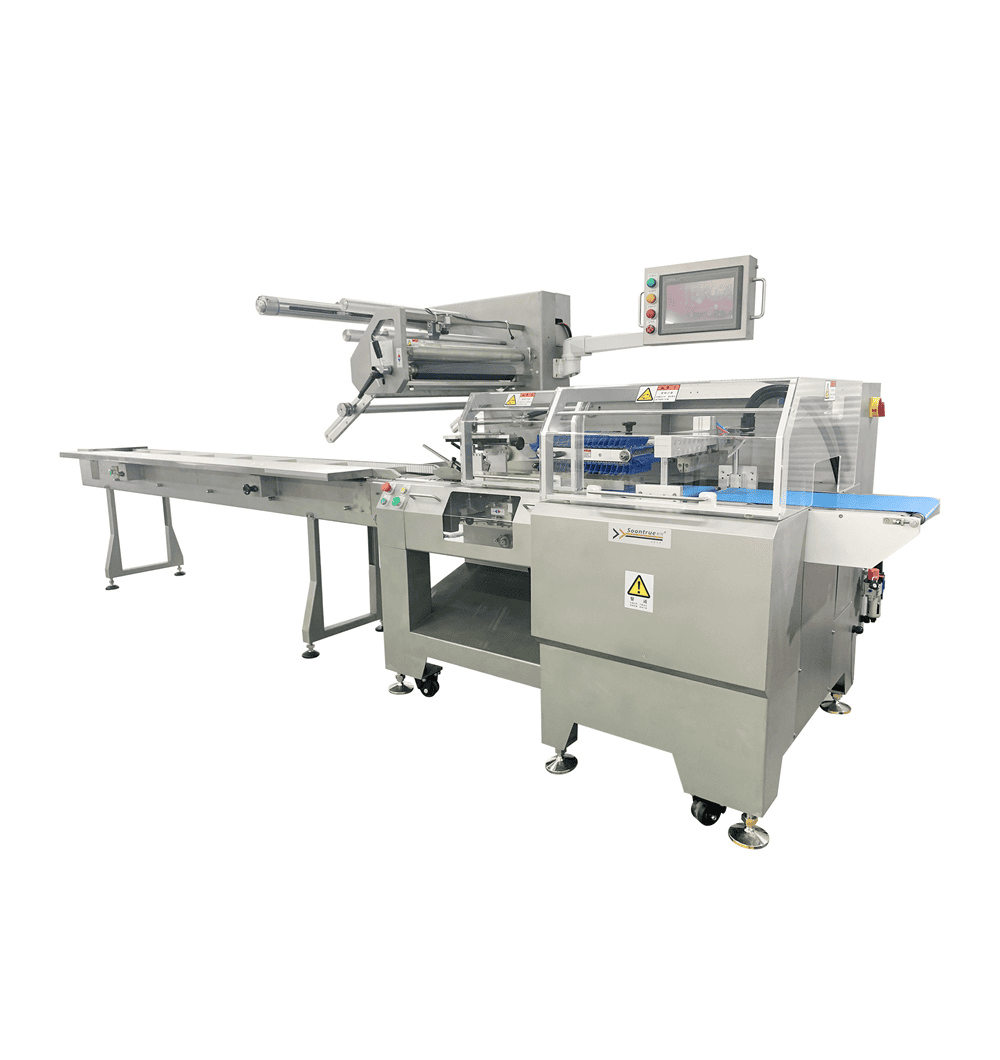
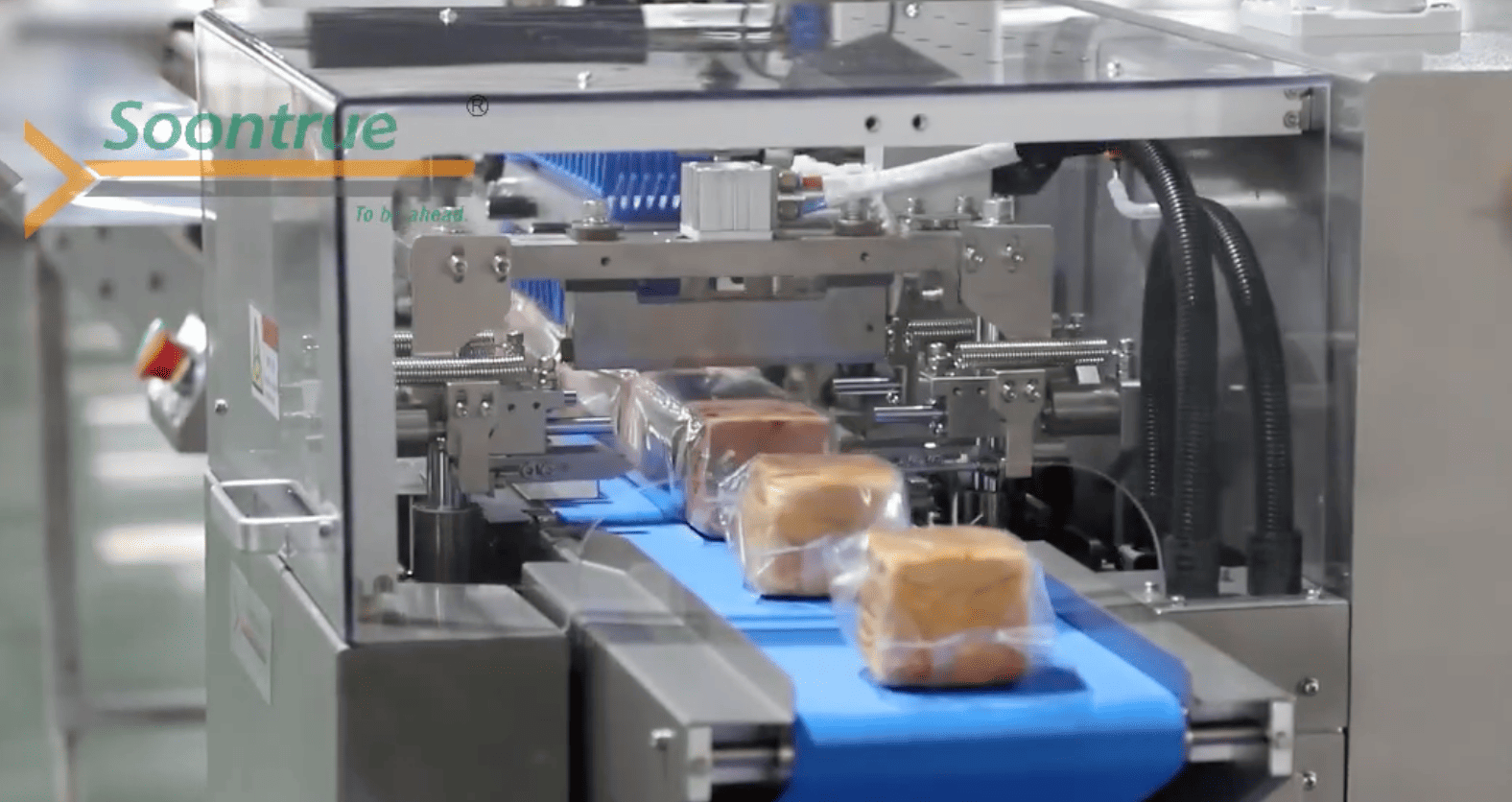
Horizontal Flow Wrappers (HFFS) Machines are the "ballet dancers" of the packaging world. The product travels on a flat plane, and the film is wrapped around it like a blanket. This is essential for items that shouldn't be dropped—think of a delicate croissant, a stack of surgical masks, or a high-end artisanal soap bar. For a small business, HFFS offers the best "shelf appeal" because the back seal is neat and the ends are crimped with precision. However, HFFS machines typically have a larger footprint. If your shop is the size of a garage, you need to measure twice.
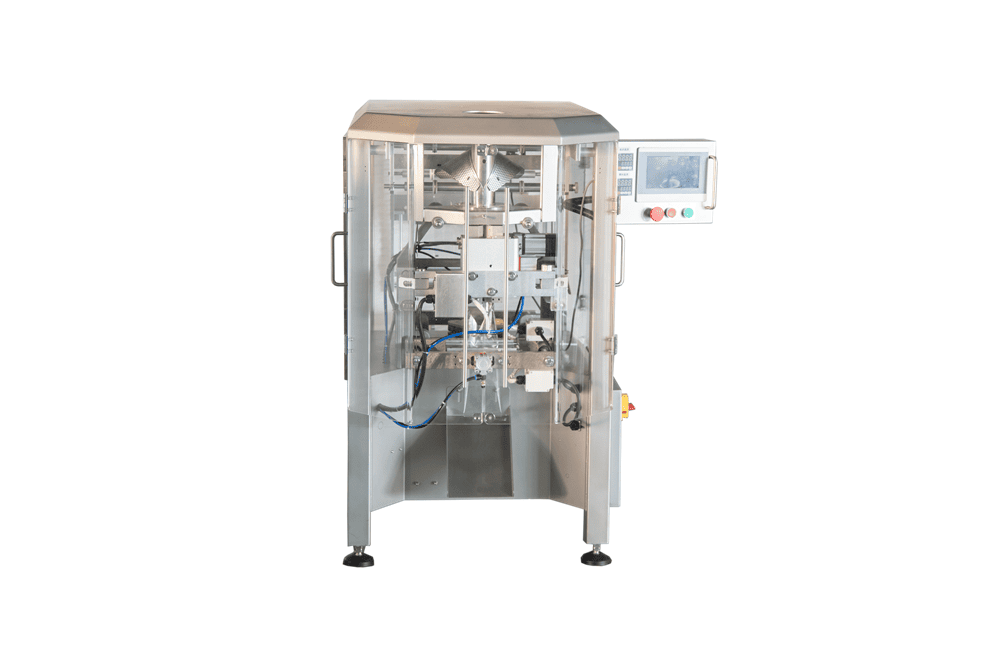
Vertical Form-Fill-Seal (VFFS) machines, on the other hand, are the "powerlifters." They take up very little floor space (often less than 1.5 square meters) because they grow upward. The product is dropped from a hopper into a tube of film. This is the fastest way to pack "loose" items like coffee beans, granola, or liquid sauces. The engineering challenge here is Gravity Management. If your product is heavy, it might "blow out" the bottom seal if the timing isn't perfect. Modern small-scale VFFS machines in 2026 now include "product stripping" and "gas flushing" as standard features, allowing small brands to achieve the same 12-month shelf life as the multi-national corporations.
The decision boils down to this: If it’s a single solid object, go Horizontal. If it’s something you could pour into a bowl, go Vertical.
Why Is "Film Chemistry" the Most Overlooked Factor in Small Business Packaging?
In 2026, your packaging machine is only as good as the film it runs; the "Film Chemistry" determines the hermetic seal strength, the barrier properties against oxygen and moisture, and the machine's overall "Seal Window" (the precise temperature and pressure required for a perfect seal).
Many small business owners spend months researching the machine but only minutes picking the film. This is a catastrophic mistake. The "Film-Machine Interface" is where 90% of production headaches occur.
Consider the "Seal Window." Traditional multi-layer plastics (like BOPP/PE laminates) are forgiving; they seal across a wide temperature range. But as we move into 2026, global sustainability mandates are pushing even small brands toward Mono-materials (single-layer PE) and Paper-based laminates. These "green" films have a razor-thin seal window. If your machine's heater is off by just 2 degrees, the film either melts into a sticky mess or fails to seal entirely, leading to "leakers" that ruin your product's shelf life.
Furthermore, you must understand the Coefficient of Friction (COF). If the film is too "slippery," it will slide off the forming tube; if it's too "tacky," it will jam the machine. For a small business, the best machine is one equipped with Adaptive Thermal Logic. This isn't just a fancy term—it’s a system that monitors the film’s resistance and the ambient temperature 100 times a second, adjusting the sealing jaws on the fly. This "intelligence" allows a small brand to use the thinnest, most sustainable films possible, saving thousands of dollars in material costs while keeping their products fresh for months.
How to Navigate the "Small Space Constraint" Without Sacrificing Industrial Power?
The rise of "Compact Industrialism" in 2026 means small businesses no longer have to choose between a "hobbyist" machine and a "factory" machine; modern modular designs allow for a full industrial-grade packaging line to be integrated into a footprint of less than 10 square meters.
Space is the most expensive "hidden cost" for a growing brand. If you’re operating out of a shared commercial kitchen or a small industrial unit, every square meter must generate revenue.
The strategy for 2026 is "Verticality and Modularity." Instead of a long, linear production line that stretches 20 meters, small businesses are adopting U-shaped or L-shaped configurations. By using a vertical elevator to feed a VFFS machine, you utilize the "airspace" of your facility, leaving the floor clear for foot traffic and raw material storage.
Another critical engineering shift is the move toward "Tool-less Modular Components." In the past, changing a machine's configuration required a toolbox and two hours of downtime. Today, the best machines for small businesses use "Quick-Release" forming shoulders and snap-on conveyors. This means you can run your 50g sample packs in the morning, swap the modules in 15 minutes, and be running your 1kg bulk bags by lunch. This "High-Mix, Low-Volume" flexibility is the secret weapon of the modern small manufacturer, allowing them to pivot their product line as fast as the market demands.
What Role Does "Edge Computing" and Data Play in Modern Small Units?
Even for a small business, "Edge Computing" is no longer a buzzword; it is the technology that allows a single packaging machine to monitor its own health, track OEE (Overall Equipment Effectiveness) in real-time, and prevent "catastrophic downtime" through predictive maintenance alerts sent directly to an owner's smartphone.
You might think, "I'm just packing granola, why do I need data?" The answer lies in the "Invisible Profit Leaks."
Without data, you don't know why your production was 20% lower on Wednesday than on Tuesday. Was it a slow operator? A temperature fluctuation in the warehouse? Or a motor that's starting to fail? Edge Computing means the machine processes this data locally, right at the source, rather than sending it to a complex corporate cloud.
For a small business owner, this looks like a simple dashboard on a tablet. It shows your OEE score—a single number that tells you how well your machine is performing relative to its potential. If the score drops, the machine tells you why. Maybe the "Seal Dwell Time" is drifting, or the "Film Tension" is too high. By catching these micro-issues early, you avoid the "Friday Afternoon Disaster" where the machine breaks down right before a major shipment is due. In 2026, the best packaging machine for small business isn't just a mechanical device; it's a "smart assistant" that ensures your production line is always running at peak efficiency.
How to Avoid the "Integration Nightmare" When Buying Your First Machine?
The most common mistake small businesses make is buying a "Frankenstein Line"—mixing a filler from one vendor, a bagger from another, and a labeler from a third—without a unified control protocol, leading to communication breakdowns and a 30% drop in overall line efficiency.
Integration is the "invisible glue" that holds your production together. If your filler is ready to dump product but your bagger isn't in position, you have a mess on the floor. If your labeler is too slow for your bagger, you have a bottleneck.
For a small business, the best strategy is "Single-Source Responsibility." Even if you can't afford a fully integrated line today, you must buy a machine that is "Integration-Ready." This means looking for a controller that supports standard industrial protocols like EtherCAT or IO-Link. These aren't just technical jargon; they are the "universal languages" that allow a machine to "talk" to future additions like a robotic pick-and-place arm or an automated check-weigher.
Another critical factor is "Upstream/Downstream Synchronization." If your oven or mixer produces product at a variable rate, your packaging machine must be able to "sense" the incoming flow and adjust its speed automatically. This "Buffer Logic" prevents the machine from "starving" (running empty) or "choking" (getting overwhelmed). By choosing a machine with Adaptive Speed Control, a small brand can ensure a smooth, continuous flow that maximizes every minute of the production shift.
What Are the 2026 Global Compliance Standards for Small Business Food Packaging?
Automation is no longer just about speed; it is a mandatory tool for meeting the 2026 "Hygienic Design" and "Traceability" standards, ensuring that every bag produced is free from contamination and can be tracked back to its source in the event of a recall.
In 2026, the regulatory landscape for small food businesses has shifted. The FDA and CE now demand a level of "Hygienic Design" that was once only required for pharmaceutical companies.
What does this mean for your machine? It means "Wash-down" capability is no longer optional. You need a machine built with 304 or 316-grade stainless steel, with sloped surfaces that prevent water from pooling and "no-tool" disassembly for deep cleaning. If your machine has "dead spots" where flour or liquid can hide, you are one health inspection away from being shut down.
Furthermore, "Traceability" is now a digital requirement. Your packaging machine must be integrated with a Thermal Transfer Overprinter (TTO) that can print not just a "Best Before" date, but a unique QR code or batch number. This "Digital Birth Certificate" for every bag allows you to prove to retailers and regulators exactly when, where, and how that product was packed. For a small business, this level of compliance isn't just a legal hurdle—it's a competitive advantage that builds trust with high-end retailers who are increasingly wary of artisanal brands with poor documentation.
How to Train a Non-Technical Team to Operate High-Tech Packaging Gear?
In an era of high labor turnover, the best packaging machine for small business is one that requires zero "engineering knowledge" to operate; by using icon-based HMIs and "Augmented Reality (AR)" troubleshooting, a new employee can be fully productive in less than four hours.
The "Skill Gap" is the biggest barrier to automation. Small business owners often fear that buying a high-tech machine means they have to hire an expensive engineer to run it.
The 2023-2026 shift in machine design has solved this. The modern Human-Machine Interface (HMI) is designed like a smartphone. Instead of complex codes, the operator sees a 3D model of the machine on a touchscreen. If there’s a jam, the screen shows exactly where it is and provides a 15-second video on how to clear it.
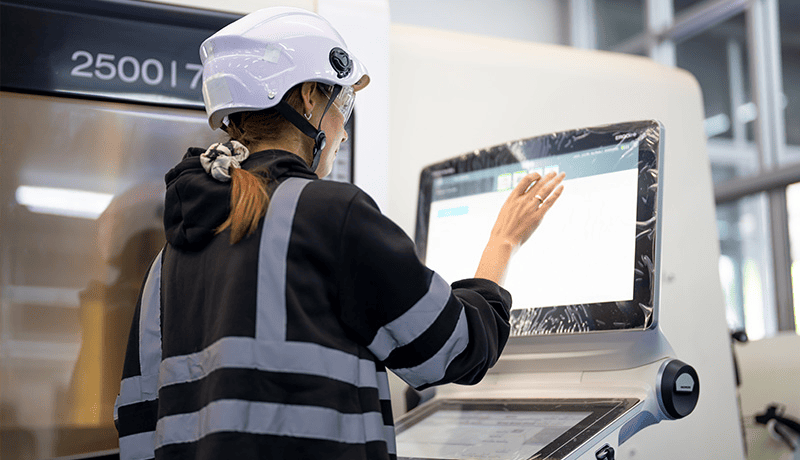
Furthermore, the best machines now feature "One-Touch Recipe Recall." If you’re switching from 100g bags to 500g bags, the operator simply taps a button, and the machine’s servo motors automatically adjust the film tension, the sealing temperature, and the bag length. This "De-skilling" of the operation is vital for small businesses. It means that if your lead operator quits on a Monday, you can have a new person trained and running the line by Monday afternoon. Automation shouldn't make your business more complicated; it should make it more "human-proof."
Can a Small Business Afford "Sustainable Packaging" Without Going Bust?
In 2026, "Sustainability" is no longer a luxury; it is a financial necessity for small brands, as new plastic taxes and consumer demand for "Paper-based" and "Mono-material" films make traditional non-recyclable plastics a massive liability.
For a small business, the "Green Transition" is a double-edged sword. On one hand, your customers are demanding compostable or recyclable packaging. On the other hand, these materials are often 20-40% more expensive than standard plastic.
The secret to making sustainability profitable is "Precision Automation." When you pack by hand, you tend to "over-package" to ensure a good seal. You use more film than necessary, and your scrap rate is high. A modern packaging machine with "Film Tension Control" and "Precision Cutting" can reduce your film usage by 10-15% per bag. This "Material Reduction" is the most effective way to offset the higher cost of eco-friendly films.
Furthermore, you must look for a machine with "Adaptive Sealing Logic." Sustainable films like Mono-PE or paper-based laminates have a very narrow "Seal Window." If the machine's temperature is off by just a few degrees, the film will melt or fail to seal. By choosing a machine that can handle these "fussy" materials, a small brand can stay ahead of the 2026 plastic taxes and position itself as a "Green Leader" in the eyes of conscious consumers.
What Is the "Hidden Cost of Second-Hand" Packaging Machinery?
A "bargain" used packaging machine is often a "time bomb" for a small business; the 2026 market for refurbished gear is plagued by obsolete PLCs (Programmable Logic Controllers), unavailable spare parts, and a lack of technical support that can lead to weeks of catastrophic downtime.
It’s tempting to buy a used machine for $5,000 instead of a new one for $20,000. But for a small business, the "True Cost of Ownership" of a second-hand machine is often 3x higher.
The biggest risk is "Component Obsolescence." If the PLC or the HMI on a 10-year-old machine fails, you might find that the manufacturer no longer supports that model. You’ll be scouring eBay for a used part while your production line sits idle.
Furthermore, used machines are rarely optimized for today’s sustainable films. They lack the precision temperature and tension controls needed for modern materials. By the time you’ve paid for a technician to "retrofit" the machine and lost two weeks of production to "teething problems," you’ve often spent more than the cost of a new, warrantied machine. For a small business, "Reliability" is the most valuable feature. A new machine with a 2-year warranty and 24/7 remote support is an insurance policy for your growth.
Future-Proofing: How Will AI and Robotics Reshape Small Business Packaging by 2030?
The best packaging machine for small business in 2026 is one that is "AI-Ready"—designed to integrate with collaborative robots (cobots) for end-of-line palletizing and equipped with "Machine Learning" sensors that can automatically detect and reject "out-of-spec" bags before they ever reach a customer.
As we look toward 2030, the line between "Small Business" and "Industrial Giant" is blurring. The technology that was once only available to Coca-Cola or Nestlé is now being "democratized" for small-scale manufacturers.
One of the most exciting trends is the rise of "Collaborative Robots (Cobots)." These are small, safe robotic arms that can work alongside human operators to pack bags into boxes or stack them on pallets. A small business can start with a basic packaging machine today and add a cobot next year as their volume grows.
Another trend is "AI Vision Systems." In the past, a "leaky bag" would only be discovered by a customer. Today, a small, inexpensive AI camera can be mounted on your machine to "see" every seal and "read" every date code. If a bag is imperfect, the machine automatically rejects it. This "Zero-Defect" production is the ultimate goal for any brand that wants to scale. By choosing an "AI-Ready" machine today, you are ensuring that your business can grow into the future without having to replace your entire production line.
How to Vet a Packaging Machine Supplier: The 2026 "Small Business Checklist"
The quality of your packaging Machine supplier is just as important as the quality of your machine; for a small business, the ideal partner is one that offers "Remote Diagnostics," a guaranteed 24-hour spare parts delivery, and a deep understanding of your specific product's physical properties.
When you buy a packaging machine, you are entering a long-term relationship. A small business cannot afford to be "just another number" to a massive conglomerate. You need a supplier that is responsive and understands the "crisis" of a downed line.
Before you sign a contract, ask these three critical questions:
- "Do you offer Remote Support?" In 2026, most mechanical issues can be solved via a video call or by a technician logging into your machine's PLC remotely. This saves you the $1,500 "call-out fee" and hours of waiting.
- "What is your 'Wear Parts' availability?" Every machine has parts that will eventually wear out—sealing jaws, knives, and belts. If your supplier doesn't have these in stock in your region, your business is at risk.
- "Can we perform a 'Fat Test' (Factory Acceptance Test) with our actual product and film?" Never buy a machine based on a video of it running someone else's product. Every powder, liquid, and solid has unique "flow characteristics." A reputable supplier will insist on testing your specific materials before the machine leaves their floor.
FAQ
Q: How much floor space do I really need for a basic automated line?
A: For a compact VFFS (Vertical) system, you can operate in as little as 5-8 square meters, including space for the operator and raw materials. For an HFFS (Horizontal) system, plan for at least 12-15 square meters.
Q: Can one machine handle both liquids and powders?
A: Generally, no. While the "bagger" might be the same, the "filler" (the part that measures the product) is completely different. A pump for liquids cannot handle the dust of a powder. However, modular machines allow you to swap the filler, though this requires a 30-60 minute changeover.
Q: What is the average lifespan of a small-scale industrial packaging machine?
A: With proper maintenance and "Edge Computing" predictive alerts, a high-quality machine should last 10-15 years. The mechanical parts are robust; the "obsolescence" usually happens in the electronics, which is why choosing a machine with a modern PLC is vital.
Q: Is it better to lease or buy?
A: In 2026, many small businesses prefer "Equipment as a Service" (EaaS) or leasing. This allows you to keep your capital for marketing and R&D while the machine's monthly payment is covered by the labor savings it generates.
Conclusion
The transition from manual packaging to automation is the "rite of passage" for every successful small brand. It is the moment you stop "working in" your business and start "working on" your business.
By choosing the right technology—whether it’s a space-saving VFFS for your coffee beans or a high-speed HFFS for your artisanal bars—and by prioritizing Film Chemistry, Hygienic Design, and Data-driven Maintenance, you are building a foundation that can support massive growth.
In 2026, the winners aren't just those with the best product; they are those with the most resilient, efficient, and sustainable production lines. Your first packaging machine isn't just a piece of steel and servos—it’s the engine of your future success.
Final Summary Table: Small Business Packaging Decision Matrix
| Feature | HFFS (Horizontal) | VFFS (Vertical) | Manual / Semi-Auto |
| Best For | Fragile, solid items | Powders, liquids, granules | Startups, very low volume |
| Speed (PPM) | 40 - 200+ | 30 - 100+ | 5-15 |
| Footprint | Large (Horizontal) | Compact (Vertical) | Minimal |
| Initial Cost | Moderate to High | Moderate | Low |
| Labor Savings | High | High | Low |
| 2026 Compliance | Full | Full | Difficult |