
Premade Pouch vs. FFS Machines: Which Fits Your Line?
Packaging Knowledge Hub

If you're seeking packaging automation solutions, please contact us, and we'll be delighted to offer you the most tailored solution.
When a food processing plant or a co-packing facility prepares to scale up production, the most hotly debated topic in the procurement meeting is almost always the same: "Should we buy cheaper rollstock film and make the bags ourselves, or invest in slightly more expensive, perfectly pre-formed pouches?"
This debate pits two titans of the packaging world against each other: Form Fill Seal (FFS) Machines and Premade Pouch Packaging Machines. While both automate the packaging process, their underlying philosophies—and their impact on your bottom line—are radically different. There is no universally perfect machine, only the perfect match for your specific business model. Let's break down the true Total Cost of Ownership (TCO), analyzing everything from initial capital expenditure and material scrap rates to changeover efficiency and retail shelf appeal.
How Do Premade Pouch Packing Machines vs. Form Fill Seal (FFS) Work?
To make an informed purchasing decision, we first need to understand the mechanical DNA of both systems. They approach the task of getting a product into a bag from opposite directions.
Form Fill Seal (FFS) Machines: The High-Volume Workhorses
The Mechanism: FFS machines—which include both Vertical (VFFS) and Horizontal (HFFS) models—start with a large, flat roll of plastic film. The machine pulls the film over a forming collar or plow, shaping it into a cylinder or flat pouch. It then simultaneously seals the bottom, drops the product in, seals the top, and cuts the finished bag loose.
The Core Trait: Bag making and product filling happen simultaneously in a continuous or semi-continuous physical loop.

Premade Pouch Packaging Machines: The Kings of Flexibility
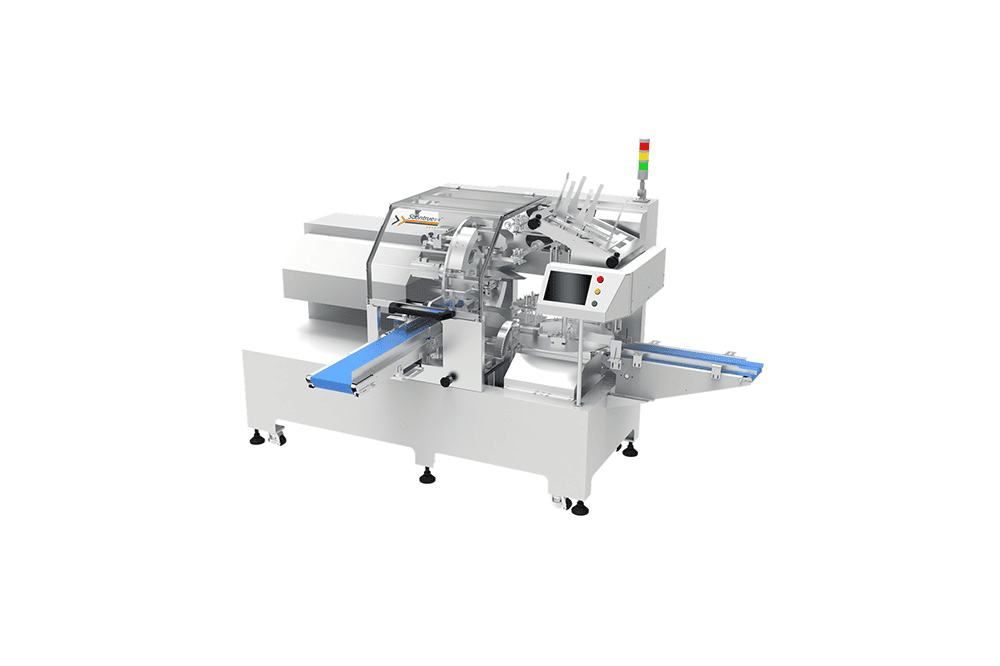
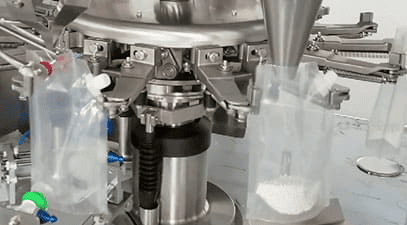
The Mechanism: These machines do not "make" bags. Instead, they handle empty pouches that have already been perfectly formed and printed by a specialized film converter. The machine uses mechanical grippers to pick up a pouch, open it, fill it, and seal it shut.
The Core Trait: The packaging process is broken down into distinct, isolated stations. The machine focuses entirely on the precision of opening, filling, and sealing without the stress of manipulating raw film.
What is the True ROI of Premade Pouch vs. FFS?
For financial directors, the decision often comes down to the math. It is crucial to look beyond the sticker price of the equipment and calculate the long-term operational expenses (OpEx).
Capital Expenditure (CapEx) Nuances
- VFFS vs. HFFS vs. Premade: Generally, entry-level Vertical FFS (VFFS) machines have the lowest initial purchase price because the mechanics of pulling film over a tube are relatively straightforward. However, if you want to make complex stand-up pouches (Doypacks) from rollstock, you need a Horizontal FFS (HFFS) machine. These are massive, highly engineered systems that are often significantly more expensive than rotary premade pouch packing machines.
- Premade Pouch Machinery: The initial investment sits comfortably in the middle. These machines require complex, highly synchronized mechanical grippers and vacuum systems, but they avoid the massive footprint and engineering overhead of an HFFS rollstock system.
Operational Expenditure (OpEx) and the Hidden Cost of Scrap
- Material Unit Cost: Rollstock film is undeniably cheaper per impression than buying pre-formed, individual pouches. If you only look at the invoice from your film supplier, FFS wins.
- The Scrap Rate Reality: FFS machines generate waste. Every time you thread a new roll of film, adjust the forming collar, or troubleshoot a tracking alignment issue, you are producing empty or poorly sealed bags. A standard FFS scrap rate hovers around 3% to 5% during initial setup, film splicing, or short-run changeovers.
- The Premade Advantage: Premade pouch packing machines operate on a strict "no bag, no fill; no open, no seal" logic. If a bag fails to open, the product is not dropped, and the bag is not sealed, allowing it to be reused. The scrap rate is virtually 0%. If you are packaging high-value goods like premium roasted nuts, freeze-dried fruits, or expensive pet treats, the product saved from the scrap bin often pays for the premade pouch machine within the first year.
Why Do Co-Packers Prefer Premade Pouch Packaging Machines?
In modern manufacturing, time is money. For co-packers and multi-SKU brands, the ability to pivot production quickly is a massive competitive advantage.
The Changeover Bottleneck
- The FFS Struggle: Changing a VFFS machine from a 100g snack bag to a 500g family-size bag is a major event. It requires stopping the machine, removing the heavy forming tube, installing a new one, re-threading the film, and recalibrating the sealing temperatures and timing. Even with skilled technicians, this takes 30 to 60 minutes of dead downtime.
- The Premade Pouch Speed: Changing bag sizes on a premade pouch machine is remarkably fast. You simply adjust the width of the mechanical grippers. On standard machines, this manual adjustment takes 10 to 15 minutes. On modern, high-end models equipped with servo-motors, one-touch automatic width adjustment takes less than 1 minute.
If your facility runs three or four different bag sizes per shift, the Overall Equipment Effectiveness (OEE) of a premade pouch machine will absolutely crush an FFS system.
How Does Packaging Format Impact Sales?
Machinery distributors know that you aren't just selling a piece of steel; you are selling the marketing potential of the final product.
The Limitations of FFS
VFFS machines are brilliant at producing standard pillow bags or basic gusseted bags. However, because the film is forcefully dragged over a forming collar, there is always a risk of the printed graphics stretching or distorting. While HFFS machines can produce nicer Doypacks, the inline forming process still limits the complexity of the pouch shape.
The Premade Pouch Premium
Premade pouches are manufactured flat in a dedicated printing facility. This guarantees zero printing distortion. The graphics are flawless, making them ideal for premium, high-margin products. Moreover, premade pouch machines effortlessly handle complex formats that dominate retail shelves today:
- Stand-up Doypacks with resealable zippers.
- Spouted pouches for liquid purees.
- Custom die-cut shaped pouches that instantly grab consumer attention.

What Are the Infrastructure Requirements for VFFS vs. Rotary Premade Pouch Machines?
Before signing a purchase order, plant managers must evaluate their physical infrastructure.
- Vertical Clearance: Vertical FFS (VFFS) machines are exceptionally tall. Because the product must drop through the forming tube, the dosing equipment (like a large 14-head multi-head weigher) must be mounted high above the machine. This often requires significant ceiling height and massive mezzanine structures.
- Horizontal Footprint: Horizontal FFS (HFFS) machines, while lower to the ground, have a massive linear footprint, often resembling a small train. Rotary premade pouch machines, by contrast, are compact space-savers. Because the bag moves in a tight circle through the various stations, the machine footprint is exceptionally small, making it perfect for crowded, modern cleanroom environments.
Should You Buy a Premade Pouch Machine or an FFS Machine?
To help you or your clients navigate this decision, here is a straightforward commercial checklist.
Strongly consider an FFS (Form Fill Seal) Machine if:
- You produce a single SKU in massive, uninterrupted volumes (e.g., standard potato chips, commodity rice, or basic frozen vegetables).
- Your product only requires a basic pillow bag or flat sachet without complex zippers or spouts.
- Your primary business strategy is built on ultra-low production costs and high-speed output.
Strongly consider a Premade Pouch Packaging Machine if:
- You are a co-packer handling multiple client contracts and need to change bag sizes several times a day.
- Your product is positioned as premium and requires high-end packaging formats like Doypacks, zippers, or custom shapes.
- Your raw materials are expensive, and you cannot afford the 3-5% material and product scrap rate associated with FFS rollstock calibration.
- Your factory has limited floor space or lacks highly specialized maintenance technicians to constantly tune forming collars.
Summary & Next Steps
Choosing between a premade pouch machine and an FFS system is rarely just about comparing the initial price tags. It requires a holistic calculation of rollstock savings versus the hidden costs of changeover downtime, scrap rates, and the undeniable brand value of premium packaging formats. For high-mix, high-value production environments, the flexibility and flawless output of a premade pouch machine almost always deliver a superior return on investment.
FAQs
Q: Is rollstock film always cheaper than premade pouches?
A: Yes, on a per-unit basis, buying a roll of unformed film is cheaper than buying individual, pre-glued bags. However, when you factor in the zero-waste operation of a premade pouch machine and the elimination of changeover downtime, the total cost per successfully packaged product often favors premade pouches for multi-SKU operations.
Q: Can a premade pouch machine run as fast as a VFFS machine?
A: Generally, standard VFFS machines are faster for simple pillow bags, easily exceeding 100 bags per minute. Standard single-lane rotary premade pouch machines run between 30 to 50 bags per minute. However, duplex (dual-lane) premade pouch machines can reach 80-100 bags per minute, bridging the speed gap.
Q: Which machine is easier for new operators to learn?
A: Premade pouch machines are generally more user-friendly. Because the machine does not form the bag, operators do not have to worry about complex film tracking, web tension, or forming collar alignments. They simply load empty bags into the magazine and let the machine do the rest.
Q: Can I add a zipper to bags made on an FFS machine?
A: Yes, but with significant caveats. While adding a zipper to a Horizontal FFS (HFFS) system is common (though it drastically increases the machine's footprint), integrating a cross-web zipper onto a Vertical FFS (VFFS) machine is notoriously complex. It is highly prone to leaking, requires constant expert calibration, and significantly reduces overall production speed.
Q: What happens if a premade pouch machine fails to open a bag?
A: Modern premade pouch machines are equipped with advanced vacuum sensors. If the suction cups fail to open a bag (or if a bag is missing), the sensor signals the dosing unit to hold the product. The empty bag is simply ejected, and no product is spilled, ensuring a clean machine and zero product waste.