
How Robotic Packaging Systems Are Transforming End-of-Line Operations
Packaging Knowledge Hub

If you're seeking packaging automation solutions, please contact us, and we'll be delighted to offer you the most tailored solution.
Your manufacturing plant might boast the fastest processing, baking, or sorting line in the world, but if the end of that line relies on human hands to wrestle with flat cardboard, fold flaps, and apply tape, you are actively throttling your own throughput.
Do not let a ten-cent corrugated box dictate the speed of your million-dollar production line.
In an era of skyrocketing labor costs and compressed delivery windows, relying on manual end-of-line packaging is no longer just inefficient—it is a massive liability. Below is a no-nonsense look at why Robotic Box Erecting Machines are becoming the non-negotiable standard for high-volume facilities, and how they instantly transform a chaotic bottleneck into a synchronized, high-speed asset.
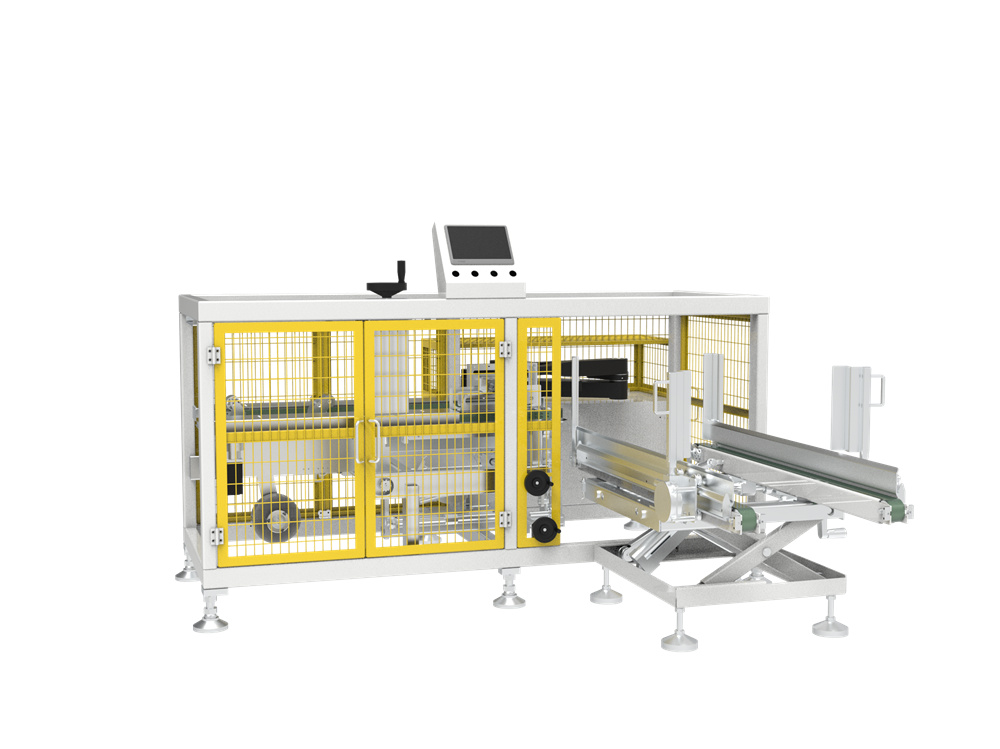
Why Are Plants Abandoning Manual Box Folding for Automation?
For decades, the industry treated carton forming as a necessary evil—a low-skill task that you simply threw bodies at. Need to ship more product? Put three more people at the end of the conveyor belt to fold boxes.
But the labor pool has changed. Manual box folding is repetitive, ergonomically punishing, and incredibly inconsistent. A tired worker folds a box slightly askew, and suddenly, your downstream automated case packer jams, bringing the entire line to a grinding halt.
A Robotic Box Erecting Machine completely eliminates this unpredictable human element. For machinery distributors, this is your ultimate pitch: You are not just selling a machine that folds cardboard. You are selling relentless consistency, absolute standardization, and the immediate elimination of your client's most frustrating labor headache.
What Is a Robotic Box Erecting Machine and How Does It Work?
Unlike older, clunky semi-automatic systems that still require a human to square the box or push it through a taper, a true Robotic Box Erecting Machine is a fully automated, servo-driven powerhouse.
Engineered for high-volume environments—spanning food and beverage, pharmaceuticals, daily necessities, and e-commerce logistics—these systems take a flat, pre-cut corrugated blank and transform it into a perfectly square, bottom-sealed carton in fractions of a second.
The Core Mechanics of Modern Carton Forming
- Smart Positioning & Extraction: Advanced systems developed by industry innovators like Soontrue utilize independent servo motors and robotic arms to extract the flat carton from the magazine with surgical precision, ensuring zero misalignment.
- Dual Suction Plate Opening: Instead of relying on brute force, high-end robotic erectors use a long-edge-to-long-edge vacuum suction system. This allows the machine to pull the box open gently but firmly, accommodating both heavy-duty corrugated board and highly cost-effective thin cartons without tearing them.
- Pneumatic Bottom Folding: Once squared, pneumatic-driven mechanisms seamlessly fold the bottom flaps, holding the carton in perfect geometric shape while the adhesive tape is applied.
What Are the Hard Business Returns of Automated Carton Forming?
When pitching this technology to a facility manager, skip the technical jargon and focus on the financial impact. The value of a robotic box erector is measured in uptime and labor savings.
- Crushing the Speed Bottleneck: A robotic box erector does not fatigue. It can consistently form up to 1,500 cartons per hour (depending on box size), ensuring that your downstream packaging equipment is never starved for empty boxes.
- Zero Downstream Jams: A box that is not perfectly square will jam a case packer. Robotic systems guarantee 100% geometric consistency. By ensuring every carton is perfectly shaped, you eliminate the micro-stoppages that quietly destroy a shift's overall equipment effectiveness (OEE).
- Material Cost Reduction: Because the robotic arm handles the cardboard with precise, programmable force, plants can safely switch to thinner, cheaper corrugated materials without fear of the machine crushing or tearing the boxes during the erecting process.
- Agility and Quick Changeovers: Modern production requires flexibility. Intelligent control panels and servo-driven adjustments allow operators to switch between different box sizes in minutes, drastically reducing changeover downtime.
The Evolution of Carton Forming: Which System Fits Your Line?
To understand the leap in technology, here is a breakdown of how robotic systems compare to legacy methods.
| System Type | Core Mechanism | Operator Requirement | Best Application |
|---|---|---|---|
| Manual Folding | Human hands and tape guns | High (Multiple workers per shift) | Low-volume startups, highly irregular custom boxes |
| Semi-Automatic | Operator opens box, machine tapes bottom | Medium (Requires constant human feeding) | Mid-volume lines with limited budget |
| Robotic Box Erector | Servo-driven robotic arms, vacuum suction | Minimal (Only to reload the box magazine) | High-volume food, pharma, and e-commerce lines requiring speed and consistency |
The Takeaway: If a facility is running continuous shifts and relies on automated case packing downstream, anything less than a fully robotic box erector is a compromise that will cost money in the long run.
The Distributor’s Playbook: How to Prove the ROI of a Robotic Box Erector
For agents and distributors, proving the Return on Investment (ROI) is the key to closing the deal. Walk your clients through this exact math:
- Calculate Direct Labor Savings: Identify how many workers are currently dedicated to erecting boxes per shift. Multiply their fully loaded hourly rate (wages, benefits, taxes) by the number of shifts. A robotic erector typically reallocates 2 to 3 workers per line.
- Factor in Downstream Uptime: Ask the plant manager how many times a day the case packer jams because of a badly folded box. Calculate the cost of that lost production time. Robotic precision eliminates this completely.
- Highlight Material Savings: Show them how the machine's "Thin Box Adaptability" allows purchasing to source lighter corrugated board, shaving pennies off every single box—which translates to tens of thousands of dollars annually.
Backed by a global service network and decades of R&D from manufacturers like Soontrue, buyers benefit from a system that pays for itself rapidly, often within the first year of operation.
5 Frequently Asked Questions About Robotic Box Erecting Machines
1. What types of cartons can a robotic box erector handle?
They are highly versatile and compatible with a wide range of corrugated cartons, supporting multiple sizes for food, daily goods, and industrial packaging. The cartons simply need to be pre-cut with standard crease lines.
2. How does the robotic system actually improve efficiency over older machines?
Older machines use mechanical plows that can jam or crush boxes. The robotic arm ensures precise pick-up and folding via vacuum suction, drastically reducing misformed cartons and enhancing consistency at high speeds.
3. Will this machine take up a massive amount of floor space?
No. Modern robotic box erectors are engineered with a compact footprint. They are designed to occupy minimal space while maintaining high-speed performance, easily fitting into tight end-of-line layouts.
4. How difficult is it to switch between different carton sizes?
It is incredibly straightforward. The servo-driven system and intelligent control panel enable quick, tool-less (or minimal-tool) changeovers, allowing operators to adjust width, length, and height parameters in minutes.
5. Is the machine suitable for integration with my existing packaging equipment?
Absolutely. These machines are designed specifically for seamless integration. They act as the perfect starting point for an automated end-of-line system, feeding perfectly squared boxes directly into your existing cartoning, case packing, sealing, and palletizing systems.