
A Comprehensive Guide to Premade Pouch Packing Machines
Packaging Knowledge Hub

If you're seeking packaging automation solutions, please contact us, and we'll be delighted to offer you the most tailored solution.
The global packaging landscape is undergoing a massive shift. Heavy glass jars and rigid plastic containers are rapidly being replaced by lightweight, eco-friendly, and visually striking flexible packaging. For food processing plants, co-packers, and machinery distributors, this isn't just a change in consumer preference—it's a fundamental operational challenge. Facing the demand for diverse formats like single-serve sachets, family-size doypacks, and on-the-go spouted pouches, production lines are under immense pressure to accommodate frequent changeovers without sacrificing speed.
Enter the premade pouch packaging machine. By combining extreme flexibility, flawless aesthetic output, and high-level automation, this equipment has become the absolute workhorse of the modern packaging room. Let's unpack exactly how these machines work, how to choose the right configuration, and how they deliver a measurable return on investment (ROI) for your facility.
What Is a Premade Pouch Packaging Machine and Why Is It a Game-Changer?
A premade pouch packaging machine is an automated system designed to handle bags that have already been formed and printed off-site. Unlike Form Fill Seal (FFS) machines that create bags from a continuous roll of film, this equipment focuses entirely on taking an empty, pre-formed pouch, opening it, filling it with product, and sealing it shut.
For plant managers and financial directors, this specific workflow unlocks three core business advantages:
- Flawless Shelf Appeal (Zero Printing Distortion): Because the pouches are manufactured and printed flat by a dedicated film converter before reaching your facility, the graphics are pristine. There is no risk of the artwork stretching or misaligning during the forming process, ensuring premium brand presentation.
- Unmatched Production Flexibility: A single machine can run multiple pouch sizes and formats. Adjusting the machine's gripper jaws to accommodate a new bag width often takes just 10 to 15 minutes manually, or under 1 minute with modern one-touch servo-driven auto-adjustment features, making it the ultimate tool for co-packers juggling multiple client contracts.
- Drastic Labor Reduction: The entire process is fully automated. A single operator simply needs to load hundreds of empty bags into the machine's magazine periodically, freeing up staff for higher-value tasks on the factory floor.
Rotary vs. Horizontal Premade Pouch Packing Machines: Which Fits Your Floor Plan?
When configuring a packaging line, the physical layout of your facility dictates your machinery choices. Premade pouch packing machines generally fall into two architectural categories.
Rotary Premade Pouch Packing Machines

The Structure: These machines operate on a circular layout, typically featuring 6, 8, or 10 distinct stations arranged in a ring. The pouch moves in a circle to complete each step of the packaging process.
The Advantage: They are absolute space-savers. The compact footprint makes them ideal for facilities where floor space is at a premium.
Best For: Standard single or dual-fill applications for snacks, powders, and liquids.
Horizontal Premade Pouch Packing Machines
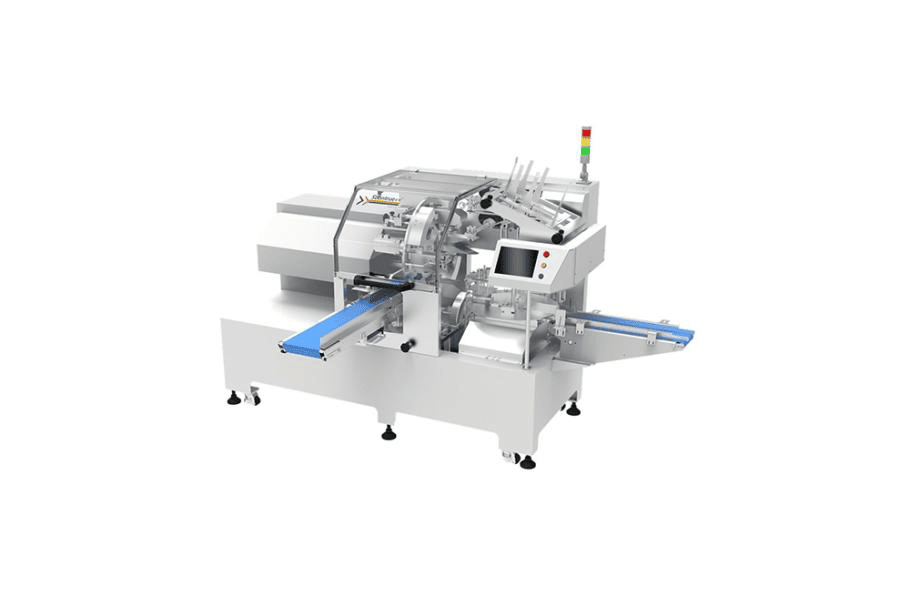
The Structure: These operate on a linear conveyor system. The pouch enters at one end and travels in a straight line through various stations until it exits at the other end.
The Advantage: Incredible expandability. Because it's a straight line, you can easily add multiple filling stations along the track.
Best For: Complex, multi-component meals (e.g., dropping in a spice packet, then dry pasta, then a liquid sauce into the same bag) or extremely high-speed operations.
How Does a Premade Pouch Machine Work? (The 5-Step Process)
Regardless of whether the machine is rotary or horizontal, the internal automation relies on a standardized, highly synchronized workflow.
1.Pouch Taking (Loading): The process begins at the bag magazine. Vacuum suction pads grab a single preformed pouch from the stack and deliver it to the machine's mechanical grippers, which hold the bag by its top edges.
2.Coding and Tracking: The pouch passes through a printing station (usually a thermal transfer overprinter or inkjet coder). Here, crucial regulatory data like expiration dates, lot numbers, or QR codes are applied directly to the film.
3.Precision Opening: Vacuum pads pull the front and back of the pouch apart. For stand-up pouches (doypacks), a blast of clean air or a mechanical plow ensures the bottom gusset is fully expanded. A sensor verifies the bag is successfully opened—if a bag fails to open, the machine will not dispense the product, preventing messy spills.
4.Product Filling: The pouch moves under the dosing station. Depending on the product, a multi-head weigher (for snacks), an auger filler (for powders), or a piston pump (for liquids) precisely drops the exact weight or volume of product into the open bag.
5.Sealing and Output: The filled pouch moves to the sealing jaws. Heat and pressure are applied to melt the inner sealant layers of the pouch together. After a brief cooling station to set the seal, the finished product is discharged onto a conveyor belt, ready for case packing.
What Industries Benefit Most from Pouch Packing Machines?
The true power of a premade pouch machine lies in its versatility. By simply swapping the dosing equipment positioned above the machine, it can serve entirely different industries:
Powders & Granules: Coffee, whey protein, spices, and baking mixes. The integration of enclosed auger fillers and dust-extraction hoods ensures the sealing area remains clean for a hermetic seal.
Liquids & Viscous Sauces: Ketchup, mayonnaise, liquid detergents, and soups. Specialized rotary valves and diving nozzles prevent dripping and splashing during high-speed fills.
Snacks & Dried Fruits: Potato chips, beef jerky, and mixed nuts. These machines easily integrate with nitrogen gas flushing systems to displace oxygen, keeping snacks crispy and extending shelf life.
Pet Food: Kibble and wet treats. Heavy-duty grippers are used to support the weight of large, multi-pound zippered bags.
Pharmaceuticals & Cosmetics: Face mask serums and medical powders. Machines can be built to strict sanitary washdown standards (IP65/IP67) to meet regulatory compliance.
Which Pouch Styles Are Compatible With Premade Pouch Packaging Machines?
Machinery distributors know that selling a machine is often about selling the marketing potential of the bag it produces. Premade pouch packing machines can handle a vast matrix of formats:
- Doypacks (Stand-Up Pouches) & Zipper Pouches: The undisputed kings of the retail aisle. Their bottom gusset allows them to stand upright, acting as a billboard for the brand, while zippers offer consumer convenience.
- Spouted Pouches: The go-to for baby food purees and liquid condiments. They are leak-proof, easy to pour, and highly hygienic.
- Flat Pouches (Sachets / Pillow Bags): Ideal for single-serve portions, hotel amenities, or sample-size products.
- Retort & Vacuum Pouches: Built from heavy-duty, high-barrier films designed to withstand high-pressure sterilization (up to 121°C) for ready-to-eat meals and fresh produce.
- Shaped Pouches: Custom die-cut bags (e.g., a pouch shaped like a piece of fruit) that help boutique brands instantly capture consumer attention.

Premade Pouch vs. Form Fill Seal (FFS) Machines: What Is the Difference?
For procurement teams, the biggest debate is often whether to buy preformed bags or make them on-site from a roll of film. Here is a quick commercial breakdown to guide your decision.
| Comparison Metric | Premade Pouch Machine | Form Fill Seal (FFS) Machine |
| Material Input | Pre-formed, individual empty bags | Continuous rolls of flat plastic film |
| Aesthetic Quality | Premium. Perfect graphics, complex shapes | Standard. Limited to simpler bag geometries |
| Line Flexibility | Extremely High. 1-15 min changeovers | Low. Requires changing heavy forming tubes |
| Footprint | Compact (especially rotary models) | Large (requires film unwinding/forming space) |
| Best Business Fit | Co-packers, multi-SKU brands, premium goods | Single-product lines, ultra-high volume commodities |
How to Choose a Pouch Packing Machine? (5 Crucial Procurement Questions)
If you are a distributor advising a client, or a factory manager planning a CapEx budget, asking the right questions upfront prevents costly integration failures down the line.
What are the exact product characteristics and target weights? Are you packing a free-flowing powder or a sticky, chunky salsa? The product dictates whether you need a multi-head weigher, a volumetric cup, or a piston pump.
What are your facility's ceiling height and footprint limits? While the rotary machine itself is compact, the dosing equipment (like a 14-head scale) and the Z-bucket elevator feeding it require significant vertical clearance.
Will the supplier conduct a rigorous Factory Acceptance Test (FAT)? Never buy a machine without sending your actual product and your actual pouches to the manufacturer. Testing the exact film thickness and product viscosity is the only way to guarantee performance.
What is your true speed requirement? Standard single-lane rotary premade pouch packing machines typically run between 25 to 50 bags per minute. (Note: Duplex or horizontal models can enriched 80-100 bpm). Ensure this aligns with your downstream case-packing capabilities and your 3-year growth projections.
Do the electrical and pneumatic specs match your region? Ensure the machine is wired for your specific industrial grid (e.g., 240V/480V 3-phase 60Hz for North America vs. 380V/400V 3-phase 50Hz for Europe) and that your factory air compressor can handle the machine's pneumatic demands.
What Are the Future Trends in Sustainable Pouch Packaging?
The packaging industry is aggressively moving toward sustainability. Conventional pouches use mixed materials (like plastic laminated with aluminum) which are nearly impossible to recycle. The future belongs to Mono-materials (pouches made 100% from PE or PP).
However, mono-materials have a notoriously narrow "sealing window." If the sealing jaws are slightly too hot, the bag melts; too cold, and it leaks. Modern premade pouch packing machines are adapting by integrating highly precise, servo-driven sealing jaws and advanced PID temperature controllers, ensuring that factories can meet strict environmental regulations without sacrificing line speed or seal integrity.
FAQs
Q: Can premade pouch-filling machines handle heavy fills?
A: Absolutely. For heavy applications like 5kg bags of pet food or bulk catering sauces, machines are equipped with specialized bottom-support conveyors. These take the weight off the top grippers, preventing the bag from tearing and ensuring a clean, wrinkle-free seal.
Q: What is a duplex pouch packing machine?
A: A duplex machine is designed with a dual-lane or dual-gripper system. It picks up, opens, fills, and seals two pouches simultaneously during a single machine cycle. This effectively doubles your production capacity (e.g., jumping from 40 to 80 bags per minute) without requiring a second machine.
Q: Are these machines easy to clean when running sticky or oily sauces?
A: Yes, provided you select a machine built for sanitary environments. Look for equipment with full stainless-steel construction (304 or 316L) and washdown-rated electronics. Furthermore, liquid pumps should feature Clean-in-Place (CIP) capabilities, allowing operators to flush hot water and detergent through the system without dismantling the piping.
Q: Can I run recyclable mono-material films on older pouch machines?
A: It is often difficult. Older machines typically rely on basic pneumatic cylinders for sealing, which lack the precise pressure and temperature control required for sensitive mono-materials. You will likely experience burnt film or weak seals. Upgrading to a machine with servo-driven sealing technology is highly recommended for sustainable films.
Q: Do I need a dedicated operator for a premade pouch machine?
While the filling and sealing process is fully automated, you do need an operator to periodically load empty pouches into the magazine, monitor the film coding ribbon, and ensure the bulk product hopper remains full. However, one operator can often manage multiple machines simultaneously on a well-designed line.